How Harmonious Does Your Life Feel?

One of my favorite email newsletters is Jason Hirschhorn’s @MediaREDEF, which offers a daily curated collection of great media and tech related articles. At the top of each newsletter, there’s normally a quote, and today’s quote really resonated:

“But what is happiness except the simple harmony between a man and the life he leads?”
– Albert Camus

What does that mean exactly? What is that simple harmony in one’s life? I definitely know the opposite of harmony, so I suppose that’s a start. The most glaring example from my own life experience is that terrible feeling you get when you work at a 9-5 job that doesn’t seem to suit you or fit within your values. I’ve had two such jobs that each lasted about a year, and I remember how awful I would feel day-in and day-out, completely mis-understood and under-utilized. I would have to find small ways to cope, like finding delicious but overpriced and unhealthy lunch spots.

I also feel that horrible lack of harmony when I find myself spending time with someone who makes me feel kind of icky or unhappy inside – more lonely than I would be spending time alone. Thankfully, that’s a very rare feeling these days, as I’ve learned to keep those people out of my life. Reflecting on it now, I actually can’t remember the last time that happened.

How does one find harmony in his/her life? What does a harmonious life look like? I imagine it’s when you find yourself feeling like you’re in the right place at the right time in your life. Kind of like deja vu, but more all-encompassing.

Throwing It All Away In Your Thirties

I’m currently on a minimalism kick.

I’m throwing away as much as possible. It’s been hard.

The easy part is getting rid of items I’m relieved to toss- the stuff I never really wanted in the first place. The hard part is getting rid of the “sometimes” items: the ones I occasionally use, find somewhat useful and sort of like.

And then I heard the wise words: “Get rid of anything that does not spark joy,”

The quote is from the number one Amazon bestselling book “The Life-Changing Magic of Tidying Up: The Japanese Art of Decluttering and Organizing” by Marie Kondo. Jane read the quote to me, and now I have to read the book. I’ve seen multiple articles about it including this one about having an entire Marie Kondo decluttering party.

But even without reading Kondo’s book, her quote is enough to change the way I look at items in my home. I’ve collected so much in my 30 years, but how much of it sparks joy?

The answer is almost none at all. Surprisingly, minimalism has begun to spark more joy in me than most of those items ever could.

images

What If You’re Ambivalent About Having Children?

When I should have paying attention to my professor in class this afternoon, I found myself riveted by this article in NY Mag, I Was a Proud Non-Breeder. I Changed My Mind by Michelle Goldberg. In the article, she talks about how she never wanted children and publicly declared so in an essay on Salon when she was 27 years old. But by the time she turned 35, her perspective started to shift. Her realization began this way:

“My own transformation didn’t begin with an unbidden outbreak of baby lust or a sudden longing for domesticity. It began, weirdly enough, when I learned about corpses becoming fathers. In 2011, I reported a piece for Tablet Magazine about the strange Israeli campaign for posthumous reproduction. Israel is the world capital of reproductive technology, and a legal group called New Family wanted to give parents who had lost adult sons the right to extract their sperm and create grandchildren. I have mixed feelings about making dads out of dead men, particularly if they hadn’t donated their sperm while living, but I remember being seized by the realization that if my husband were to die young, I’d want to be able to do it to him.”

How interesting that what sparked Goldberg’s shift towards the idea of possibly having children was other people’s inability to do so. This article got me thinking about my own feelings about having children. I’m not ambivalent per say, because I know I would like children eventually. But I don’t feel the urge right now, which is problematic being that I’m 33 years old. I feel like I want to accomplish more in Babiesmy career, and get further ahead before I bring a little one into the world. But I also fear that if I have a child before I’ve succeeded, I may resent my child for taking up my time when I could be writing and producing creative work.

Often times, I wish I had a very strong pull towards having children – one that would usurp all other purposeful pulls in my life. However, for now having children seems to rest in a more nebulous area of my ‘life wants.’ In two years, when I’m 35, my soon-to-be husband and I will have to start really diving into that nebulous area and make a solid plan.

So the tricky thing is, what do you do when you don’t feel an incredibly strong urge to have children, but you’re approaching your mid-thirties?

The Childhood Calorie Dilemma Still Around In My Thirties

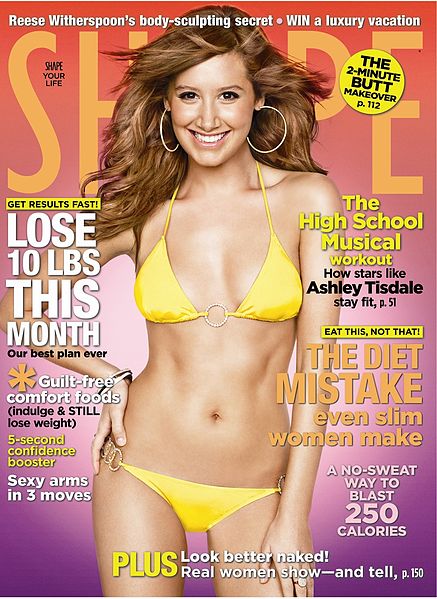
As a woman, I’ve grown up reading my fair share of women’s magazines. It started with Seventeen Magazine (which I began reading at age 12.)

But I was always a voracious reader even back then, so it didn’t stop there.  I began to devour Cosmopolitan, Glamour, Marie Claire, Elle, Vogue, Allure, and occasionally even Redbook. I couldn’t stop. When I got to college and discovered that the gym existed and was something I could do, I added Shape, Women’s Health, and Self Magazine to my repertoire.

The magazines were “fun” and “silly” but they were also addictive and confusing. I took their advice very seriously because I didn’t have any other information about diet and exercise. I’d never really thought much about working out and being thin before. I grew up in a household that ate dessert and drank soda with every meal, and my mother always cooked wonderful indulgent dinners for us every night.

It took until college for the magazine brainwashing to really kick in, but once I was living on my own, I began to really experiment with diets in order to be the ultimate in skinny. I went through all kinds of weird food phases.

  • I tried the Atkins diet where I only ate meat and cheese, and just butter alone…with no bread.
  • Then I tried the South Beach diet, which was a modified version of Atkins- so I could add some nuts to my meat.
  • I tried skipping dinner every single day until I couldn’t do it anymore.
  • I tried skipping lunch every single day until I couldn’t do it anymore
  • I replaced dinner with milk shakes
  • I went days without eating solid food and tried to live on liquids alone.
  • I tried eating soy sauce packets instead of food when I got hungry.
  • I tried to eat only fruit and vegetables and absolutely nothing else…except occasionally soy chips.

And there were probably many other stupid phases I don’t really remember. And during most of them, I made sure to go to the gym 5-7 days a week as well, because I figured that would help. And I never thought of myself as having any sort of disorder, because it was all “normal”…every woman was obsessed with being thin. Obviously, thin was the best thing to be. And I didn’t have an “eating disorder” because I was neither anorexic nor bulimic. But I was obsessed. I couldn’t think of much else besides what I did or didn’t eat. But of course, I knew I could stop at any time…

Throughout all of this, and beyond, my focus was never on being the strongest I could be. I never thought about food as making me strong and actually physically powerful. I thought about LACK of food as making me powerful…psychologically powerful that is…because being thin equals ultimate power, right?

So when I read the article 1200 Calories the other day, it almost made me cry, because the comments it makes about problematic marketing to women are so true. Even now. The marketing is just as bad now.

I hope that one day women’s magazines will all stress eating whole foods, building muscle, and getting strong, as opposed to just cutting calories and getting as thin as possible, but I don’t know if this will ever truly happen.

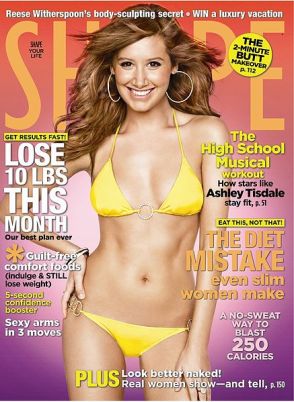
The author of ‘1200 Calories’ talks about how women have been taught from a very young age, through all sorts of media sources, that what we need to do is cut calories and starve ourselves. We’re taught that being as thin as possible is the ultimate perfection. We’re taught that eating low calorie food with no real nutrients and doing as much cardio as possible is the way for us to be sexy.

“Women’s magazine covers frequently use terms like “drop X pounds fast!” and “calorie-torching workout!” and “low-calorie foods.” Men’s magazines use keywords like “build,” “power,” and “strength. Think of all the potential that is thrown out the window when women deprive themselves of food on their quest to be thin. What great things could women accomplish if we weren’t fucking dieting all the time?! It’s saddening.” 

How sad is it that the message of going for actual health, building muscle, and being strong wasn’t a message I started thinking about until recently? How much sadder is it that I still barely believe that message to be true?

What can we do about this? How can we combat the harmful marketing to women that’s still going on strong right at this very moment?

2014-02-19-437pxShape_Tisdale

In Praise of a Small, Happy Life

I’ve realized recently that our thirties are a kind of world-building decade. We figure out if and who we want to marry and settle down with, perhaps we gain some clarity on our passions and career goals, and maybe we have children. So while you’re creating your future, hopefully you’re at least periodically asking yourself, what do you ultimately want from your life, what’s your ultimate purpose? It’s a question we should probably ask ourselves more often, and we shouldn’t settle for surface answers.

k3631415

I’m somewhat obsessed with this great existential question as I bet most of us are in some way or another. Personally, when it comes down to life goals, I toggle between wanting contentedness living a simple life with family, friends and a meaningful job but then wanting to be an incredibly successful writer that people adore. I suppose that’s the ego-driven part of me that wants to be special. When that ego driven side of me rears its’ head, I want to be someone who’s considered exceptionally talented and creative. Someone like Mindy Kaling. When I look at her Instagram feed, I can’t help but feel a tinge of jealousy – wondering why I haven’t gotten where she is. It’s more than just jealousy though, I also feel sometimes like if I don’t achieve that level of success, I will have failed. But when I step back and think about it, I know that not everyone can be a Mindy Kaling, and all of our journeys are our own. And maybe there’s a kind of vast journey continuum – where some of us are on smaller journeys – like indie films as opposed to sumer blockbusters.

So, this essay in the NY Times couldn’t have come at a better time. It’s a fascinating peek into how people find purpose in their lives.

The Small, Happy Life by David Brooks:

http://www.nytimes.com/2015/05/29/opinion/david-brooks-the-small-happy-life.html?_r=1&assetType=opinion

What does your small, happy life look like?

Really Awesome Credit Bureau Changes You Should Know About

I just wrote an article about credit card myths, and right afterwards, big news broke about some credit bureau changes happening in 31 states in the near future. A lot of the changes will be very helpful to consumers 🙂

Now that you’re in your thirties, make sure you’re keeping your credit report in extra good shape by checking it at least once a year. You can easily check it on a site like http://www.annualcreditreport.com  Errors pop up in credit reports all the time and you want to catch them early before they damage your score. The new rules getting put in place among the credit bureaus should help stop these accidents from happening. Here they are:

  • If there’s an error on your file with one of the three agencies, that agency must notify the others
  • It will now take 180 days for medical debt to appear on your credit report. So if you have medical debt because your insurance is supposed to take care of a bill and things are still processing, the issue will get squared away before doing any credit damage.
  • The bureaus will closely track data furnishers who most often supply disputed info- so if an organization or debt collection agency is being disputed all the time by everyone, credit bureaus will get way more suspicious.
  • The bureaus have to educate consumers on getting access to free credit reports as opposed to paying for promoted credit reports.
  • You’ll get an additional free credit report provided to you if you’ve recently disputed a claim.

Thanks so much! Hope this all gets put into place! 🙂

credit_report_australia_law_change_2014-860x312_c

Portrait of a Thirty-Something: Jennifer Harder

We are thrilled to present our fourth Portrait of a Thirty-Something interview with Jennifer Harder, a performing artist in New York City. Jennifer works as an actor, horn player, and a neo-vaudevillian (which if you haven’t heard that term, as I hadn’t, it means bringing back sideshow, circus, burlesque, and other live nightlife of yesteryear). I love how open Jennifer is about finding more peace with herself and how she’s learned to let go of seeking approval from others. Enjoy her interview, and a big thank you to Jennifer!

You can visit her website here.

Name/Age/Location: Jennifer Harder/34/Brooklyn, NY  AC_Portraits5B__033 as Smart Object-2 copy

Occupation: Performing Artist

What’s the accomplishment you’re most proud of in your 30s so far? Feeling at home and at peace in my own skin has been something I never thought would happen. It’s glorious.

What do you NOT miss about your 20s? I don’t miss the striving for “perfection” that I thought was lurking around every corner.  I was fairly close-minded in my early years about what constituted “success” and what that then meant.  On nearly every endeavor, I hardly enjoyed the journey and when I got to the destination it seemed hollow and unsatisfying.

Looking back, what shouldn’t you haven’t been afraid of in your 20s? People! I was so afraid of what they thought, gaining their approval, disappointing them, being dismissed by them, etc.  We are all in the same boat; the idea that we’re somehow different or separated from one another is imaginary.  People are truly what life is all about: a full life is one in which you share your moments with each other.

Any surprises about what your 30s are like? My mind has expanded exponentially and I’m able to look back on my stories of mishap and adventure with wisdom and without judgement.  I never really thought my 30s would be any different, but am pleasantly surprised with the maturity and peace of mind I’ve found.

What do you find most challenging about this decade? I might be at a crossroads with my career and it’s proving to be both frustrating and illuminating.  I may be emotional one day and excited the next about where life might take me.

What are you most looking forward to? Be it tonight, next month or ten years from now! I’m looking forward to becoming more spiritual, which is another area I never thought I’d explore.  I’m also looking forward to trying new things and seeing new places.

What would you like to hear more about regarding the thirties. What articles would you like to read?  I’d like to hear stories of people who have changed focus in their careers.

Knowing the Difference Between Memorial Day, Veterans Day and Labor Day by Your Thirties

Today I overheard someone asking the difference between Memorial Day and Veterans Day. This was not a child asking- it was someone in their fifties

Last year on Labor Day, a friend of mine was wondering whether or not to thank the military. (Short answer- sure, thank the military- but not because of Labor Day. Labor day has nothing to do with the military- it’s about American workers.)

So in case you’re not sure of the differences between the holidays, but are too embarrassed to ask, lets clear up the confusion right now, anonymously 😉

Memorial Day: Memorial Day is for honoring and remembering military personnel who died serving their country, particularly those who died in battle or as a result of battle wounds. The holiday originated right after the Civil War and is always celebrated the last Monday in May because that’s when flowers are blooming to decorate the graves of the dead. Read more about Memorial Day here.

Veterans Day: Veterans Day is a day to thank EVERYONE who’s served in the military, whether in wartime or peacetime. The day is especially to thank living veterans for their service, and to really show that all those who served, and not just those who died, have done their duty. Veterans Day was created after World War I and is always celebrated on November 11. Read more about Veterans Day here

Labor Day: Labor Day is dedicated to the contributions and achievements of American workers. It was created in 1887 by the Central Labor Union and the Knights of Labor. It’s always celebrated the first Monday in September. Read more about Labor Day here.

Hope you had a beautiful Memorial Day weekend.

American flag flying in the wind

The Un-Official Start to Summer

While the summer doesn’t officially start until June 21st this year, Memorial Day always feels like the start of the summer ‘season’ to me. Maybe that’s because it’s when the beach lifeguards and the ice cream trucks came out at the long island country house my parents had. Year after year, memorial Day would mark the start of summer while Labor Day marked the end.

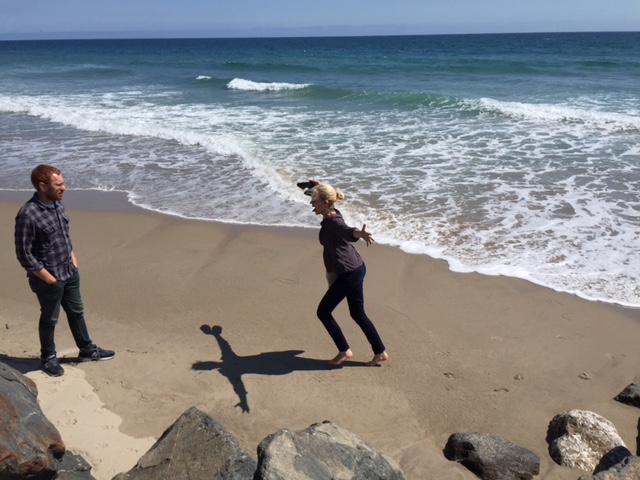
Since I moved to Los Angeles nearly two years ago, the start of summer hasn’t felt quite as pronounced as it did on the east coast. But for some reason, today it did. That’s probably because we went to Malibu and walked on a secret beach, and beaches remind me of restful rejuvenation when you can ‘reset’ yourself.

IMG_2094

Trying to ‘scare’ Aaron but clearly it’s not working

The summer to me always feels like a time to try something new in a relaxed, exploratory and fun way. Personally, I’m really hoping to finally get serious about exercise and eating better. I just got over a bad cold/cough that left me hacking up a lung every night and losing my voice. I realized that if I had been in better health all along, maybe I wouldn’t have been sick for over a week. I also finally admitted to myself that I probably eat 1-2 serving of fruits/vegetables every day since starting graduate school, and that’s  not good. So this summer, I want to find a way to incorporate eating well/exercise into my life in an enjoyable way.

So, happy start of summer, everyone! Do you have any fun goals for this season?

Credit Card Myths You May Still Believe In Your Thirties

I feel like getting and keeping good credit is something that should be taught in schools. Otherwise you really have to dig to learn the ins and outs of the mysterious FICO score.

Then again, there are many financial topics that should be taught in schools but aren’t.

Sadness.

Just because I’m in my thirties doesn’t mean I was necessarily taught anything about the ins and outs of FICO. Most of my answers have been self taught.

So I’m here with some common credit card myths that I used to believe in the past. The only way to counter the misinformation that abounds about FICO scores is to provide some solid facts. Hope they’re helpful!

1. Applying for Credit Cards majorly damages your credit score

FALSE – Actually, applying for new Credit Cards will likely help your score in the long run because it will lower your debt-to-credit (or credit utilization) ratio and will increase your credit history. Applying for new cards temporarily lowers your credit score- but way less than you may think. The dip will usually be around 5 points. The long term gains you see will likely be much more than that.

2. You must carry a balance on your credit cards to build credit history and increase your score

FALSE- I really used to believe this one and used to wonder what the magic number was- should you carry a 5% balance? 1%? The answer is that you can pay off your cards in full every month and your score will only increase because of your better debt-to credit ratio.

3. Canceling your credit cards is good for your credit score

FALSE – If you’re an out of control spender, financial gurus such as Suze Orman recommend that you cut up your credit cards- but don’t cancel them. Canceling them will lower your all important debt-to-credit ratio, and will likely end up lowering your score. The only time you should cancel a card is when it has an annual fee that you don’t feel is worth paying anymore. It’ll still lower your score a bit, but it may be worth it.

4. Once you have a bad credit score, you can never fix it

FALSE- This is very untrue. Credit scores don’t really reflect how things are today- they’re a collection of happenings over the years. Missed and late payments and other score damagers will actually fall off your report in 7 years! So there’s likely very good FICO news in your future if you got off-track but now are back on.

5. Checking your credit report hurts your score

FALSE- I believed this one forever. But it’s just not true. If you check your own credit, it’s known as a soft inquiry, and doesn’t have ANY effect on your credit score. If someone else (a credit card issuer, lender, etc) checks your credit score, it’s called a hard inquiry, and that affects your credit score. But not by as much as you think (see Myth #1 above).

Hope this was helpful! These are the simplest myths, but I’ll be back with a part 2 very soon 🙂

3d rendering of a credit card cut into pieces

Too Old for Graduate School?

When I enrolled at UCLA in Fall 2013 at thirty-two years old, I wasn’t sure how old the majority of my peers would be. Would I be the ‘older one’ or a ‘younger one’? Turns out, I’m on the older side, as most of my classmates are in their 20s. But I’ve been assured that classes prior to mine (class of 2015) had an older median age.

I’ve had friends tell me, “I’m too old to go to graduate school now,” thinking their ship has sailed. But it’s not true – you’re never too old for graduate school. And, according to information collected from the 2000 National Postsecondary Student Aid Survey, the average graduate student is 33 years old. Not only that, but 20% of all graduate students are over the age of 40.

You may worry about the perceived ‘stigma’ of being an older graduate student. But in my mind, yes, you may stand out if you’re an older student but standing out is good. Really. People are curious about you and your background, and many times you’re perceived as being courageous for continuing to go after your goals. One of the most talented recent graduates in my program was a grandmother in her 60s, and she was awesome. She won tons of awards for her writing and one of her TV pilots was actually produced.

When you go to graduate school later in life, you have a better idea of where you’re aiming to go. You don’t get stuck in “academic inertia” as one college professors said when he warned me against applying to school too soon. You also appreciate the sweetness of graduate school life a lot more than would if you were only a few years out of college (That is, if you’re not simultaneously working a full-time job, which is a beast.)

Also, you can benefit form the Lifetime Learning Tax Credit, which in 2014-2015 was about $2,000 per year. However, there are income restrictions and only one member of married couple can benefit from this credit at a time. You can read more about it here.

Education, at any age, is never a waste.

It hurts. So what?

A couple of weeks ago, I was extremely afraid. I wanted to speak up, but it felt much easier to stay silent. Or rather, I needed to speak up but was afraid of the response. There was an 95 percent chance that things wouldn’t end well.

Okay, I exaggerate. I’m not saying that I would die or get physically injured or even be screamed at, but I likely wouldn’t get the response I desired. I’m talking about the likelihood of a very high rejection rate.

I knew I’d regret it if I didn’t say what I wanted to say. I knew I’d feel even worse if I stayed silent. But I was scared. The pain I’d feel if rejected felt very real.

So I vented to Jane about how I felt safer staying quiet because I didn’t want to bring almost certain pain into my life. Even though I knew what I needed to do, it sucked that I could predict the future pain from doing it. And it was then that she said to me one of the best pieces of advice I’ve ever heard in my adult life.

She said “yeah, it’s going to probably  hurt. It’ll probably hurt very bad. But okay. So what?”

So what??

The revelation feels groundbreaking. Things may hurt, very badly even, but so what? So what?

Can you live with the pain of things hurting? Yes. And when you can live with that pain and be brave in the face of it, the world opens up.

Suddenly, suddenly everything is doable. Even the most immense impending hurt can’t stop you. It can bring you to your knees and it can make you cry. For awhile even.

But so what?

I ended up saying what I needed to say, and I was extremely relieved I did. And the hurt still came on strong. The rejection felt intense and stung with pain.

But so what? So what??

I’m still here. And I’m okay.

An Egg Freezing Horror Story

If you’re a female in your thirties without children who wants children, you’ve probably at least heard about egg freezing. Maybe you’ve even considered it. I never really dug into researching it, mainly because I can’t afford it (The procedure usually starts at around $10,000 plus additional yearly fees for storage). So, since I didn’t research it, I kind of assumed it was an easy, breezy procedure. An in-and-out sort of thing. A very expensive afternoon hospital visit.

But after reading this scary article by Vicki Rox in VICE online, I Froze My Eggs, Ended Up in the ER, and Almost Lost an Ovary, I discovered that it’s actually a much more complex process which involves amping up your hormones levels weeks before you get the procedure so you’ll have as many eggs as possible. Now, the point of the article is not about how involved the process is, but rather the abnormal side effects she experienced (Ovarian torsions). But regardless, the author got me thinking about what the actual procedure is like, something I had never considered.

It seems a lot more ‘real’ than the ‘theoretical’ egg freezing I had imagined. I’ve never been a fan of playing with hormone levels in my body, mainly because I have intense PMS mood swings and don’t want to mess with that any more than I have to.

It’s worth a read to gain a fresh, honest perspective on what actually happens during an egg freezing procedure.

Help! I’m 30 and Never Followed My Childhood Dream! – Part 2

Jane just wrote How Did You Find Your Career Path? and, in the article, she mentioned a lot of people that didn’t find their career, but instead had their career “find them.” There was the writing major friend of hers who ended up working in perfume, and the film school friend who went into advertising… And then she mentioned how people’s careers usually switch approximately 7 times in their life!

I have a friend who was a drama major who got a major role in a film that turned him off from acting. He went into teaching, loves it, and never looked back. My brother, another actor, was always big into video games and tech. He got a job during college in a video game store. He’s now a brilliant manager at that store and loves his job.

I’m finding lately that sometimes what you think you want to do isn’t actually what you want to do at all. It’s almost hard to admit here because it feels like giving up something…a part of who you are. In a post I wrote awhile ago, Help! I’m 30 and Never Followed My Childhood Dream, I remembered an episode of How I Met Your Mother. In that episode, the gang all realized that there were dream career paths from their childhood that they never followed but always held secret hopes that they one day would. Lily wanted to be a painter and someone wanted to be a rockstar…I can’t remember who. At the end of the episode they realize that they want to let those dreams go because they enjoy the paths they’re currently on even more.

It’s a hard lesson, and not always the case. Childhood career dreams sometimes become reality. Or they sometimes influence what you end up doing (all that drama school helps me see tradeshows as a kind of theater that I need to organize, occasionally direct, and always play my part in, haha). Also, childhood career dreams come in and out, sometimes reemerging as a fresh passion (Janna talks about going after her dancing and acting dreams again after stopping for awhile in Portrait of a Thirtysometing- Janna Davis.)

More than ever, I think that nowadays your career is something to create and evolve with…it isn’t a straight line but- to be corny- kind of a large garden, with seasons and fresh starts and different climates. Sometimes there’s sun and sometimes there’s snow. The soil remains the same (you), but can feel dried up or moistened (those times you realized your career path wasn’t working for you vs those moments of inspiration).

I’ve even heard before from friends that the best moments of their lives were after they got fired from their jobs. They were absolutely forced to start fresh in new jobs and situations they never would have turned to before.

That’s a scary situation and I would never wish for it. I love my job and my unforeseen career path, even though it was never my childhood dream. But I feel more and more that career paths can widen and change and twist into something far different, and maybe a lot better, than your childhood self ever could have dreamed up.

download (6)

How Did You Find Your Career Path?

Did you find your career or did your career find you? It’s an interesting question because I think more people than you would expect had their job “find them.”  In this economy, many of us take jobs because they are decent jobs that pay a fair wage in a field we’re mildly interested in. For instance, a lot of my film school friends ended up working in advertising, because of the abundance of jobs tangentially related to film. One friend ended up working at a commercial real estate company because she was a temp there after college and ended up loving it.  Another friend who was a writing major at my college ended up working at a perfume company and now she’s the director of product innovation for a major beauty brand.

While we may be working in a particular industry now, it doesn’t mean we will be there forever. The average American has 7 careers over the course of his/her lifetime, according to the Bureau of Labor Statistics.

“The decisions you make about your work life are especially important, since most people spend more of their waking lives working than doing anything else. Your choices will affect, not only yourself and those closest to you, but in some way the whole world.”
—Laurence G. Boldt

How did you land in your current career? Do any of the below apply to your situation?

  • Lifelong childhood dream to work in a particular job
  • Personality test (Myers-Briggs) that indicated you fit a certain career path
  • Family connection to a company, job or industry
  • Strictly a monetary decision
  • A lifestyle decision

We’d love to know how you found yourself wherever you are now career-wise.

Email us at omgimthirty@gmail.com or reply below. We’ll be sharing some answers on the blog soon. Can’t wait to hear from you!

Why You Should Get Global Entry In Your Thirties

I was always that weirdo who opted out of the airport scanner machines. I never liked them, and I knew that the jury was out on their safety and health risks (even though TSA always claimed they were safe).

If you opt out of the scanner machines, you’ll be subjected to a patdown. I never minded much (free massage!), except that waiting for a patdown always takes awhile, and you’re subjected to gawking stares from fellow passengers who think you’ve been pulled aside because you’re a terrorist.

It was actually a TSA agent patting me down a few years ago who recommended getting Global Entry. I’m amazed that I didn’t really know much about the program even though I fly over 2 or 3 dozen times a year for work.

2000px-Global_Entry_Logo_Negative.svg

If you travel at all outside the country, and hopefully in your thirties you’re doing a bit more of that, I highly recommend Global Entry.

You’ve probably heard of TSA Pre-check– this allows you to bypass the sometimes crazy lines and go straight through security in your own line.

Global Entry is basically TSA Pre-Check PLUS. You get all the benefits of Pre-Check, PLUS you’re able to bypass Customs when you return from most travel abroad…plus other awesome benefits. You get:

-To bypass the long security line at most airports!

-To leave your shoes on when you go through security (soo nice!)

– To never have to go through the airport scanner (known as a millimeter wave device). You always get to simply go through the metal detector as long as the PreCheck line is open.

-You don’t have to take your laptop out of your bag

-You don’t have to take off your light jacket

-You get more respect when you travel (when gate agents or security agents see my Global Entry card, things always seem to go extra smoothly.

– With Global Entry, your chances of getting PreCheck on your boarding pass are way higher than when you just havePreCheck. I get PreCheck on my boarding pass almost 100% of the time, but a lot of my friends who just have PreCheck (vs Global Entry) get it on their boarding pass around 60%-75% of the time.

It’s easy to apply for Global Entry- just follow the directions here. It’s $100 for 5 years, so only $20 a year- very affordable and super worth it!

TSA Precheck is $85 for 5 years, but you get none of the international and extra benefits that Global Entry gets you. So pay the 15 extra dollars and get Global Entry. It’s been the best thing I’ve done for myself regarding travel.