A New Way to Look at ‘Time Management’

According to Wikipedia, Time Management is “The act or process of planning and exercising conscious control over the amount of time spent on specific activities, especially to increase effectiveness, efficiency or productivity.” But that seems too simple an explanation. It doesn’t seem to take into account when our emotional engagement and motivation is highest for certain projects.

A few months ago, I heard the term “energy management” and now, I greatly prefer this term when it comes to discussing productivity. Maybe this is because I’m an introvert, and I find that I have a limited amount of social energy reserves that I can expend each day. I also know that I have a few solid hours of great writing energy every day, and certain factors can drastically after that energy. For instance, if I schedule a hectic day of work, classes and socializing, even I get home at 6pm, it’s impossible for me to write at night, even though I technically have the “time.” I can’t do the writing effectively because my energy resources have been drained.

I do most of my best writing in the morning because that is when my energy/motivation leaks are at their peak (after coffee, of course). It’s also because I don’t have any pent up stimuli from the day weighing down on me. I come to the page (or the cursor rather) with a fresh mindset. Personally, I know that if I have a big project coming up, it’s best for me to chunk it out over several mornings.

This is a fascinating deep-dive article in the Harvard Business Review by Tony Schwartz and Catherine McCarthy about this subject that’s worth a read: Manage Your Energy, Not Your Time. I think this is one of the best pieces of advice in the article (do your most important work early in the day).

Another way to mobilize mental energy is to focus systematically on activities that have the most long-term leverage. Unless people intentionally schedule time for more challenging work, they tend not to get to it at all or rush through it at the last minute. Perhaps the most effective focus ritual the executives we work with have adopted is to identify each night the most important challenge for the next day and make it their very first priority when they arrive in the morning. Jean Luc Duquesne, a vice president for Sony Europe in Paris, used to answer his e-mail as soon as he got to the office, just as many people do. He now tries to concentrate the first hour of every day on the most important topic. He finds that he often emerges at 10 am feeling as if he’s already had a productive day.

How can we take better control of our energy? Well, we can start by identifying when our energy is at its’ peak and utilizing that time for our most important life goals. Also, we can be very cognizant of what activities/people drain us energetically and emotionally.

A great way to start is to make a list of times in your average week when you feel particularly low energy. What energy depleting activities do you have in your life? Are they unhealthy addictions, eating poorly, seeing ‘toxic’ people who drain your spirit?  What can you eliminate from your life?

Portrait of a Thirtysomething – Jamie Wiley

We’re thrilled to bring you the third interview in our series, “Portrait of a Thirtysomething.” This time we were lucky enough to get the fabulous Jamie Wiley, of the blog Sincerely, Miss Design, to agree to be interviewed. Jamie’s got an inspiring story that reminds us that you can change the course of your life at any point and that’s it’s never too late for a new path. I also loved what she had to say about toxic relationships…Read on!

Name/Age/Location:  Jamie Wiley, 32, Allentown Pennsylvania

Occupation:  Real Estate Appraisal Coordinator (aka Glorified Secretary) and full time Graphic Design student

wiley_jamie_headshot (1)

What’s the accomplishment you’re most proud of in your 30s so far?

By the time I was 31 I came to the realization that the things I wanted career wise were not just going to fall into my lap. When I graduated college 13 years ago I took a job that I had just planned to work at for a short time to get my bearings and go back to college in a year or two. I just kept pushing returning to school off and there I was 13 years later still working at the same job feeling stagnant. Finally I took control of my life and enrolled in college full time. It’s been incredibly difficult juggling both a career and school work, but so far I’ve been able to maintain a 4.0.

What do you NOT miss about your 20s?

I do not miss the insecurities and uncertainties of that time in my life. Even though you are physically “grown up” in your 20’s, it takes a little while longer for you to mentally catch up. During my 20’s I was still learning what being an adult actually meant. Rather than budgeting my money out between pay weeks I’d spend my whole check the same day I got it. I was so strapped for cash that I’d hunt down every loose coin to take to the Coin-star machine to get cash. Of course the irresponsible spending lead to massive credit card debt that took years to bail myself out of.

Looking back, what shouldn’t you haven’t been afraid of in your 20s?

I should not have been afraid to let go of toxic relationships. I always felt obligated to maintain relationships with family members and friends regardless of the fact that they were dragging me down. I’ve learned that sometimes it is better to part ways with people to maintain your own sanity.

I also should not have been so afraid to stand up for myself and my beliefs. I have always been a passive aggressive people pleaser which basically made me a doormat.

Any surprises about what your 30s are like?

Yes, a few things. As I get older I gain more self confidence and acceptance of myself as I am. I no longer take to heart negative things people may say or think of me. In turn I’ve learned to be less judgmental of others.

What do you find most challenging about this decade?

In your 30’s you have more of a sense of what direction your life is going to go in. So, I think that at this point everyone’s lives branch off into different directions. Friends move, change careers, start families, etc. All of our priorities suddenly change and it takes a great deal of effort to stay in contact with one another.

Also, learning to listen to my body. I can no longer live on junk food and soda. If I do not eat proper meals or drink enough water I feel terrible. I’ve made it a habit to stretch and foam roll every night before bed to maintain flexibility.

What are you most looking forward to? Be it tonight, next month or ten years from now!

I’m looking forward to graduating from college and any great opportunities the future holds for me!

Thanks so much, Jamie! We loved reading your interview. 

Check out her website, Sincerely, Miss Design for more about Jamie.

I’d Give Up Being Happy To Be Happy

Tonight a friend of mine drunkenly called me after hitting up a bar too many (or maybe it was the perfect number of bars).

We were having a pretty funny and awesome one-sided drunk conversation for awhile (I was unfortunately just sitting soberly at my desk), when the tone turned slightly negative. It was a still pretty awesome conversation, the way one sided drunk and negative conversations can often be (admit it), and things were said such as ‘sometimes people can just suck! Why?? Why do they suck??’ Rambling rants commenced.

Then my friend suddenly said “I just want to be happy. I’d give up being happy to be happy.”

I laughed and asked what in the world that meant.

“I don’t know,” was the reply, “I’m drunk. I’m rambling.”

“Haha, I see.”

“But I just want to be happy now. Not just later.”

My friend made an offhand drunk comment, but it got me thinking about long term happiness vs short term happiness- or long term happiness vs short term pleasure.  Right now, I’m kind of down and I just want everything to be okay. When I’m feeling upset,  sometimes I just want the shortest road to feeling better. Even though I know what will lead to happiness in the long term, there are times I just want things to satisfy me now.

Wanting pleasurable experience after pleasurable experience without sacrificing for the long term is called the hedonistic treadmill. Some people spend their whole lives on it. That short term patchwork feel-better “happiness” is actually just pleasure, whereas deeper and true lasting happiness is something far different. A good example is eating platters of nachos on the couch instead of exercising, when your goal is to get fit. The platters of nachos may be delicious and give you short term “happiness” (pleasure), but seeing results from your workout regime would give you way more long term happiness.

Right now I find myself grappling with this a lot, in much less obvious ways than the nacho example. I see the hedonistic treadmill issue pop up when I’d rather stay in a non-ideal situation rather than go through the discomfort of demanding better things in my life. Or when I want to feel peaceful all the time and can’t face occasionally upsetting but natural feelings in order to work through them.

Do you recognize a pleasure-addiction syndrome in your life- even a subtle one? What can you do to better face occasional unpleasantness and sometimes very scary feelings in order to have greater happiness in the long run?

Treadmill-Fails-Compilation

What’s Your Skincare Routine?

Now that you’re in your 30s, has your skincare routine changed at all from your younger years? Do you take better care of the LARGEST ORGAN IN YOUR BODY now that you’re older? Sorry for the caps there, but it boggles my mind that our skin is indeed the largest organ in our bodies.

I certainly have changed my routine. Well, now I actually have a routine whereas in my twenties it was wash and go, with a little Clean and Clear acne cream when needed. I’m in preservation mode these days. I want to keep the wrinkles at bay and keep my youthful glow (I’ve still got it, right? Right?!!).

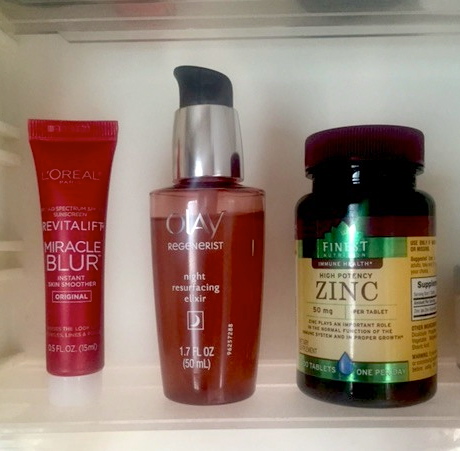
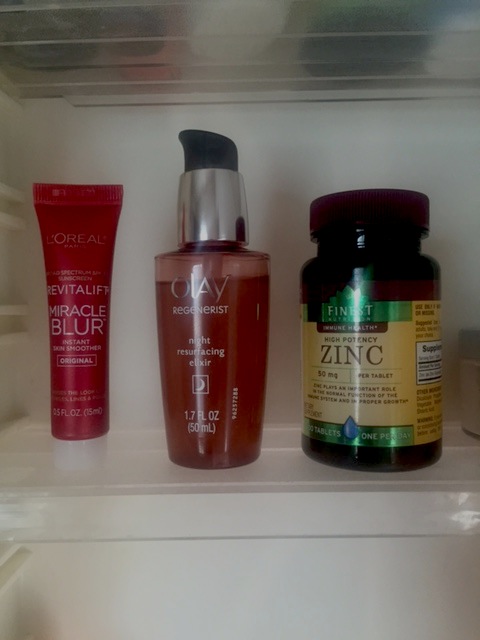
So, here are a few of my favorite products in my bathroom cabinet.

IMG_0571
Starting from the right hand side, I love L’Oréal’s Revitalift Miracle Blur – it’s a primer that smoothes out pores, wrinkles and any other imperfections you may have. You can wear it under makeup or in lieu of makeup. The best part is that it’s seriously like velvet on your skin. It’s very similar to Benefit’s POREfessional, but a bit cheaper, so Miracle Blur is what I’m using now.

In the middle, is Olay’s Regenerist Night Resurfacing Elixir. The name of the product basically says it all, but it’s a exfoliating treatment with glycolic acid. My skin feels clearer and more glowy than normal when I use this consistently before bedtime.

Then, there’s the Zinc tablets. Not only does zinc possibly boost your immune system, it helps make your skin look dewy. If you take zinc for two days straight, you’ll definitely notice a certain glow. I only take zinc tablets when I’m feeling saucy because they tend to give me an upset stomach. Maybe it’s because my zinc tablets are high-potency.

And last but certainly not least. I’m loving the Face Yoga Method. I have a very expressive forehead, which is awesome (I guess? People know how umm…emotional I am.), but I have forehead wrinkles already and it drives me bonkers! A few months ago I researched all-natural ways to reduce your forehead wrinkles and I found this amazing website: Face Yoga Method. Okay, yes, the whole thing may seem a bit kooky, BUT, I can honestly say I’ve seen results. You may feel a little silly doing the exercises, but they work.

These are my tips and tricks. Got any to share?

The Best Foods For Your Thirties

What foods do you love now but hated before? I made a list of foods that I’m now obsessed with including:

1. Mushrooms

I used to HATE mushrooms- it’s a texture thing. Now I really love them. This is partially because of my forays into cooking- mushrooms add a ton of flavor to everything.  I still can’t do a huge portobello in a burger, though. Gross.

2. Hot Sauce

I used to really dislike hot sauce and couldn’t figure out why people were into it. Now it’s everything. It’s especially good on mac and cheese that’s too bland…like most vegan mac and cheeses.

3. Jalapenos

Like hot sauce, these were avoided like the plague. Now, I like to infuse my sauces, and even my drinks, with jalepenos.

4. Lemons

Was never a big citrus fan. But now with the whole lemon water craze, I’ve been trying lemons as a condiment…making salad dressings out of them and even squeezing them in my water glass way more often.

5. Wasabi

I must just have a higher tolerance for spicy foods nowadays, but suddenly no sushi meal is complete without this previously hated side paste.

6. Whisky

Okay, not a food, but I now seriously love me some Old Fashioneds…and I’m the girl who used to spit them out.

7. Beer

Another non-food, but I never liked beer, and for quite awhile I thought I was allergic to it. Now I’m all about it- especially craft beer and beyond …I’ll always love my usual belgian favorites but I’ve moved on to beefier porters and stouts…plus strawberry beer!

So those are the foods (and drinks) that my tastebuds have added to their happiness repertoire in my thirties.

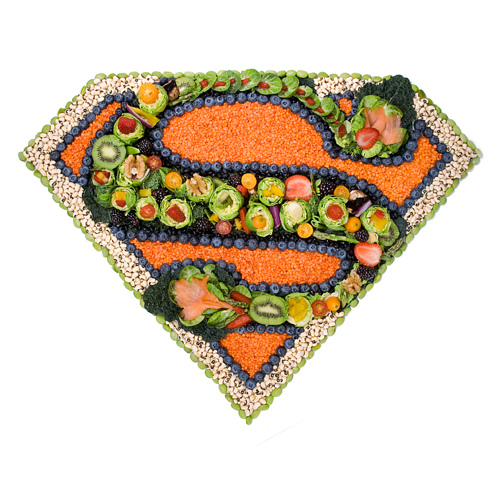
I googled “best foods for your thirties,” and found a bunch of articles with foods that are reccomended for this time in our lives. You can check on some of them them here and here and here. Below is a summary list of the foods that repeated the most, the ones I think are best, and why they are important:

  1. Water– Essential nutrient. If you add nothing else to your diet, add more water. It’s everything, no matter what your age.
  2. Bananas– Good source of potassium. Helps with high blood pressure/ hypertension. (I love these. They’re almost an everyday occurrence for me.)
  3. Beans– Rich in antioxidants, protein, and fiber. Good for your skin. (I’ve already been adding these to everything I can for years- they’re a great vegetarian source of protein. )
  4. Nuts– Loaded with Vitamin E and B which both boost the immune system. Walnuts are known to soothe stress. Nuts are also good for your skin. And, because of their arginine content, they’re known to boost sex drive as well! Just don’t overdo it now that you know their benefits- a handful a day is plenty 🙂
  5. Fish– Full of essential fatty acids. Good source of vitamin A and reduces cartilage swelling and inflammation. For vegetarians like myself, try ground flaxseed instead.
  6. Avocados (a superfood, and quite delicious- loaded with folate for fertility, good fat for your skin, and lots of vitamins B and E). Guacamole, anyone?? 😀
  7. Oatmeal (One of my favorite diet staples- an amazing source of iron, full of fiber, plus magnesium to tame muscle stress)
  8. Leafy greens, broccoli, bell peppers– full of vitamin c, protein, vitamin e, and antioxidants. Spinach, ounce for ounce, has more protein than steak!
  9. Berries: Great sources of vitamin C and antioxidants, plus they’re just plain delicious. Blueberries are the ultimate superfood.

So enjoy the foods that are great for your health, and the foods and drinks that taste even better as you get older. Stay healthy and enjoy your thirties to their fullest…even if that means adding hot sauce to everything and going for the absolute tastiest top shelf whisky! 😉

photo-original

SuperFoods1-1

Getting the Measles at 30- or Vaccinate Your Children Please!!

My coworker just got a notification from a tradeshow she recently worked. It said:

“We received official notice by the Florida Department of Health that an individual who attended Enterprise Connect Orlando 2015…was hospitalized with a laboratory-confirmed case of the measles. We immediately began working with the Florida Department of Health and the Florida Department of Health in Osceola County to assist them with their thorough investigations and notification process.

The safety and security of our staff, attendees, exhibitors and partners is our top priority. We are working closely with Florida health officials, and are following their recommendations and guidance on the immediate actions we take.”

This is a pretty messed up letter to get after working hard at an otherwise pretty typical tradeshow.

Even 5 years ago, if I saw something like this, I would have been shocked. But now I’m just angry and confused.

When I was a kid, I remember crying about getting vaccines such as the ‘measles, mumps, rubella’ vaccine, but I was dragged to the doctors office, like every other kid I knew. I’d never heard of anyone’s parents opting them out of these vaccines. It just wasn’t a thing. And I also never heard of anyone I knew getting the measles. All my friends in their 30s have never had the measles.

But now measles outbreaks seem to be happening again, and it’s not okay at all. Are future children going to be exposed to diseases that we once thought were eradicated… just because they don’t get the cure that we have in our hands?? We. Have. The. Cure. Now.

I’m a very holistic person, and I believe in alternative medicine. I use ginger tea and apple cider vinegar and garlic and lemon water to cure colds. But sometimes enough is enough…sometimes you simply need to get antibiotics or your infection won’t go away..it will get worse. In the past, before our time, you could have strep throat and then have it develop into scarlet fever without antibiotics. You need antibiotics for strep throat. Holistic medicine won’t cure it.

I get that some people are worried that vaccinations can possibly cause autism and other complications- but there’s no real proof of that. However, there IS definite proof that unvaccinated people- especially babies and children- exposed to measles WILL GET MEASLES.

So please, parents in your 30s, vaccinate your children!

Below is an amazing and hilarious Jimmy Fallon video about vaccinating your kids. Share with others.

Are You More Confident Now That You’re Older?

There was one time I was acting in a play and said to the director, “my character is so confident. How can I play a character who’s more confident than I’ve ever been?”

I can’t remember the director’s response, but it was something like “you’re confident. It’ll be fine.” I remember wondering whether I was fooling people into thinking I was more confident than I felt. I think I ended up repeating affirmations over and over to myself in order to get the character feeling right: “I’m confident. I’m beautiful. I’m frigging great.” Stuff like that. And I tried to imitate confident people I knew. It worked well enough at the time, I guess.

Is confidence a fake it till you make it thing? Does it help to take on a projected mindset of confidence?

I sort of hate the idea of ‘fake it till you make it.’ I like to think of myself as a pretty down to earth person, so I find it hard to attempt faking a version of myself. Whenever I try, it works for awhile, but sometimes I end up back where I started. Of course, now that I’m 30, I don’t always have to try and fake confidence. There are definite areas where I’m naturally confident from experience alone- usually in my job and friendships and certain subjects such as travel….areas where I’ve tried different things and failed and succeeded and failed again.

I recently read a brilliant article by one of my favorite writers, Mark Manson, called The Confidence Conundrum. In it, Mark says something I’ve always wondered about confidence- that the lack of it seems to just lead to a downward spiral of less confidence.

“On the surface, confidence appears to be an area where the rich get richer and the poor stay the fucking losers they are. After all, if you’ve never experienced much social acceptance, and you lack confidence around new people, then that lack of confidence will make people think you’re clingy and weird and not accept you. Same deal goes for relationships. No confidence in intimacy will lead to bad break ups and awkward phone calls … This is the confidence conundrum, where in order to be happy or loved or successful, first you need to be confident; but then to be confident, first you need to be happy or loved or successful.”

He comes to the conclusion that the answer doesn’t actually lie in faking it and saying “i’m fucking great. I’m fucking amazing at this,” but in “becoming comfortable with what you potentially lack.” In other words, confidence is about failing and failing again…and becoming comfortable with not achieving. In other words, confidence isn’t about what we achieve (which seems to bring about more of a temporary external confidence anyway), but about becoming comfortable with dreaded things like failure, rejection, and getting hurt.

Scary stuff! But imagine if instead of worrying about achieving all the time, and wanting to have a constant peaceful mindset, we instead became comfortable with discomfort. If we could get comfortable putting ourselves out there and failing, then we could become confident no matter what. We’d have nothing to prove to ourselves or others.

Perhaps it’s a numbers game. When you put yourself out there again and again and get rejected or fail and get hurt over and over, think ‘this is normal. And it’s fine. It’s actually great. Because this is part of life and it means that I’m truly putting myself out there and living.”

It’s scary, but if it’s actually the true key to building confidence, would you do it more?

Protecting Your Mental Garden

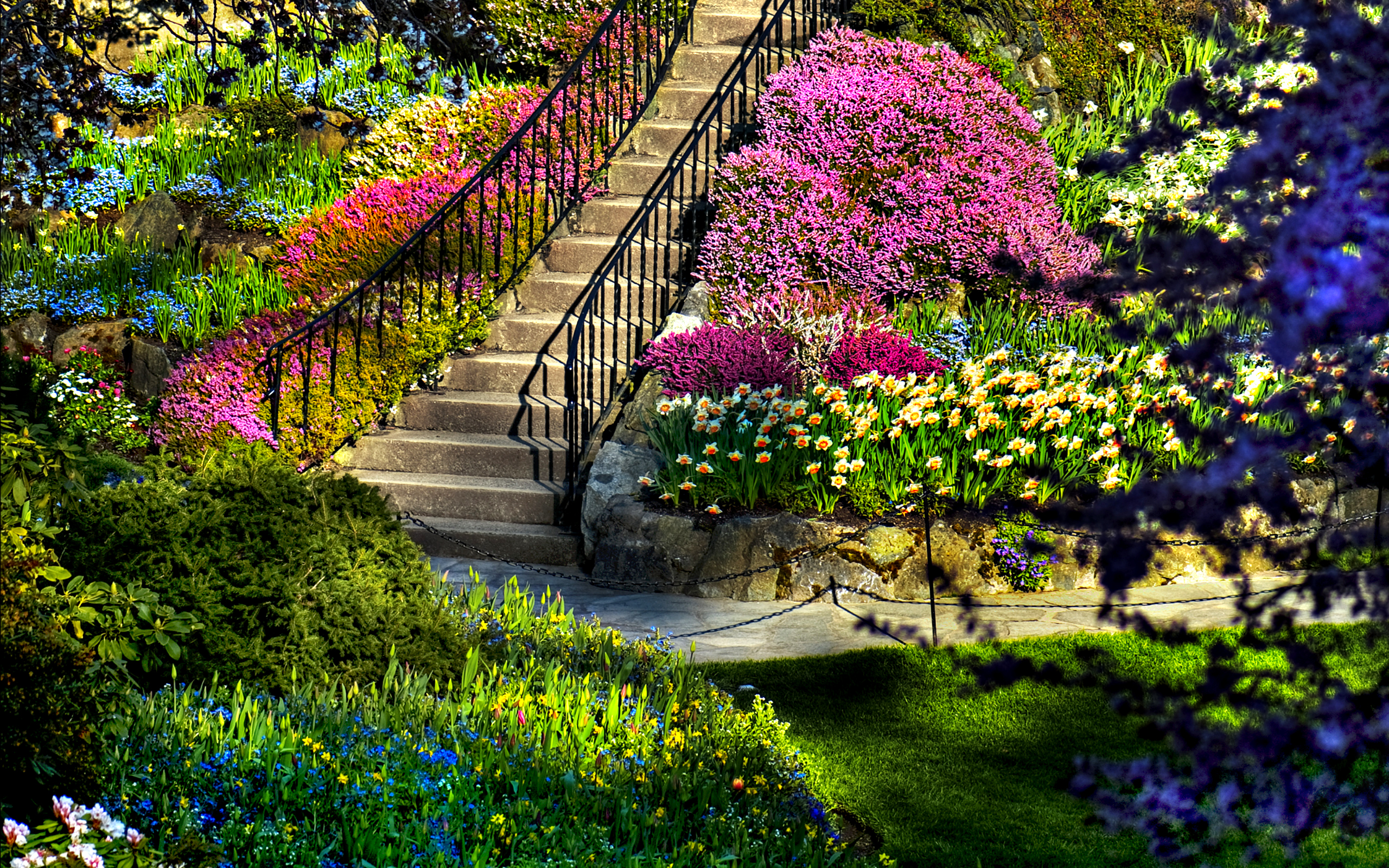
I was talking to a friend yesterday, and she relayed a beautiful analogy that our mutual friend had shared with her. Basically, the idea is that you should think of your mental life – your ambitions, hopes and dreams – as a garden. So, in the process of life, you’re creating a garden for yourself. It’s a place where you feel happy, secure and confident that your deepest hopes will be realized. It’s a place you can retreat to for safety and love.

wonderwordz_gardens_2

As the gardener of your garden, you have to make sure you don’t let anyone inside who won’t care for the garden and appreciate it as much as you. You need people in the garden who will urge it to grow and blossom. We all know that some people can have toxic energy, or can simply suck your energy source dry – those people are your weeds. And weeds must clearly stay out of a garden.

To build your garden, you need nurturing, positive thoughts that uplift you. You need friends who support you unconditionally and hold you up when times are hard.

As we get older, into our thirties and beyond, we will inevitably have more life challenges to deal with. And I think it’s important we learn how to create a safe, loving space for ourselves so we can face those challenges with more grace. I love the idea of a mental garden to be that place.

What to Do When You Feel Overwhelmed

I woke up this morning with anxiety, the kind of chest tightening, global feeling anxiety. I couldn’t quite place it – where it was coming from and why, but it’s been uncomfortable all day. When I thought more about the feeling over the course of the day, I began to place why I was anxious. I have final projects for grad school due soon, an uncomfortable conversation to have, and plans that are up in the air for tonight in addition to lots of other small tasks that have piled up. Combined, these things created a ball of anxiety that is currently sitting in my chest, annoying the crap out of me and making me feel overwhelmed.

So what do I do? Well, I have a few tactics that I’ve learned over the years to help me feel less overwhelmed. Maybe they can be of some use to you too.

1. What’s the Worst That Could Happen? 

Usually, even if everything went wrong – the situation I’m dealing with still wouldn’t be so bad. Think about what you’re worried about – and let’s say the worst case scenario happened – would you still be alive? Probably. Then that’s enough. You can get through it.

2. Take the Smallest Possible Step in a Productive Direction 

Procrastinating on a project or sending a dreaded email? Take the tiniest step possible towards accomplishing that goal. For me, I force myself to do just 10 minutes of whatever dreaded thing I’ve got going on. Once I’ve finished the 10 minutes, I realize it wasn’t so bad, and I usually keep on going. But if I don’t, so be it. Ten minutes is better than no minutes. Don’t underestimate the effect of small amounts of time put towards a big goal.

3. Slow Down 

Think of yourself as a turtle. Make every decision in as deliberate a way as possible. Focus on each thing you’re doing during each moment as completely as you can. This ties into the whole zen idea of being fully present in all of your tasks.

“If while washing dishes, we think only of the cup of tea that awaits us, thus hurrying to get the dishes out of the way as if they were a nuisance, then we are not “washing the dishes to wash the dishes.” What’s more, we are not alive during the time we are washing the dishes. In fact we are completely incapable of realizing the miracle of life while standing at the sink.” – Thích Nhất Hạnh

4. Write it Down 

Take out a pen and paper and write down all the things that are contributing to your anxiety. Sometimes they won’t all come up at once, so be prepared to be constantly adding to the list throughout the day. Just having a single spot where all your worries are kept seems to help me tremendously.

Hope these help you as much as they’ve helped me!

Screen Shot 2015-03-11 at 5.19.45 PM

That Time You Hated Positivity In Your Thirties

Have you ever had someone say “cheer up” or “smile” to you? Did it annoy you at the time?

Have you ever wondered why you can’t constantly be happy and peaceful? Why do circumstances always come at you and change your happy perspective for a bit? Why can’t you get back that peace you felt a minute ago or yesterday or last week or last year?

I used to think, “all I want is to be strong all the time. And I feel strong when I’m positive and happy. So I want to be positive and happy all the time. I wish I could figure out how to always be peaceful and happy every moment of every day.”

Or I’d think, “I don’t know how so-and-so does it. He/She seems so peaceful/happy/blessed/lucky all the time on Facebook/Instagram/Twitter. How is He/She always so happy/magical/overjoyed in His/Her status updates? If only I could be stronger, I could hold onto this kind of happiness/blessedness/unicorn-ness all the time!”

The older I get, the more I have moments of clarity about this kind of happiness and strength. I actually think that true strength doesn’t lie in holding onto smiles and cheer all the time, but in recognizing that feelings come and go in waves. And waves go both up and down.

The other day, I was saying to a friend of mine “I just want to be strong, and I’ve been so happy lately. But today I feel shaken by outside circumstances, and I can’t hold onto the strength I felt yesterday. What do I do?” But as I said it, I realized that in a way I was stronger than ever. And I didn’t really need to do anything. I’ve begun to recognize the waves and ride them, even when they’re occasionally jarring and scary.

Constant happy-joy-joy positivity, especially on social media, annoys me because it seems fake. There’s a notion that ‘putting on a happy face all the time’ is the absolute best thing to do. I don’t really agree.

Not that I think being negative is good. But as I enter my thirties, I think the best spot to be is ‘positive but honest.’ You can still be positive and admit you’re scared. You can still be positive and feel weak. You can still be positive and cry. And you can also be positive and happy.

Life happens. Circumstances outside you happen. It’s okay to admit they get to you sometimes.

Ironically, the more you can ride the low feelings and let them be, the better you’ll ride the high…and the happier you’ll be anyway.

1797608_1505406369738255_8556569257062031013_n


The Stigma Attached to Not Wanting Children

Have you noticed there seems to be a stigma around being a woman of a certain age who doesn’t want children?

To preface this post, I’m not writing about myself and my own desires not to have children. I personally do want children, but I also wouldn’t be devastated if I couldn’t have children. I am an only child and I’ve always had a desire to have a bigger family, and naturally I feel pretty maternal.  I’m nearly 33, so this whole ‘having children’ thing is on my mind.

Despite wanting children, at this stage in my life, I identify more with the woman who wants time to work on her projects and her career than have children. I love my alone time to think, ponder and daydream. I love vast swaths of private time with no particular place to be or people to see. Is this me being an INFP? Perhaps. But, I’ve always been a late bloomer in my life, and in this particular area, I don’t have the luxury of being a late-bloomer. Of course I could wait till I’m nearing 40 and chance it with having kids, but that is indeed, chancing it.

When I say I want children, it sometimes feels like the “I” I’m thinking about my future self; specifically, the needs and desires of my future self. The same way I might plan for retirement financially or dream about having two dogs and a jacuzzi, deep soaking bathtub when I’m older and have more money.

I’ve just noticed lately that there’s such a stigma to not wanting to have children. The stigma seems to be this notion that if you don’t want children, it’s because you really did but you put your career first or didn’t find a husband/boyfriend in time, and now you’re subconsciously justifying your ‘choice’  And I hate that! Choosing not to have children can be a very active choice and not some by-product of running out of time, as it is often portrayed.

Another aspect of the stigma seems to be that there’s something inherently not ‘natural’ or ‘feminine’ about not wanting children. So many characters in films who don’t want children are tough and mean, like the evil corporate bitch that is Sigourney Weaver’s character in Working Girl.

This whole post was inspired by an interesting article I read on Dailyworth.com, Why I Never Wanted Kids. The article touched a nerve because I was surprised and intrigued by all of the reasons the author listed for not wanting children. There was one in particular that I never thought about: Having a negative experience as a child and not wanting to subject another person to that. I thought that was intriguing. While I had a good childhood, it wasn’t a reason I could relate to, but I could certainly empathize.

Do you have friends that know they don’t want children? How do you view their choice?

But Thirty is So Young…

It’s funny how on your journey through your twenties, you always think “Oh man, I can’t believe I’m going to be thirty. I’m getting so OLDDDDD…’

And once you hit thirty, you exclaim ‘Am I an adult now? I’m not a kid anymore… I’m so old. I’m expected to be mature.’

And then, once you’re in your thirties, and especially your later thirties, you try to hide your age because you feel like you’re so old since you aren’t in your twenties anymore. Even the clothing store ‘Forever 21’ reminds us of this every day.

But on my way to work today, I was in a taxi with my coworkers, and we made a remark about how beautiful the beaded gems were that were hanging from our driver’s rearview mirror. We told him how much we liked them.

He thanked us. Then he said that the gems were memorials for his sister and his best friend who had both died tragically of cancer in their thirties.

Their thirties.

A heavy moment of sadness hung in the air. We were silent. We stopped complaining about how we had to work long hours. We stopped complaining about the cold. We definitely weren’t complaining about how old we were in our thirties.

All we could think was ‘they were so young.’

I realize I take so much for granted.  I remember the story of Brittany Maynard, who died at 29 of a terrible disease. I start to grasp what a gift it is to live to 30. Even when things seem terrible, I have to recognize how amazing it is to simply still be alive.

DSC00314 (Small).half300

Am I Any Closer to Self-Acceptance Yet?

Jane recently wrote two posts on Self-Acceptance: Radical Self-Acceptance and The Paradox of Self-Acceptance. In her latter post she asked a question that I ask myself almost every day:

“How do we completely accept who we are, but also self-improve?”

I’ve grappled a lot with the idea of dualities: two ideas that seem conflicting, but actually go together. In the road leading up to my thirties, I’ve desperately wanted to accept myself right now while still working on a better version of myself. This feels really hard to do without beating myself up for not yet being the person I’m working towards being.

Meditation, as Jane also mentioned in her last post, is definitely helpful. In fact, I believe that’s the main point of meditation- to get yourself into the now and accept yourself now, even while knowing that there is no choice but to grow and evolve. A lot of this is talked about in my favorite meditation podcast, Learn To Meditate, from the Mediation Society of Australia (but I will also try Headspace. Thanks, Jane!)

How to self-accept yourself completely in the now but still change at the same time is one of those questions where the answer has always felt like a slip and slide; However, this year I found a great way to look at it which always brings me back to center:

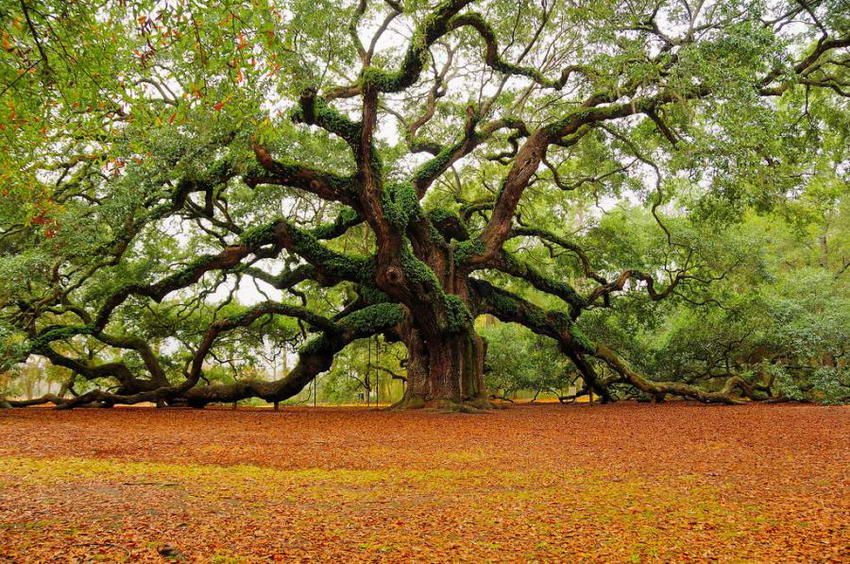
Think about a tiny oak tree seed that will one day grow into a giant oak tree. The potential for a giant oak tree is always inside the small seed, but the seed hasn’t yet grown up into what it will be. Do we hate the seed for not yet being an oak tree? Do we beat it up? Do we say “why aren’t you a giant oak tree yet??” Of course not.

For the tiny seed to become a giant oak tree, time is always involved- plus water and soil and care. That’s the way it is and the way it has to be. There is no rushing it. There is only caring for it. All we can do is love and accept the seed for being what it is and let time, nurturing and growth take their course.

You can still accept yourself and know that you’re a small seed growing into a giant oak tree.

At the same time that you love the small seed that you are, give yourself the nurturing energy, patience, and love needed to grow into the giant oak tree that’s been living inside you the whole time. Your best self is already there!


historic-angel-oak-tree

The Paradox of Self-Acceptance

Remember last week when I wrote about “Radical Self-Acceptance“? Yeah. Well. That’s really hard. I mean, duh. I knew that. But besides being hard, something always bothers me about this concept of 100% self-acceptance.  How do we completely accept who we are, but also self-improve? This week, I asked my therapist this question. I asked him how to reconcile these two opposing ideas. He said that he gets that question a lot, which immediately made me feel better because clearly the answer (if there is one) is not obvious. Anyhow, I got kind of lost in his answer, but basically he said something about harnessing the energy of self-acceptance and “playing around with it.” Typing that now I realize it sounds kind of ridiculous, but in the moment it made sense. Or, some kind of sense. I think what he meant was that accepting ourselves give us the freedom to change things up and take risks.

Do you have any idea how to reconcile these ideas? I’m still working on formulating my own opinion, so I have nothing concrete to share at the moment.

Meditation has made me ponder these questions a lot more lately. A few folks have asked me where to begin with a meditation practice, and I’ve recommended this amazing app called Headspace. It’s free to start, and there’s a ten day free trial with 10-minute practices everyday. There are also neat little videos along the way that clarify complex concepts. The man who leads the meditations has an incredibly soothing, Australian accent and I believe he used to be the voice behind an app called Buddify, which I loved a few years back. It’s $12.95 a month after your free trial, but in my mind, it’s a small price to pay for solid, guided meditations.

To happy pondering and self-acceptance!

Self-acceptance


Have You Lived Alone?

There seems to be this idea that if you’re in you’re in your 30s and can afford it, it’s time to say goodbye to roommates and live alone. It’s like there’s a certain period of time for roommates and then it ends. Obviously, this is different in major, expensive cities like NYC (where I think the cheapest studio in a safe neighborhood would begin around $1200 – and that’s a very low estimate. More likely it’s $1300 now.)

A recent NY Mag article, Does Living Alone Drive You Mad? inspired this post today. The article is mostly about older people who live alone, and the author zigs and zags across different ideas, types of people living alone, and varying circumstances. Deep down, the writer seems terrified of living alone for a long period of time, which is understandable as she was married for over 20 years and now has a live-in partner. But it bothered me that the article had a somewhat negative slant.

I lived alone for nearly three years. I loved it! I loved my space, decorating however I liked, coming home to quiet (heaven for an introvert), cooking whatever I pleased, and on and on. But, I guess I assumed, deep down, that it would be temporary. I didn’t know that for sure of course, but I knew that my intention was to meet someone and get partnered up one day. Perhaps that changed my idea then, of what living alone was really like?

I think what the author of the article neglected to talk about was that living alone (if done correctly) forces you to engage with the world outside your door in a more unique, meaningful and appreciative way that living with other people. When I lived alone, I treasured going outside and made a much bigger effort to see friends, go to activities and even just take small walks to the coffee shop.

Unknown

Imagine – this is all yours to decorate as you choose. Living alone can be like getting to fulfill all your pinterest board fantasies and needing no feedback from anyone else

Radical Self-Acceptance

Do you mentally beat yourself up? Maybe you tell yourself you’re not doing enough, not working enough, not being the best you that you can be. I do all of that. A lot. For a long time, I thought the only way to silence this voice in my head was to simply do more. Work harder, write more, exercise more, eat more vegetables, meditate more, and on and on…

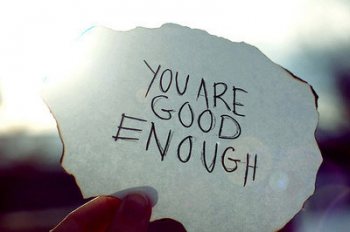
But in the past year, I’ve been trying to work on the idea that everything I am right now is enough. Everything I need to be I already am.

I think the thirties is the decade where we do more of this work than ever before – this work of self-acceptance. You realize that you have to embrace and accept your own imperfections. Those negative voices that tell you, “You’re lazy! Be more productive!” and “You need to do more” and all of those voices, don’t serve you at all. You have to be kind to yourself. I wish I knew exactly how to do it, and sadly I really have no idea. But I do know that it begins with loving all the parts of yourself – the lazy parts, the sad parts, the goofy parts, all of them.

“Clearly recognizing what is happening inside us, and regarding what we see with an open, kind and loving heart, is what I call Radical Acceptance. If we are holding back from any part of our experience, if our heart shuts out any part of who we are and what we feel, we are fueling the fears and feelings of separation that sustain the trance of unworthiness. Radical Acceptance directly dismantles the very foundations of this trance.”
― Tara Brach, Radical Acceptance: Embracing Your Life With the Heart of a Buddha