Too Old for Graduate School?

When I enrolled at UCLA in Fall 2013 at thirty-two years old, I wasn’t sure how old the majority of my peers would be. Would I be the ‘older one’ or a ‘younger one’? Turns out, I’m on the older side, as most of my classmates are in their 20s. But I’ve been assured that classes prior to mine (class of 2015) had an older median age.

I’ve had friends tell me, “I’m too old to go to graduate school now,” thinking their ship has sailed. But it’s not true – you’re never too old for graduate school. And, according to information collected from the 2000 National Postsecondary Student Aid Survey, the average graduate student is 33 years old. Not only that, but 20% of all graduate students are over the age of 40.

You may worry about the perceived ‘stigma’ of being an older graduate student. But in my mind, yes, you may stand out if you’re an older student but standing out is good. Really. People are curious about you and your background, and many times you’re perceived as being courageous for continuing to go after your goals. One of the most talented recent graduates in my program was a grandmother in her 60s, and she was awesome. She won tons of awards for her writing and one of her TV pilots was actually produced.

When you go to graduate school later in life, you have a better idea of where you’re aiming to go. You don’t get stuck in “academic inertia” as one college professors said when he warned me against applying to school too soon. You also appreciate the sweetness of graduate school life a lot more than would if you were only a few years out of college (That is, if you’re not simultaneously working a full-time job, which is a beast.)

Also, you can benefit form the Lifetime Learning Tax Credit, which in 2014-2015 was about $2,000 per year. However, there are income restrictions and only one member of married couple can benefit from this credit at a time. You can read more about it here.

Education, at any age, is never a waste.

An Egg Freezing Horror Story

If you’re a female in your thirties without children who wants children, you’ve probably at least heard about egg freezing. Maybe you’ve even considered it. I never really dug into researching it, mainly because I can’t afford it (The procedure usually starts at around $10,000 plus additional yearly fees for storage). So, since I didn’t research it, I kind of assumed it was an easy, breezy procedure. An in-and-out sort of thing. A very expensive afternoon hospital visit.

But after reading this scary article by Vicki Rox in VICE online, I Froze My Eggs, Ended Up in the ER, and Almost Lost an Ovary, I discovered that it’s actually a much more complex process which involves amping up your hormones levels weeks before you get the procedure so you’ll have as many eggs as possible. Now, the point of the article is not about how involved the process is, but rather the abnormal side effects she experienced (Ovarian torsions). But regardless, the author got me thinking about what the actual procedure is like, something I had never considered.

It seems a lot more ‘real’ than the ‘theoretical’ egg freezing I had imagined. I’ve never been a fan of playing with hormone levels in my body, mainly because I have intense PMS mood swings and don’t want to mess with that any more than I have to.

It’s worth a read to gain a fresh, honest perspective on what actually happens during an egg freezing procedure.

How Did You Find Your Career Path?

Did you find your career or did your career find you? It’s an interesting question because I think more people than you would expect had their job “find them.”  In this economy, many of us take jobs because they are decent jobs that pay a fair wage in a field we’re mildly interested in. For instance, a lot of my film school friends ended up working in advertising, because of the abundance of jobs tangentially related to film. One friend ended up working at a commercial real estate company because she was a temp there after college and ended up loving it.  Another friend who was a writing major at my college ended up working at a perfume company and now she’s the director of product innovation for a major beauty brand.

While we may be working in a particular industry now, it doesn’t mean we will be there forever. The average American has 7 careers over the course of his/her lifetime, according to the Bureau of Labor Statistics.

“The decisions you make about your work life are especially important, since most people spend more of their waking lives working than doing anything else. Your choices will affect, not only yourself and those closest to you, but in some way the whole world.”
—Laurence G. Boldt

How did you land in your current career? Do any of the below apply to your situation?

  • Lifelong childhood dream to work in a particular job
  • Personality test (Myers-Briggs) that indicated you fit a certain career path
  • Family connection to a company, job or industry
  • Strictly a monetary decision
  • A lifestyle decision

We’d love to know how you found yourself wherever you are now career-wise.

Email us at omgimthirty@gmail.com or reply below. We’ll be sharing some answers on the blog soon. Can’t wait to hear from you!

Thought Exercise: What Does “Making it” or “Success” Mean to You?

Today my friend texted me saying she was afraid she didn’t feel like she was “making it” in LA. She elaborated to say that she didn’t even know what it would mean to “make it.” When I thought about her text, I realized I feel similarly. What would “making it” truly mean to me?

I mean, I guess I do have a general idea. I’m pursuing screenwriting and TV writing and I think for me success would mean either A) a screenplay spec sale, B) A manager or agent or C) getting staffed on a TV show. But since the industry is so fickle and it’s seemingly easy to be a “one-hit wonder,” perhaps I should broaden my perspective on “making it.”

Also, all of my metrics for success are objective – as in, other people can easily identify them as markers of success. Should I also be looking deeper in subjective metrics – such as, “I constantly improve as a writer” or “fulfillment from my writing”? It’s probably healthy to have a mix of objective and subjective metrics for your success.

So, thought exercise for you. Put 3 minutes on your iPhone timer and really visualize what “making it” would mean for you, in whatever career you’re in. It might be helpful to put a timeline in there too.

A New Way to Look at ‘Time Management’

According to Wikipedia, Time Management is “The act or process of planning and exercising conscious control over the amount of time spent on specific activities, especially to increase effectiveness, efficiency or productivity.” But that seems too simple an explanation. It doesn’t seem to take into account when our emotional engagement and motivation is highest for certain projects.

A few months ago, I heard the term “energy management” and now, I greatly prefer this term when it comes to discussing productivity. Maybe this is because I’m an introvert, and I find that I have a limited amount of social energy reserves that I can expend each day. I also know that I have a few solid hours of great writing energy every day, and certain factors can drastically after that energy. For instance, if I schedule a hectic day of work, classes and socializing, even I get home at 6pm, it’s impossible for me to write at night, even though I technically have the “time.” I can’t do the writing effectively because my energy resources have been drained.

I do most of my best writing in the morning because that is when my energy/motivation leaks are at their peak (after coffee, of course). It’s also because I don’t have any pent up stimuli from the day weighing down on me. I come to the page (or the cursor rather) with a fresh mindset. Personally, I know that if I have a big project coming up, it’s best for me to chunk it out over several mornings.

This is a fascinating deep-dive article in the Harvard Business Review by Tony Schwartz and Catherine McCarthy about this subject that’s worth a read: Manage Your Energy, Not Your Time. I think this is one of the best pieces of advice in the article (do your most important work early in the day).

Another way to mobilize mental energy is to focus systematically on activities that have the most long-term leverage. Unless people intentionally schedule time for more challenging work, they tend not to get to it at all or rush through it at the last minute. Perhaps the most effective focus ritual the executives we work with have adopted is to identify each night the most important challenge for the next day and make it their very first priority when they arrive in the morning. Jean Luc Duquesne, a vice president for Sony Europe in Paris, used to answer his e-mail as soon as he got to the office, just as many people do. He now tries to concentrate the first hour of every day on the most important topic. He finds that he often emerges at 10 am feeling as if he’s already had a productive day.

How can we take better control of our energy? Well, we can start by identifying when our energy is at its’ peak and utilizing that time for our most important life goals. Also, we can be very cognizant of what activities/people drain us energetically and emotionally.

A great way to start is to make a list of times in your average week when you feel particularly low energy. What energy depleting activities do you have in your life? Are they unhealthy addictions, eating poorly, seeing ‘toxic’ people who drain your spirit?  What can you eliminate from your life?

“Having It All” – The Secret to Work/Life Balance

There was a big uproar this week after this New York Times article was published, How Some Men Fake An 80 Hour Workweek, and Why It Matters. It’s a fascinating look into how men and women with high-powered, demanding jobs manage to also make time for family and still get promotions and raises. The article cited a study at a top tier collar consulting firm that showed that many of the professionals claiming to work 80-90 hours a week weren’t actually working that much, and also highlighted that many of these “fakers” were men.

The article dives deeper and talks about how many of these high-powered women would ask for maternity leave or flexible schedules to spend more time with their children, BUT by asking for this time, they were ‘punished’ come their performance reviews. They often didn’t receive promotions or raises as readily as men/women who claimed to work the 80-90 hour weeks.

To me, the most fascinating part of the article is that if you don’t explicitly ask for a flexible schedule and simply keep up the appearance of working a ridiculous amount of hours, you are rewarded. The author, Neil Irwin, explains the difference between those who ask for more flexibility at work and those who don’t:

A second finding is that women, particularly those with young children, were much more likely to request greater flexibility through more formal means, such as returning from maternity leave with an explicitly reduced schedule. Men who requested a paternity leave seemed to be punished come review time, and so may have felt more need to take time to spend with their families through those unofficial methods.

The result of this is easy to see: Those specifically requesting a lighter workload, who were disproportionately women, suffered in their performance reviews; those who took a lighter workload more discreetly didn’t suffer. The maxim of “ask forgiveness, not permission” seemed to apply.

Basically, the key takeaway is that you shouldn’t call attention to yourself if you’re going to ask for time off or a flexible schedule. Having worked at a few major corporations myself, I definitely believe there’s a lot of truth to this. Unwavering devotion to your job and the perception that you put your job above all else in your life seems to go a long way towards making you successful.

What do you think? Would you rather ask your boss for a flexible schedule/lighter work load or “keep up appearances” of maintaining your same pace/productivity?

Portrait of a Thirtysomething – Jamie Wiley

We’re thrilled to bring you the third interview in our series, “Portrait of a Thirtysomething.” This time we were lucky enough to get the fabulous Jamie Wiley, of the blog Sincerely, Miss Design, to agree to be interviewed. Jamie’s got an inspiring story that reminds us that you can change the course of your life at any point and that’s it’s never too late for a new path. I also loved what she had to say about toxic relationships…Read on!

Name/Age/Location:  Jamie Wiley, 32, Allentown Pennsylvania

Occupation:  Real Estate Appraisal Coordinator (aka Glorified Secretary) and full time Graphic Design student

wiley_jamie_headshot (1)

What’s the accomplishment you’re most proud of in your 30s so far?

By the time I was 31 I came to the realization that the things I wanted career wise were not just going to fall into my lap. When I graduated college 13 years ago I took a job that I had just planned to work at for a short time to get my bearings and go back to college in a year or two. I just kept pushing returning to school off and there I was 13 years later still working at the same job feeling stagnant. Finally I took control of my life and enrolled in college full time. It’s been incredibly difficult juggling both a career and school work, but so far I’ve been able to maintain a 4.0.

What do you NOT miss about your 20s?

I do not miss the insecurities and uncertainties of that time in my life. Even though you are physically “grown up” in your 20’s, it takes a little while longer for you to mentally catch up. During my 20’s I was still learning what being an adult actually meant. Rather than budgeting my money out between pay weeks I’d spend my whole check the same day I got it. I was so strapped for cash that I’d hunt down every loose coin to take to the Coin-star machine to get cash. Of course the irresponsible spending lead to massive credit card debt that took years to bail myself out of.

Looking back, what shouldn’t you haven’t been afraid of in your 20s?

I should not have been afraid to let go of toxic relationships. I always felt obligated to maintain relationships with family members and friends regardless of the fact that they were dragging me down. I’ve learned that sometimes it is better to part ways with people to maintain your own sanity.

I also should not have been so afraid to stand up for myself and my beliefs. I have always been a passive aggressive people pleaser which basically made me a doormat.

Any surprises about what your 30s are like?

Yes, a few things. As I get older I gain more self confidence and acceptance of myself as I am. I no longer take to heart negative things people may say or think of me. In turn I’ve learned to be less judgmental of others.

What do you find most challenging about this decade?

In your 30’s you have more of a sense of what direction your life is going to go in. So, I think that at this point everyone’s lives branch off into different directions. Friends move, change careers, start families, etc. All of our priorities suddenly change and it takes a great deal of effort to stay in contact with one another.

Also, learning to listen to my body. I can no longer live on junk food and soda. If I do not eat proper meals or drink enough water I feel terrible. I’ve made it a habit to stretch and foam roll every night before bed to maintain flexibility.

What are you most looking forward to? Be it tonight, next month or ten years from now!

I’m looking forward to graduating from college and any great opportunities the future holds for me!

Thanks so much, Jamie! We loved reading your interview. 

Check out her website, Sincerely, Miss Design for more about Jamie.

Do You Know About Dunbar’s Number?

I guess friendship has been on my mind lately, considering this is my third consecutive post about friendship. Perhaps it’s the realization that I still feel like an outsider in my new city after a year and a half.

A few years ago, I remember being fascinated by a concept called “Dunbar’s Number.” According to Robin Dunbar, a British Anthropologist, the average human brain can only effectively maintain a social relationship with approximately 150 people at a time. Basically, our brains just don’t have the cognitive capabilities to handle remembering all the details of more than 150 people at one time. According to research, this is evolutionary and has been true since the dawn of man. In hunter-gatherer societies, the average community was about 150 people.

Now this doesn’t mean these people are your actual ‘friends,’ they are simply people in your social circle. If you would stop to say hello to someone on the street, they probably count in your 150.

But what’s a bit scary, at least for me, is that a lot of my closest “150” are scattered around the country. They are not all in my community like they probably were for  those in hunter-gatherer societies. I don’t get the benefits or a reassuring hug or an arm squeeze. So essentially, the benefits of my ‘community’ are diffuse and not as concentrated as they could be.

What does this mean for us, as most of us become increasingly mobile in our lives? Are most of your “150” located near you?

What’s Your Skincare Routine?

Now that you’re in your 30s, has your skincare routine changed at all from your younger years? Do you take better care of the LARGEST ORGAN IN YOUR BODY now that you’re older? Sorry for the caps there, but it boggles my mind that our skin is indeed the largest organ in our bodies.

I certainly have changed my routine. Well, now I actually have a routine whereas in my twenties it was wash and go, with a little Clean and Clear acne cream when needed. I’m in preservation mode these days. I want to keep the wrinkles at bay and keep my youthful glow (I’ve still got it, right? Right?!!).

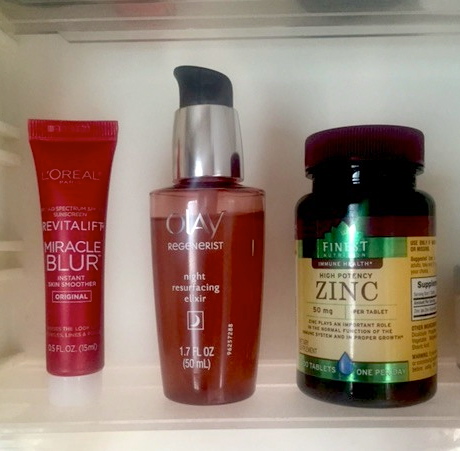
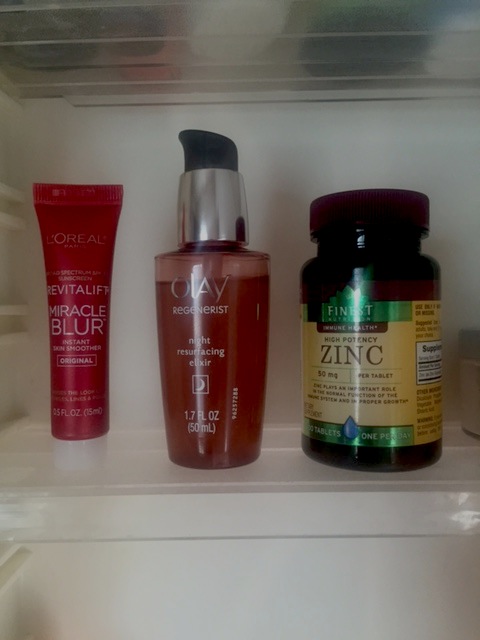
So, here are a few of my favorite products in my bathroom cabinet.

IMG_0571
Starting from the right hand side, I love L’Oréal’s Revitalift Miracle Blur – it’s a primer that smoothes out pores, wrinkles and any other imperfections you may have. You can wear it under makeup or in lieu of makeup. The best part is that it’s seriously like velvet on your skin. It’s very similar to Benefit’s POREfessional, but a bit cheaper, so Miracle Blur is what I’m using now.

In the middle, is Olay’s Regenerist Night Resurfacing Elixir. The name of the product basically says it all, but it’s a exfoliating treatment with glycolic acid. My skin feels clearer and more glowy than normal when I use this consistently before bedtime.

Then, there’s the Zinc tablets. Not only does zinc possibly boost your immune system, it helps make your skin look dewy. If you take zinc for two days straight, you’ll definitely notice a certain glow. I only take zinc tablets when I’m feeling saucy because they tend to give me an upset stomach. Maybe it’s because my zinc tablets are high-potency.

And last but certainly not least. I’m loving the Face Yoga Method. I have a very expressive forehead, which is awesome (I guess? People know how umm…emotional I am.), but I have forehead wrinkles already and it drives me bonkers! A few months ago I researched all-natural ways to reduce your forehead wrinkles and I found this amazing website: Face Yoga Method. Okay, yes, the whole thing may seem a bit kooky, BUT, I can honestly say I’ve seen results. You may feel a little silly doing the exercises, but they work.

These are my tips and tricks. Got any to share?

Staying Friends in Your 30s

How do you maintain your friendships as life gets busier and busier in your 30s? Four hour boozy dinners and impromptu afternoons of lunch and wandering the city become near impossible when you’ve got work to finish, spouses to see and kids to take care of. While I don’t have kids yet, I definitely find myself strapped for time and not feeling as carefree about my time as I did in my 20s.

This article in NY Mag, The Secret to Staying Friends in Your 30s, was fascinating and awesome because the author, Ada Clahoun, basically makes the case for what she calls, “disjointed, casual and improvised” friendship. What she means by this is, instead of having long hangouts that are hard to schedule, have snippets of in-person friend bonding time whenever you can. In my own circle, I can point to the example of one of my friends who enjoys “errand running” with her other friend whenever he’s in town. When they met up a few days after Christmas this past year, they both went on a gift returning expedition. I love that! There’s a deep comfort in a friendship when you’re able to do errands together.

I love this part of the article:

Friendships these days require both recklessness and ingenuity — the willingness to try hard, but also to settle for scraps. So you see friends when and where you can: say, at a coffee shop around the corner from a drop-off birthday party while working side by side on laptops. “I only have friends who will go to CVS with me,” my best friend, Tara, once announced while we were making our way through Chelsea. I had picked her up at Penn Station (she lives in D.C.) and I was walking her to a meeting. We covered a lot of emotional territory as we marched downtown carrying heavy bags. “How much time do we have?” she will ask most days when we get on the phone. “Six blocks,” I will say. “Okay,” she’ll say. “Go.”

The way Tara and I have stayed close for something like 15 years is that long ago we lowered the bar, accepting that so-called quality time is for other people and that it is our lot instead to tell each other stories one bit of dialogue at a time in ten short phone calls spread out over a week.

When I first started reading this article, I thought “Eh, but it’s not the same as a three hour dinner!” but by the time I finished reading the article, I had changed my tune. I’d rather see my friends more frequently and become more a part of the fabric of their lives than only seeing them the rare times they both have 3-4 hours consecutively to spare.

Not only is the frequency nice, but there’s something very intimate about picking up dry cleaning or going grocery shopping with a friend. I wish I could do more of that, as corny as it sounds. I recently went with my friend to pick up her son at daycare just so we’d get the brief drive to the daycare place together to talk, and it was so wonderful. Aside from our chat, I got to see a whole new side to  her life that I really appreciated.

Here’s to weaving our friends into the fabric of our everyday lives!

Do You Have Home-Cooked Dinners with Friends?

I wish I did! It’s a rare occurrence when I have a home cooked meal with friends. When I do have dinner with my friends, it’s normally at a restaurant. The main home-cooked meals I have outside my home are in either with my fiancé’s family or with one of my parents. Back in NY, we have a few foodie friends and they invited us over. When we did have home-cooked meals with them, it was a treat.

meatballs-with-pasta-mista

And so when I read about Sarah Grey’s “Friday Night Meatballs” tradition, I fell in love. Sarah and her husband were feeling disconnected from their community and social circle, and finding themselves spending more time on the couch with Netflix than they would have liked. On her 33rd birthday, she went on her Facebook wall and wrote:

“So here’s what Joe and I have decided to do, in my 33rd year, to make our lives happier: we are instituting a new tradition we call Friday Night Meatballs. Starting next Friday, we’re cooking up a pot of spaghetti and meatballs every Friday night and sitting down at the dining room table as a family—along with anyone else who’d like to join us. Friends, neighbors, relatives, clients, Facebook friends who’d like to hang out in real life, travelers passing through: you are welcome at our table. We’ll just ask folks to let us know by Thursday night so we know how many meatballs to make. You can bring something, but you don’t have to. Kids, vegetarians, gluten-free types, etc. will all be taken care of. The house will be messy. There might be card and/or board games. There might be good Scotch. You might be asked to read picture books. You might make new friends. We’ll just have to find out. This is our little attempt to spend more time with our village. You’re invited.”

She was overwhelmed with likes and visitors, and eighteen months later, she’s created a personal family tradition. But she’s also starting a movement of sorts. Check out her website, FridayNightMeatballs.com.

Once I’m more settled and have a bigger place, I’d love to try something like this out. Would you ever host your own regular dinner? Or do you already?

Baby, Career or Both?

The “Ask Polly” column on NY Mag.com is one of my (and Laura’s) favorite places to find advice. The writer behind the beautiful, insightful words of “Ask Polly” is Heather Havrilesky. She writes truthfully and warmly and she reminds me a bit of Cheryl Strayed (Author of Tiny, Beautiful Things and Wild). The most recent “Ask Polly” column was especially resonant for me as a 33 year old woman in a relationship who feels behind in her career yet also feels the pressure to have children in the next few years.

The letter (email?) writer was stuck in a dilemma. She wants children but she also wants a fulfilling career (and the job she’s in is not satisfying, so she wants to start over and find a job that satisfies her). She feels it impossible to do both. I can relate! I desperately want to find success as a screenwriter (or some semblance of success) before I have kids. But time keeps ticking away and  while my writing is getting better, the paychecks and job offers aren’t rolling in.

Heather ‘s (Polly’s!) advice was beautiful, per always. She advocated for the life of “All.” The life of everything even though it will be damn challenging.

This was my favorite part of her reply:

Bottom line: I was so fearful. But throwing my energy into both my kids and my career turned out so much better than I ever thought it could. And I became much more focused and ambitious after I had kids. I valued my time more. I used my time more wisely. All of the time I used to spend questioning myself and worrying about the big picture is now spent doing dishes and folding little dresses. A lot of the working mothers I know feel the same way.

…Imagine a full life and be true to that vision. Defend it. And put fear aside. You have one person with a steady job in the house. Don’t panic.

You can have it all. You may have to adjust the particulars of “IT” but trust me, “ALL” is what you want. It’s exhausting and it’s a balancing act and it’s way too much for anyone to handle, ever. That’s also what’s so gratifying about it.

This was a refreshing advice column to read, because I think it addresses the “perfectionist” trap we can get into as women. That we must excel in our careers and excel as mothers and homemakers living from Instagram worthy moment to Instagram worthy moment. So we end up feeling the need to choose one or the other.

But it seems the best option is this: if you want it all, you should aim for it all,  and not pre-emptively  cut yourself off from options. And yes, your life of “ALL” will probably be imperfect and messy.

Spinster: The Pre-Having-Read-This Book “Review”

True Confession: I find great pleasure in watching the Today Show on NBC in the morning. Watching Al, Matt, Tamron, and Savannah chat and deliver the ‘news ‘ is on my list of personal self-soothing remedies, a list which also includes wine drinking while reading Real Simple magazine and taking long baths while listening to the sound of the tub filling up.

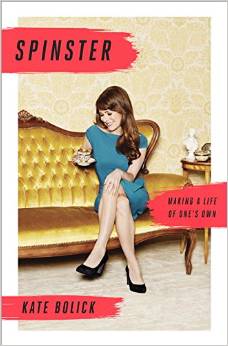
So, this morning, I am watching the Today Show, trying to get my butt out the door to make it to class on time, and I see a very pretty woman in her 30s talking about her new book, Spinster. The Today Show has hooked me; I had to sit down and listen to her interview. It turns out this woman is the  39 year old author of the book, Kate Bolick. (Just a note: did I have to mention she’s very pretty? No. But it definitely helps her argument, as she’s a single, not married, but has a boyfriend, beauty in her late 30s which we don’t often seen portrayed.)

The book explores the question “Can I spend my life alone and be happy?” from a woman’s perspective. Bolick got a reported high six-figure deal for the book. Aside from the fact that I’m a teeny weensy bit jealous and also have a bit of a platonic girl crush on her…I’m desperately excited to read this book. Mainly because I’m so sick of this idea that women can’t have fully, complete and satisfied lives on their own.

images

Image by Willy Somma

Bolick’s book explores the lives of five female writers in the past century who’ve actively chosen to live their lives on their own terms and not marry. As I haven’t read it, I can’t really give a 100% recommendation but my hunch is, it’s going to be a fascinating read, if for no other reason than this line about her eating a Big Mac on her sidewalk after a drunken night out:

“I chomped and strolled as slowly as I could, prolonging the delectable realization that waiting for me at home was nothing but an empty bed into which I’d crawl naked and drunk and stinking of fast food, disgusting nobody but myself.”

Unknown

Can’t wait to read this.

A Base Salary of $70,000 a Year for Every Employee?

Have you heard about how Gravity Payments, a start-up company based in Seattle, is implementing a plan to give every employee a base salary of at least $70,000 a year? I just read about it today in this article, One Company’s New Minimum Wage: $70,000 a Year, and it made my heart do a little dance of joy. It’s a pretty incredible leap from the “Fight for 15” movement which is pushing for minimum wage bumps to $15 an hour at fast food companies.

Citing happiness research as his impetus for this new salary minimum, Dan Price, CEO of Gravity Payments, said that the idea came to him after reading a study that said that for people who make less than $70,000 a year, extra money makes a huge difference in their lives.

Patricia Cohen, the author of the article, succinctly states the research here:

“The happiness research behind Mr. Price’s announcement on Monday came from Angus Deaton and Daniel Kahneman, a Nobel Prize-winning psychologist. They found that what they called emotional well-being — defined as “the emotional quality of an individual’s everyday experience, the frequency and intensity of experiences of joy, stress, sadness, anger, and affection that make one’s life pleasant or unpleasant” — rises with income, but only to a point. And that point turns out to be about $75,000 a year.”

So I guess we should all aim to make at least $75,000 a year? Easier said than done, I know. Because, if you’re like me, in a less traditional, perhaps more artistic or non-profit type job, that’s not all too easy to attain. And sometimes, if a job offer that pays that much comes your way, you may have to choose between salary or higher personal satisfaction? For me, I’ve often chosen the latter – which is why…true money confession…I’ve never made $70,000 a year. Not yet, at least. When I do make that amount, it will nice to not stress about going out to nice dinners with friends, or being able to buy nice gifts for people, or treating myself to something randomly without thinking too much about the financial consequences. Since my tastes are pretty minimal, I think I could do that on a salary of $70,000 a year.

Currently, the average salary of an employee at Gravity Payments is $48,000. So that’s a pretty sweet bump for those employees whose salaries are in the average range. One of the other reasons Dan Price instituted this change was because he felt the discrepancy between CEO/top leadership pay and regular employees salaries was absurd.

I hope the company continues to stay profitable and that the employees end up being more invested and productive in their jobs, so that perhaps one day this can be a model for other companies.

Simple Thoughts to Remember If You’re Pursuing Something Challenging

Lately I’ve been bumming out over how little progress I feel I’ve made with my writing. While I’m writing more than ever, I’m not getting the meetings or the feedback I would like. It can feel disheartening. So, I was buoyed a little reading this article about Louie CK, comedian extraordinaire. He has some wise words for those of us struggling to pursue something artistic, or something just plain challenging.

Here are some encouraging quotes from his article in The Hollywood Reporter:

“I didn’t start doing really well until I was about 42 years old; I’m 47 now, so I got 42 years against five good ones. I still have a lot to draw from, and life doesn’t get easier. It’s still cold when I’m outside like it is for everybody else.”

“I definitely have huge benefits to how well I’m doing, but you do find yourself missing the climb. It’s a little like Mount Everest. When you summit, you spend about 20 minutes up there, and you do a little dance, but if the 20-minute dance was really it, would you really risk your life for the amount of work it takes to get up and down? So every time I feel like I’ve found a clearing, I try to find something else that I don’t know how to do yet. That’s just much more interesting to me.”

Remember to enjoy the journey, because that’s half the fun.

louis_ck_660Love you, Louie.

Letting Go of the “Achievement Demons”

Do you feel this gnawing need to achieve something great? Do you feel like you’re constantly striving? I have and I do. Throughout high school, I strove to get into the best college I could, make Dean’s List in college, and after college, my dreams were always huge and perhaps unrealistic, “make my own feature film,” “sell a screenplay,” “have a play reviewed in the NY Times.” Now I understand that these goals can take years comprised of steady work that builds over time. But when I was 24, I assumed I could accomplish them in a year, and when I didn’t, I felt woefully inadequate that I had “failed.”

That’s why this article by Andrew Yang, CEO of Venture for America, resonated  so much with me:  The dark side of American’s achievement culture. Yang talks about this drive to succeed, saying:

I jokingly call the hang-ups associated with a drive to achieve as “the Achievement Demons.” When I was growing up, I’d study for days trying to get good grades. When I’d get an “A,” I’d feel elation for about 30 seconds, and then a feeling of emptiness. Rinse and repeat.

Man, I can totally relate to that. His article is fascinating, and he gives some tips and tricks to avoid letting the achievement demons get you down. My favorite quote in the article is this one:

“FOMO (fear of missing out) is the enemy of valuing your own time.”

I’ve never thought about FOMO that way, but that’s exactly what it is. When your really think about it, FOMO is the biggest self-insult there is. You’re basically devaluing and insulting whatever you’re doing at that moment. It’s kind of like when you have a guest at a party who leaves early to go to another party that will seemingly be more fun. But  in this case, you’re the guest at your own party who wants to leave!

Anyhow, I highly recommend reading this article if you ever feel like you’re constantly striving.