If It’s Good Enough for Kate Middleton…

Then it’s good enough for me. Err…I guess, right?

I recently came across this old post on the The Telegraph’s news site, Dear Kate Middleton, the best is yet to come. The article is basically a compilation of quotes from notable women in the UK giving Kate unsolicited advice on turning 30. The author mentioned Kate entering her “fourth” decade of living, which stopped me in my tracks, because I keep thinking of this period of my life as my third decade of living. But when you turn thirty, you’re actually beginning your FOURTH decade of living. Have I lost brain cells from too much Merlot, or is this just a common misconception?

Regardless, there were some very nice gems of advice I thought I’d share here:

“Don’t spoil your life by fretting about age while you’re still young. Women in their thirties sometimes panic because they feel it will be a disaster if they don’t get everything – the right partner, children, a successful career. Some women do have all those things, many don’t. There are happy and unhappy people in both groups.” –Wendy Cope, poet

“Best of all, it gets easier to be yourself when you turn 30 – you develop the confidence you longed for but never had in your teens and twenties. You get better at your job, more experienced, more skilful. And forget all those gloom-mongers – doctors among them – who say your brain and body start to deteriorate. I married and had my first baby at 37, then had three more. I launched ChildLine at 46, and hosted a talk show at 62. Go for it, Kate, the best is yet to come.” – Esther Rantzen, Broadcaster and Campaigner

Read more in the article linked above and enjoy these bits of motivational goodness as you head into your weekend!

Giving Advice In Your Thirties

Hope you’ve all had a restful Boxing day! Boxing Day doesn’t exist in the US, but is officially a day after Christmas bank holiday in the UK, Hong Kong, Canada, South Africa, and many other places around the world- and I know we have some awesome readers from these places who know all about this 🙂 Random trivia- the name ‘boxing day’ comes from when servants and tradesman would get their boxed Christmas gifts from their employers and managers the day after Christmas.

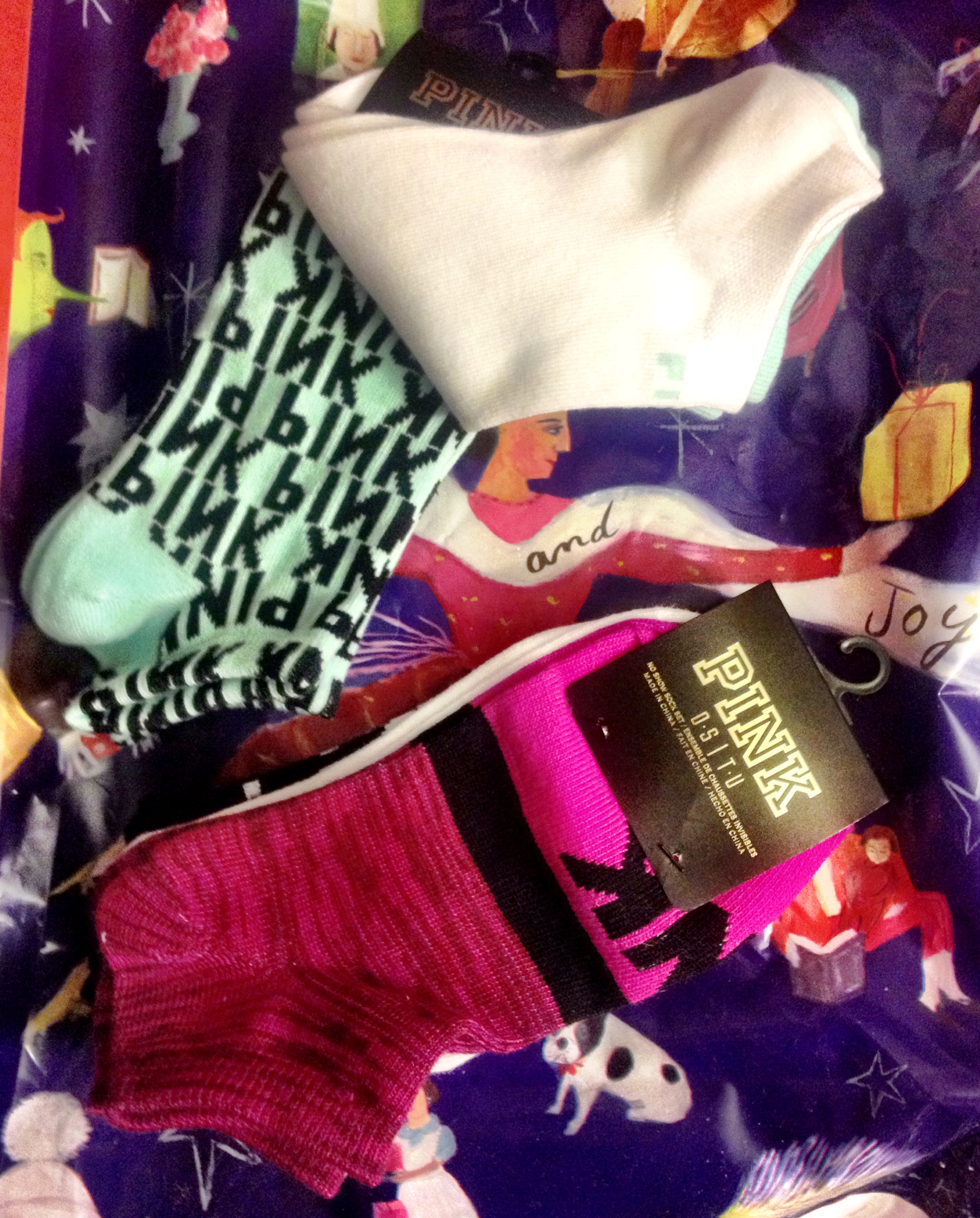
Anyway, this post started out as a short note about socks.

I was remembering when I was a child and would get upset about getting socks as a gift. Then adults would say to me: “when you’re older, you’ll appreciate getting socks!

Of course, I was positive they were wrong. But on my 30th Christmas, I received not one, but 6 pairs of socks. And I was overjoyed! I needed them! And I appreciated the pajamas I got too! And the scarf! Which I definitely could have cared less about earlier in life.

Which I guess means I’m a real adult now. 😉

image (5)

But anyway, as you may know, sometimes even though you’re officially an adult, you may not feel like an adult- especially when it comes to giving advice.

In the past, I’ve shied away from giving advice about money, even while I’ve been in the thick of paying off my student loans. I’m quite good at paying down debt (as evidenced by my major decline in student loan money owed, thank god) and I’ve spent hours and hours researching best ways to pay them down. However I’ve felt like there were people better qualified than me to give financial assistance.

And there are. But that doesn’t mean that people are going to find them. And that doesn’t mean I’m not at all qualified to give any advice- after all, I’m an adult. So I’ve tried my best to help people when they ask.

During Christmas, my younger brother Scott and my little cousin Justin were sitting together at one point, both playing on their phones and Nintendo 3DS’. My cousin (a junior in high school) suddenly started opening up about how he felt slightly pressured into choosing a certain major and how he wasn’t sure where he really wanted to go to college.

My brother, who’s 26, put down his game and gave Justin some advice. First, he asked Justin a bunch of questions. He inquired where Justin really wanted to go to school and what he was actually interested in studying. Then he told Justin to follow his heart but also to research everything. He said to be conscious of the money involved (my brother also knows all about student loans), but not to base the decision solely on money. It was a sweet moment.

I have no idea if my brother’s advice will have any influence on my cousin’s decision. But it made me think about how advice in general doesn’t have to come from an expert. And it doesn’t have to come at special scheduled times. Sometimes you’ll be asked for advice during holidays or at totally random moments. Feel confident that you’re adult enough to share whatever you’ve learned so far in life. You never know how much you’ll help someone.

Being Kind To Your Friends’ Relationships

As I moved into my late 20’s/early 30s, many of my friends partnered up, settled down and/or started families.  It simply comes with the thirty-something territory. When our close friends get involved with someone, it can be tricky to navigate the new dynamics – do we like our friend’s partner? Do we feel they are the right fit for our friend? In the beginning, we may analyze the new guy or girl and his/her actions, read their texts, and basically become a sounding board for our friend. But as the friend’s relationship with their new partner deepens over time, we usually step aside on the analyzing and discussing because their relationship has reached a different stage.

Eventually though, relationships will hit rocky patches. It’s inevitable. And here’s what I want to talk about today. Too often, when we gripe to our friends and acquaintances about our relationships, they try to support us by saying things like, “Are you really happy?,” “You can do better,” or “You deserve someone who fits you 100%,” and “Don’t settle.” It’s a natural instinct, right? To help our friends by pointing our that they are Queens and deserve only the best.

Here’s the thing: I believe that while these comments can seem supportive, in many cases they may be more harmful than helpful. Clearly, if your friend is in a terrible relationship where she feels belittled, disrespected, or scared – then yes, you want to help your friend realize she’s in a bad relationship. And of course, any good relationship should be one in which you’re with someone who you love and who loves you, who respects you, who supports you, and also fulfills whatever deep need you may have for your particular loving, intimate relationship.

But, a lot of times I think we should remind our friends that relationships involve work. They are not all work, of course, but there’s a healthy amount of learning to communicate with a new person. I really believe that a lot of people give up too soon. It’s hard to find someone you click with. And at the end of the day, you’re not going to find 100% of what you want in a relationship. Show me someone that says they’ve found that, and I’ll show you someone who’s not very self-aware. I believe you should enjoy and “click” with your partner probably something like 80% of time.

I got to thinking about all of this when I read an article yesterday, and before you read the title and say “Oh no, he didn’t…” – I suggest you give it a read.  It’s titled “The Good-Enough Marriage.”

The author cites a fascinating study about happiness in marriages and the use of social media:

“In a study in the February issue of Computers and Human Behavior, the authors noted that those who didn’t use social media sites at all ‘reported being 11.4 percent happier with their marriage than heavy social media users. And heavy social media users were 32 percent more likely to think about leaving their spouse, compared with 16 percent for a nonuser.’ “

This is all to say that input, from social media, friends, etc. can be dangerous. It can make us doubt ourselves, doubt our feeling, experience FOMO (Fear of Missing Out) because we think we’re not in the ‘right’ relationship.

So what can you do to be kind to your friends relationship? Mark Regnerus, an associate professor of sociology at the University of Texas at Austin and the author of this article says it best here:

“Remember that when we offer comfort by belittling someone else’s spouse, we do damage to their marriage—an entity that we did not found, and one that exists independently of each. The temptation to do this is very strong (and often fed by one of the spouses). I myself am guilty. To be sure, some marriages must end—but not so many as we’ve witnessed.

Second, be gentle…We do harm when we fail to esteem others’ unions, fragile though they may be. Praise those aspects of others’ marriages that merit it. A bruised reed we ought not break…We forget that marriage is bigger than two people—two frail lovers. It is about sacrifice. It is your own project for the world.” – Mark Regnerus

Beautiful words. I’ll definitely try and be more open-minded when a friend tells me about their relationship woes. And also take advice given to me with a grain of salt.