Is Love Really Everywhere?

I’ve mentioned before that I’m newly into meditation. It’s somewhat daunting and somewhat the best thing I’ve ever discovered.

Jane and I have both been following Deepak Chopra and Oprah’s 21 day free mediation challenge, but before that, I’d discovered a podcast I love called ‘Learn to Meditate.’ It’s created by the Meditation Society of Australia, and I highly recommend downloading it (it’s free!) if you like meditation or want to try it out.

I have trouble sitting still without a guided meditation to help me, and the podcasts are amazing and extremely straightforward, if not somewhat above my normal comprehension level.

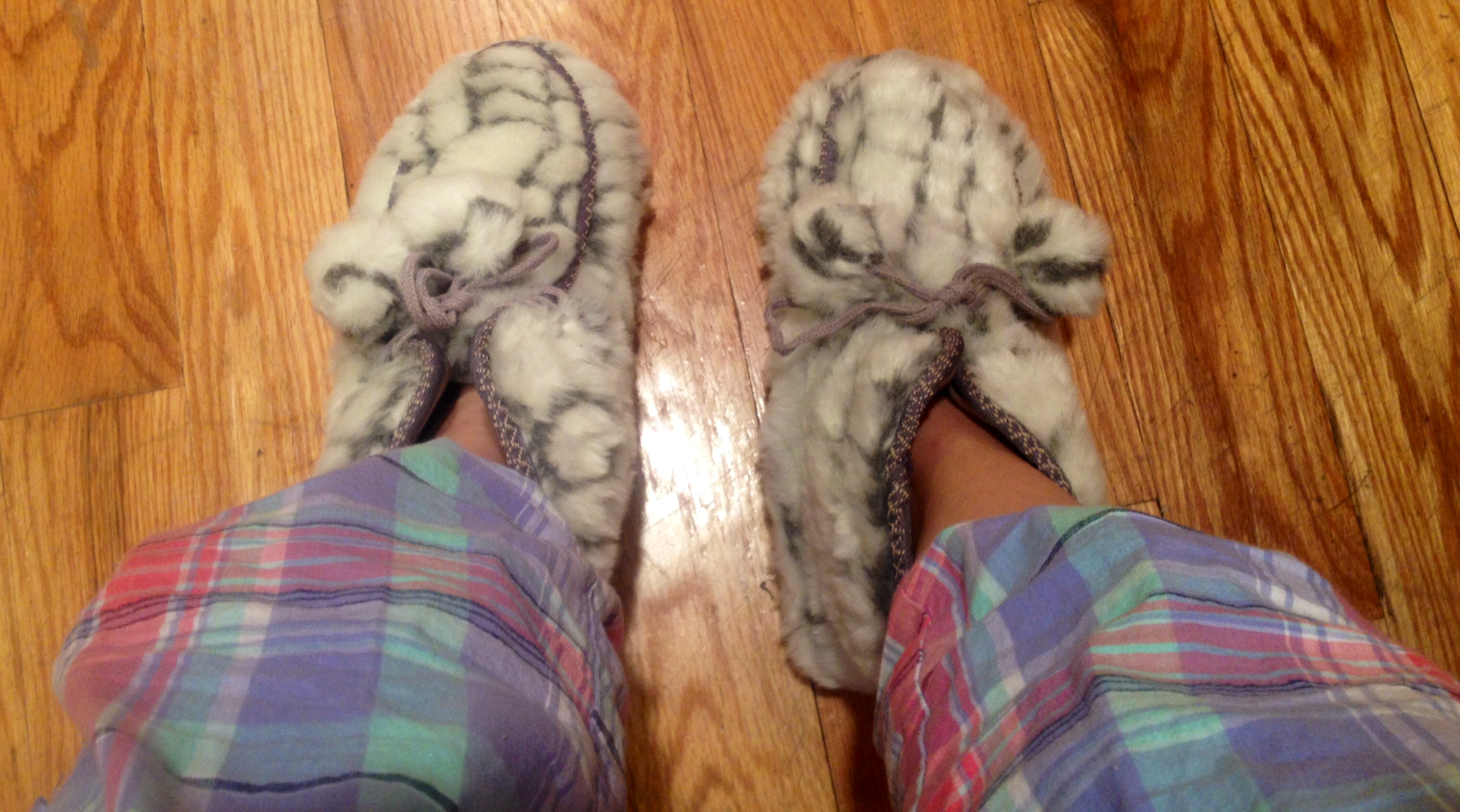
Other computer 2518

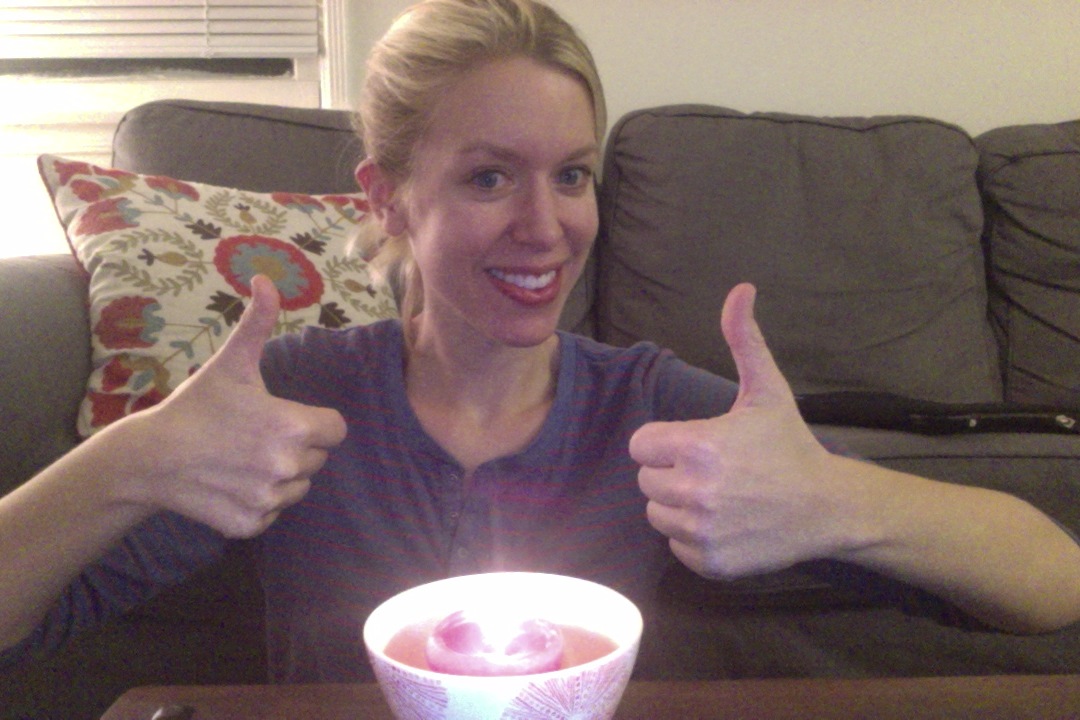
I am not actually meditating here. But I am very happy.

The first part of these meditation podcasts are always a brief overview of a topic- for example ‘desire’ or ‘fear’ or ‘letting go’ or ‘manifesting through playfulness’ or something of the sort. A speaker talks about a topic for a few minutes before the meditation starts. I love this first part almost more than I love the meditations themselves- they’re super calming and enlightening. Maybe it’s the Australian accents, but something about the opening messages put me in a calm state of mind. I usually feel the need to hear a lesson again because I really want the message to sink in.

Almost all of the meditation podcasts mention love, especially ‘unconditional love.’ I realized from the beginning and I still realize- even after listening to all 50 of the ‘Learn To Meditate’ podcasts- that I can’t exactly comprehend what unconditional love is.

I mean, I sort of get unconditional love from a dog or cat or other pet, or possibly a baby? But from a grown up human?…It’s hard to wrap my mind around that.

The podcasts recurrently talk about how love is flowing freely everywhere, and we just need to open ourselves to it. One talk mentioned that the love we give and receive from romantic relationships, friends and family is only 1% of the love that’s out there to give and receive, and 99% of love is actually everywhere else.  Yet 99% of the love most people experience in their life is from and to romantic partners, friends and family. That’s not to say that the love you get from and give to those people should be any less, but rather that there is just THAT MUCH MORE love out there. What??

How do we find this love?? Where is it? What is it? Is it divine? What is that exactly?

The podcast explained that meditation is a simple path to opening ourselves up to the love that is everywhere. But that kind of knowledge feels ungraspable…the same way that the universe expanding infinitely in all directions is ungraspable. The same way that string theory is ungraspable. If 99% of the love out there is untapped by us- love as strong as the love from and to our family, romantic partners and friends, where is this love and where does it live? Inside of us? In the sky? As a part of nature? How do we find it?

Even if I figure out the answer to any of these questions myself, I wonder if opening up to this kind of love would even be measurable, sustainable, or teachable. So I open up the floor to suggestions. Does this love baffle your mind? Do you agree that it’s out there? Have you found any of the other 99% of the love supposedly all around us? …And has it changed your life?

A ‘Braided’ Lifestyle

The other day I came across the idea of a “braided” career on Penelope Trunk’s website. Penelope is a founder of multiple start-ups including her most recent one Quistic, a site dedicated to helping people discover their next career moves. She now lives on a farm in Wisconsin with her husband and kids. She has a graduate degree in English, played professional beach volleyball, and taught herself to code. Umm…awesome. I was so impressed by her wide range of experiences and ability to not be pigeonholed by one experience.

About seven years ago, she wrote an article on her website in which she coined the term “braided career.” I so wish I had read this in 2007, when I was 24! I would have been three years out of college, and so in need of this advice.

In this article, she says unequivocally, “The most important thing in your life is the people you love, so you need to figure out how to create a work life that will accommodate that.” It’s an obvious statement, to me at least, but I think a lot of people neglect the nitty-gritty of what this actually means.

She goes on to coin the term “braided career,” writing:

“The best way to make sure you will have time and money to create the life you want is to have what I am going to start calling a braided career. Intertwine the needs of the people you love, with the work you are doing, and the work you are planning to do, when it’s time for a switch.” – Penelope Trunk, Letter to new graduates. And how about a braided career?

Can I just tell you how much I love this term? It’s such a perfect descriptor of this new career landscape many of us are navigating.

I get the impression that this post was tailored to millennials having quarter-life crises, BUT it’s absolutely applicable to anyone at any stage in their career. A key takeaway of this article is that a braided lifestyle is almost always going to be in transition because our needs and the needs of our loved ones are always in transition. It means we can’t be afraid to ditch a 70-hour a week job when it’s not aligning with our values for, let’s say, time with friends and family. We need to not let fear guide our decisions, and instead put our values first.

“It feels like you’re all over the place, it feels like you have no plan, it feels like you’re always about to spend your last cent. But you are learning to create stability through transition. You can become a master of transition and you are achieve the thing you want most: A work life that supports the values you hold dear – time, family, friends, community, passion, and fun.”

For me, the key takeaway is that we must learn to be okay with a constantly evolving career.  Like she says, stability through transition.

How To Be a Third Wheel

The other day I went to a Barbecue in upstate New York. It was hosted by a close friend of mine and her boyfriend. When I got there, my friend said to me apologetically, “you’re going to meet a lot of people you don’t know.” What she didn’t mention was “you’re going to meet a lot of people you don’t know…and all of their significant others who you also don’t know.”

Once I went inside, I figured out that everyone at the BBQ was either married or engaged. And I felt very, very single. And very much like a third wheel.

This made me want to hide.

This made me want to hide away. At home. Somewhere inside my hoodie.

I didn’t realize that married and engaged couples would become the majority once I turned thirty. When I was in my twenties and would go to parties, I seem to remember a fair mix of singles and couples present. I also remember lots of alcohol being thrown down, and lots of stumbling home at 3am…or later. Was it a different world back then? After the BBQ this month, I caught the Metronorth back to Queens at the wee hour of 7pm (!)…with a nice newlywed couple who held hands as they told me the story of how they met.

To be fair, I was half of a couple for just about the entirety of my twenties…a serial monogamist from 21 to 29. And I basically saw the world of my twenties through ‘couple-eyes’ (yes, this is a thing)…which for me then meant: half of a couple = the definition of who I am.

So I didn’t totally get the whole third wheel stigma thing.

When I was part of a couple, I actually loved hanging out with single friends. I mean, it was fun to double date, but when I had a single friend hang out with me and my boyfriend at the time, I loved it just as much. All I wanted was for my friend to feel welcome and comfortable, single or not. A third wheel has this strange solo definition- they’re an extra piece- suddenly we have… a tricycle? A whole new entity. But that entity doesn’t have to be bad. I never thought it was bad before.

Of course, I very much understand the third wheel stigma- ‘couple-alone-time’ is important (as much as regular alone-time)- and a third person tagging along uninvited to a date night walk along the beach would probably not be the best. But the key word here is ‘uninvited.’ When you’re a third person invited along with a couple, you’re not a tag-along, you’re a guest. You’re a friend.

But when I first became single again, a few months ago, I didn’t feel like a guest. No matter how much a couple tried to make me feel included, I felt like I was invading their space and time. I felt like a lonely half who needed another. A missing piece. An extra part.

It took me awhile to remember how much I enjoyed hanging with single people when I was half of a couple…how much I wanted them to NOT feel like third wheels. It took me awhile to remember that they weren’t third wheels to me then…I saw them as full people- totally complete on their own. It’s weird how hard it is to see yourself the way you see others. Why would a couple be better than a single? What does that even mean?

I didn’t end up having a bad time at the barbecue. I’ll admit, I felt sad at first…wistful for coupledom. But then I started to have fun, once I settled in. I began to ask questions. I talked to my friend…and her boyfriend. I relaxed and ate barbecue. And I started to let go of looking at myself as an extra. I listened to stories… how couples met, where they lived, what they did. I enjoyed my ride home on the Metronorth with the newlyweds, who had a great first-meeting story and were both super nice. And I stopped feeling like a third wheel. And I stopped feeling alone. I didn’t feel like half a couple. I just felt like me.


When and “If” to Course-Correct your Career

How certain are you that the career path you’re working towards is one that will make you happy? When I worked at film studios after college, the question I asked myself was: “Would I want the job my boss or VP of the department has?” For me, that answer was always no. That’s one of the ways I realized I needed to find a way to write full-time or just find something that would make me feel at least somewhat fulfilled. This basically led to my decision to go to graduate school.

But now, I find myself again unsure if what I’m working so desperately towards (writing for movies and TV) is what will make me happy. Because continuing on, I’d most likely have to live in LA for at least five more years, and I don’t love it here, in fact, at points I think it makes me downright unhappy. Also, from what I’ve seen about how television shows and movies get made, all of the requisite bullshit might drive me to an early grave, or at least to indulge in an unhealthy amount of gin and tonics.

I keep asking myself, why do I find myself so unhappy this quarter at school? What I once found incredible joy and release in (writing) brings me great anxiety now. I’ve been told it’s because I’m in a very competitive program where we’re constantly talking about writing and the industry, and that that environment is not conductive to writing.

I don’t have a definitive answer. Friends tell me to soul-search. But how does one soul search to get to the answer? Should I take a long weekend of meditation or a solo hike down the Pacific Coast Trail like Cheryl Strayed in Wild? I’m a bit of a weenie when it comes to camping, and too antsy to do a weekend of meditation. So I think for me, the answer is closest to this lovely piece of advice from the poet Rilke, who has always been a personal favorite writer of mine:

“…I would like to beg you dear Sir, as well as I can, to have patience with everything unresolved in your heart and to try to love the questions themselves as if they were locked rooms or books written in a very foreign language. Don’t search for the answers, which could not be given to you now, because you would not be able to live them. And the point is to live everything. Live the questions now. Perhaps then, someday far in the future, you will gradually, without even noticing it, live your way into the answer.”

Maybe you just have to keep going, making teeny-tiny course corrections every day. Because course-correcting allows for growth. It’s also a really important life skill to master.

So the question I leave you with is this: Are you sure where you want to go is worth it? This is an important question to ask, and if you’ve been chugging ahead towards a specific goal for a long time, you may neglect even re-evaluating this question, thinking to yourself like I did, “Of course this is what I want, I’ve wanted this for so long.”

But you’re not who you were five years ago, even last week. So maybe it’s worth another look.

Charity Fundraising Ideas in your Thirties

Tonight I’m directing a charity concert called Broadway Can that features Broadway actors singing as part of a benefit to raise money for City Harvest. I direct this concert just about every year if I’m not out of town working. In the summer, I also usually direct another charity concert called Broadway Meows to raise money for the Humane Society. I’m really happy to be a part of both of these events- they’re for two great causes, and are also really fun to work on. In fact, even if the concerts weren’t to raise money for charity, I’d still enjoy being part of them. I like the people I’m working with and also like theater.

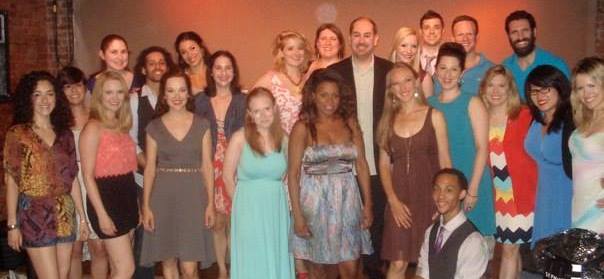
Me and the awesome cast and crew of Broadway Meows this past summer!

Me and the awesome cast and crew of Broadway Meows this past summer!

It’s great to find causes that fit your personality- things you care about. When I used to think about giving money to charity, I’d feel guilty. I’d think, ‘I’ve never served meals to the homeless on Thanksgiving…I probably should’ and ‘I probably need to make time to work in a soup kitchen one day in order to give back.’ But those thoughts just fleetingly crossed my mind and I didn’t do either of them.

For most of my life, I never really focused on charity…I guess because I felt like I didn’t know exactly where to donate, or felt like I had no money or that every spare dollar I had needed to go toward my student loan, or I didn’t know which cause I should focus on or whether charities were really putting the money to good use.

But lately, I’ve started to see causes all around me where I can easily, happily give back- and in some cases, such as directing the concerts, have already been giving back.

I have dozens of friends putting up theater all over the city. There’s always a fundraising campaign and various fundraising ideas underway for these projects. I usually try to donate what I can- supporting the arts is important to me, especially when I know the people creating the art. Also, I have lots of friends who run or walk to raise money for a cause, and I donate what I can to their fundraising campaigns. It all adds up- even small amounts.

So I don’t need to necessarily be at a soup kitchen serving meals to help others. There are so many different ways to give back that I hadn’t thought of before, even if I have no time, or no money to spare.

Here are some ideas for giving back when you have more time than money:

Some ideas for when you have more money than time, but aren’t sure what organizations to choose, or are suspicious of where your money is actually going:

  • Donate to a friend’s fundraising page for their theater or artistic project, or their charity walk or run for a cause. There are many fundraising ideas- check out their Kickstarter or Indiegogo campaigns!
  • Charity Navigator – Tracks charitable Organizations’ performance and effectiveness, so you can find the most effective charities.
  • Guidestar.org – Similar to Charity Navigator above.
  • GreatNonprofits.org – This is like the Yelp of nonprofits! Read lots of charity reviews.
  • Philanthropedia– Charity ratings by a group of experts in over 35 different fields.

I hope these lists help you help others…and I strongly believe you’ll end up helping yourself along the way!


What’s your re-charge routine?

How do you re-energize and center yourself when your emotional batteries are low? Personally, I’m a big fan of alone time spent reading novels, watching movies and TV, and drinking a glass of wine. I guess you could call that escapist re-charging and for me, that’s phase 1. For me, this helps because alone time is an essential, non-negotiable part of my life. In case you haven’t heard this before, the prime difference between introverts and extroverts is where each get their energy. Introverts get energy from being alone, while extroverts get energy from being around people.

Phase 2 re-charging is a bit more active and involves taking care of my body. So, hitting a Pilates class or the gym and eating a healthy meal.

Phase 3 recharging is after my alone, quiet quota has been filled and I can focus on the “lifters” in my life – the people that make me feel energized, motivated, and importantly, loved. So that normally means a coffee, wine, or long-distance phone call date with a close friend. Once I’ve accomplished these three phases, my battery is juiced and I’m ready to begin again.

For some reason, I love visualizing myself as containing an internal phone battery who need to ‘charge up’  from time to time. I imagine watching the green light on my human body iPhone progress further and further to the right of the screen. While we know our phones are dying because we see that lovely percentage indicator going down, how do we know that it’s time for us to plug in and charge up? It’s so easy to keep pushing and pushing and pushing…to the neglect of ourselves. Should we have warning signs for ourselves?

I have three main red flags that mean I’m need of juicing up: when I find myself being snappy with people, I know it’s time for a re-charge because I’m not normally a snappy person. Secondly, if I find that I’m starting to see things in a consistently negative light, I know it’s time for a break. And thirdly, if I just find that I’m not finding joy in things I normally enjoy, I know it’s time to settle in and let myself relax.

The funny paradox about re-charging is that it’s not about ‘vegging out’ or totally relaxing yourself into a comatose state (though sometimes that’s both nice and needed), it’s about re-connecting to yourself. Finding your ‘zone’ as it were, finding that motivated excited self.

So, here’s a little drawing of what my battery re-charging looks like. What would yours look like?

Pardon my super dorky rendering! Never said I went to art school.

FullSizeRender

Choosing the Easy Career

Whenever I get blood tests, there’s always a chance I’ll faint. Even if no one’s sticking me with a needle, I may hit the floor from even simply hearing talk of medical exams or blood vessels.

I visited a relative in the hospital last year. A doctor came up to me to explain the testing and examinations they were doing. In the middle of our conversation, I began to hear the familiar ringing in my ears, and my vision started to blur over. “Excuse me,” I said to the doctor, and walked down the hospital hallway. I stood in a corner and tried to make the dizziness stop before I fainted.

I can never be a doctor.

249009_10101217710934329_1718237375_n

I sometimes work at medical shows…but I feel fine there. I haven’t fainted yet, anyway.


I have similar issues when I fly. During takeoff and landing, I will turn away from whoever I’m talking to. I will put down the book if I’m reading, or look solidly away from my phone. I may close my eyes. These are all preventative tactics I discovered over the years which stop me from developing motion sickness. On boats, these tactics still don’t work, and I have to take dramamine…which still may not work.

I can never be a flight attendant. Nor can I work on a ship.

There are certain careers that just don’t come naturally. You can always excel at a job if you put your mind to it, but sometimes it may be better to forsake certain vocations that are extremely easy for others but super difficult for you.

Not always, of course. If I really wanted to become a doctor or a flight attendant, I guess I could try to fight my natural sickness. But there are many people who don’t get sick at all from these things. They have a natural advantage.

There are less black and white career choices that cause a lot of confusion. I took a computer science class in college and really enjoyed it. However, I was horrible at programming. I just didn’t have a knack for it. Programs that took me two hours to create took many of my classmates 10 minutes. Sure, I’d eventually make the program work, and maybe I’d get faster if I kept at it, but it wasn’t the natural way my brain worked. I got so extremely frustrated with computer programming that I ended my minor in Computer Science and minored in Psychology instead.  Still, I wish I’d stuck it out longer– computer programming is something I still really want to do.

Then there’s acting. I love acting. I’m good at acting. But right now I don’t want it enough to go through the ‘business of acting’ – to act as a career. Some people will give up anything to be an actor- they’ll sacrifice, they’ll go through rejection after rejection, they’ll surrender time and money for quite awhile. And I admire the heck out of them. And I want to want it. But I just don’t want it enough. Especially not to go through all that. Not now, anyway.

Are you happy with your chosen career path? Or are you in a field or at a job where you feel like you’re fighting your natural instincts every day? I’m not saying it’s never worth the fight. Sometimes it totally is, if you want it bad enough. But pick your battles carefully. Look for the balance between what you’ve always been good at and what you’re willing to sacrifice for. And remember that many tasks which seem simple to you may be the same ones that cause others to faint dead away.


Do you have a mission statement?

Last night I was down in the dumps, feeling lost and somewhat aimless in my life. A lot of this feeling comes from being in graduate school, in a program where I’m often home alone, writing, trying to will my imagination to work with me, damnit. You would think graduate school would actually provide me with MORE of a sense of focus, but alas, that has not been the case.

I could write with other people, or go to different locations, but I find my best work is done solo in a quiet space. (I might have to re-evaluate this theory soon). When I’m in my own head too long, I tend to go a little stir crazy, but when I have too much social interaction, I also go crazy. It’s all about keeping a fine balance between nurturing my introversion and extroversion.

Back to last night. I poured myself a glass of wine and got into some google searching. I think I started with “thirty something feeling lost,” and found some interesting articles. As long as you don’t go down a crazy rabbit hole time-suck, I highly recommend googling your feelings to make yourself feel less alone.

One of the articles I stumbled upon was about crafting a life mission statement. The kind of mission statement the writer is talking about isn’t the one at the top of your resume, or your LinkedIn profile. This is your personal life mission statement, perhaps oriented around your values or how you want to spend your time.

Here are two anonymous examples I found on franklincovey.com. (This company is a business oriented leadership site, but they had some great examples of personal mission statements.)

“My mission is to give, for giving is what I do best and I can learn to do better.
I will seek to learn, for learning is the basis for growth, and growing is the key to living. I will seek first to understand, for understanding is the key to finding value, and value is the basis for respect, decisions, and action. This should be my first act with my wife, my family, and my business.
I want to help influence the future development of people and organizations. I want to teach my children and others to love and laugh, to learn and grow beyond their current bounds. I will build personal, business, and civic relationships by giving, in frequent little ways.”

I loved this one:

“I want to be the kind of person my dog already thinks I am.”

Do you have a mission statement?

I don’t have one now, but I’m going to craft one soon. Maybe it could help alleviate that ‘lost’ feeling.

Restarting In Your Thirties

Has your computer ever stopped working? Perhaps it completely froze up after you tried to download something, or the timer kept spinning when you attempted to install a new operating system? Were there times when you couldn’t fix the problem? Did you have the urge to take the whole beautiful machine and just throw it on the floor?

Last week I was working at an event in New Orleans where all technology kept breaking down. We had an Apple TV, various iPads, spotty wifi, scanners, lots of sound equipment, HDMI cables, bluetooth, and more all used in our multiple presentations throughout the day. Various times, after troubleshooting a problem for awhile ourselves, we’d break down and have a tech person come over and look at things. More often than not, the solution ended up being:

1. Hold down button to force close device.

2. Count to ten.

3. Push button again to turn on device.

That was it. Then it would be smooth sailing once again. I’d say about 70% of the time, that was all it took. After catching on to this deceptively simple trick, I was troubleshooting issues like a pro, and we had a lot less need for tech support. Strangely enough, people kept commenting on how tech savvy I was, even when I explained the solution to them. 70% of the time, it’s such a simple answer!!

When I got back to New York after the event two days ago, I was exhausted. However, I went to bed really late and didn’t get enough sleep, so I was even more tired yesterday. Still, I put some major items on my to do list for the day. Since I finally had a day off, I was going to attack the list, which included ‘write 3 articles, meditate, switch summer/winter clothes, clean out closet, go for 7 mile run, cook lunches for the week, unpack suitcases and do laundry, clean out email inbox, return all emails. These items seemed pretty basic to me, and I was sure I could get them done in a day. But instead of doing any of them, I forced myself out of bed and wandered my apartment like a maniac, sitting down to meditate and then getting up immediately. I turning on the stove and then turned it off. Sat down, got up, opened the laptop, closed it again. Turned on the shower faucet, turned it off. I couldn’t concentrate. I felt jittery and anxious. An hour or two went by and nothing got accomplished. I berated myself for wasting precious time and made myself even more anxious.

Then I remembered all the ‘broken’ technology this weekend. I felt broken.

And then I thought about my solution. It had worked 70% of the time before: Turn it off. Wait. Turn it back on.

I scrapped my to do list. I lay in bed. I stared at the wall.

Then I opened to a blank page and wrote:

1. Shower

2. Meditate

3. Take care of self.

4. Enjoy day.

I stared at the paper. “I can do this.” It was actually still difficult. I found it hard to move, but eventually I dragged myself into the shower.

With that simple action, I started to move forward, and afterwards I turned on my meditation music and stayed seated. When I finished, I stared at the ceiling again for awhile. Then I watched a show on Netflix. Then I went and met a friend for dinner. I listened to podcasts on the subway. My shoulders slowly unclenched. Then I slept for almost 12 hours last night… I must’ve been pretty tired.

Today I feel slightly better than yesterday, although I’m still prioritizing a careful need for rest. And for time.

Sometimes solutions are as simple as turning off and turning back on again. Meanwhile, let yourself enjoy the off moments in between. Sometimes you just need to restart. Try it for yourself- it seems to work 70 percent of the time.


A humorous look at the 30’s

Two Sundays ago, there was a great op-ed in the NY Times called “The Terrible 32s” written by Kate Greathead and Teddy Wayne. The title immediately drew me in, because I’m exactly 32 years old myself and I read anything and everything about this life stage, including way too many BuzzFeed listicles. You can kind of guess what the article is about from the title – a humor piece about life in your early 30’s.

Here’s the link:

The Terrible 32s

You can get a taste for it from the first line:

“The Terrible 32s are a perfectly normal stage in your youngish adult’s development, characterized by cranky self-pity over the discrepancy between the life she has and the one she feels entitled to based on popular-culture narratives and her peers’ achievements, such as those of Laura, who recently landed a big promotion, and maybe it’s worth calling her to see if there’s an opening at her company?”

Being 32 myself, I thought this was both hilarious and comforting. The authors poke fun of MFA programs with little post-grad career prospects, hate-reading Facebook wall posts, and more. Have I made you want to read this yet?

All jokes aside, the truth is that not only do we all have different ideas of success, but we all have different timelines for success. Some of my favorite playwrights and authors didn’t even publish work until their fifties or sixties. My classmates and I often talk about how challenging it can be when we hear about all peers getting literary managers or agents, selling scripts, winning awards, etc. and how it makes us feel like we’re behind somehow. What helps is remembering that we’re all on our own journeys. Cliche but true.

And after all, if other people are achieving success in your chosen field, it means it’s possible for you too. When a classmate gets a top-notch agent, I think, okay – there’s hope for me, too.

Tracking and Hacking Your Health

Today I impulse bought a Jawbone Up Fitness tracker. I guess it’s unfair to say the purchase was impulsive, because I’ve been thinking about it for a long time, but I’d held off because I assumed I’d use the new iPhone to track my steps, once I bought it that is. But the iPhone is just too expensive for me at the moment ($370, gasp!), so this was a in-between purchase. The Jawbone Up was on sale at Best Buy for $64.99. Not too bad.

You wear the Jawbone around your wrist, and it tracks the amount of steps you take and the amount and quality (deep vs. light) of sleep you’re getting. I’ve always liked the idea of collecting data about yourself and trying to “hack” your health to make yourself healthier and happier.

As I’ve gotten into my thirties, I’ve noticed that my body isn’t functioning the way it used to. And not only my metabolism – which is the change every thirty-something seems to mention when it comes to changing health. For me, my body seems to be having trouble digesting the food I used to love, namely carbohydrates. I think it might be a gluten intolerance, so I’m ‘hacking’ my body by trying a 21-day no-gluten diet.

So, I like the idea of the Jawbone because it’s a way to track and monitor your habits, and I hope that it helps me develop better ones.

Have you ever used one of these devices? What did you think?

Photo on 11-9-14 at 5.19 PM

I’ll keep you posted on how it goes.

“It’s not about the actual quilts, you know…”

Last weekend, I took a visit to my local Barnes and Noble. My boyfriend (technically, he’s my fiance, but I hate that word, so let’s agree here and now to use it as little as possible) was looking for a new book, and I find wandering the aisles of Barnes and Noble immensely relaxing so I tagged along. As I wandered around, I found myself in the Arts and Crafts section. Lately, I’ve been attracted to the idea of getting more into crafting, mainly because I’m constantly in my own head because my job/studies is all mental. I want to use my hands more. I think it’s a common desire among writers, and I’ve had this conversation with my classmates. In fact, two of my friends at school and I are planning on making soap together soon, so that should be fun. I’ll keep you posted.

Anyhow. So there I am, looking at the books on knitting and scrapbooking thinking about how these aren’t the right crafts for me, when I looked down a shelf and saw books on quilting. Immediately, I felt drawn to the books. It could be because it had been damn COLD that week, and we have a faulty window that won’t shut, so blankets have been top of mind.

Whatever it was,  I no idea why I immediately wanted to google quilting classes in my neighborhood. But later that night I was telling Laura about how I felt drawn to quilting, and how I couldn’t really understand the desire, since I’ve never really given much of a passing thought to this activity. (With the exception of that movie, “How to Make an American Quilt,” which I actually don’t remember anything about except there was a hot dude and old ladies sitting around quilting).

Laura then proceeds to hit the nail on the head. It’s not about the quilting, she tells me. It’s about the women you’re quilting with. And ding! That was it. Quilting is a group activity, at least from what I’ve heard. You sit around with a group of women and you quilt and talk. Not to be corny, but there’s a lot of power in a group of women coming together.

I realized that’s what I was missing in my life. A connected group of women to talk with. I have friends here now, and amazing friends around the country, which I am so immensely thankful for, but I do miss having a solid group of local girlfriends to talk with. There’s something very rich about the group dynamic. I think if you don’t have children, it’s hard to create a solid group of female friends in your 30’s.

If you’re reading this and thinking, “But I totally do!” then count yourself grateful and lucky.

So now the goal is to learn quilting, but also to cultivate relationships and try to bring the women in my life together.

FB-promo-quilt

Consciously Removing Unconscious Labels

New Orleans is one of my favorite cities in the country. However, I’ve been here before. Numerous times. And so I’ve found it hard to care as much as I used to.

When I arrived in New Orleans for work two days ago, a dull happiness beat in my heart. But then that happiness was quickly covered by a grayness. For me, this grayness is common…it occurs when I find it hard to feel.

I remember the first time I ever came to New Orleans- about two years ago. I was so excited. I took a Mardi Gras Tour, a Walking Tour and a Ghost Tour. I wanted to do it all- even though I was working. I ran along the Mississippi River before work. I ate beignets for dessert. I took pictures of balconies at dusk. I daydreamed about Tennessee Williams plays and listened to jazz. Voodoo stirred my soul. Everything was so unique.

This time, because of all the other times I’d been here before, my mind duly noted that New Orleans was one of my favorite cities. My eyes glossed around town. I’d seen it. I felt anxious. I felt nothing much. New Orleans had become a label.

I wouldn’t even have registered this, except that the other day a guided meditation I was listening to talked about how labeling things had become the norm for almost everyone. At first I thought ‘absolutely not me!’ and then I realized labeling is actually my unconscious’ favorite thing to do. Labeling orders my world and keeps everything recognizable, safe and easy. Does this sound familiar to you? You put things and people into a box and label it with an opinion, and then you just look at the label to know what’s inside. It’s hard to really see things again after that.

I know academically that even when you see the same thing 100 different times, it’s never the same. But it’s so hard to actually grasp the meaning of that in real life. So hard.

So yesterday I decided to fight the labels. I was going to look again. I was going to see New Orleans uniquely once more. I was going to move past the grayness and feel something new while seeing something old.

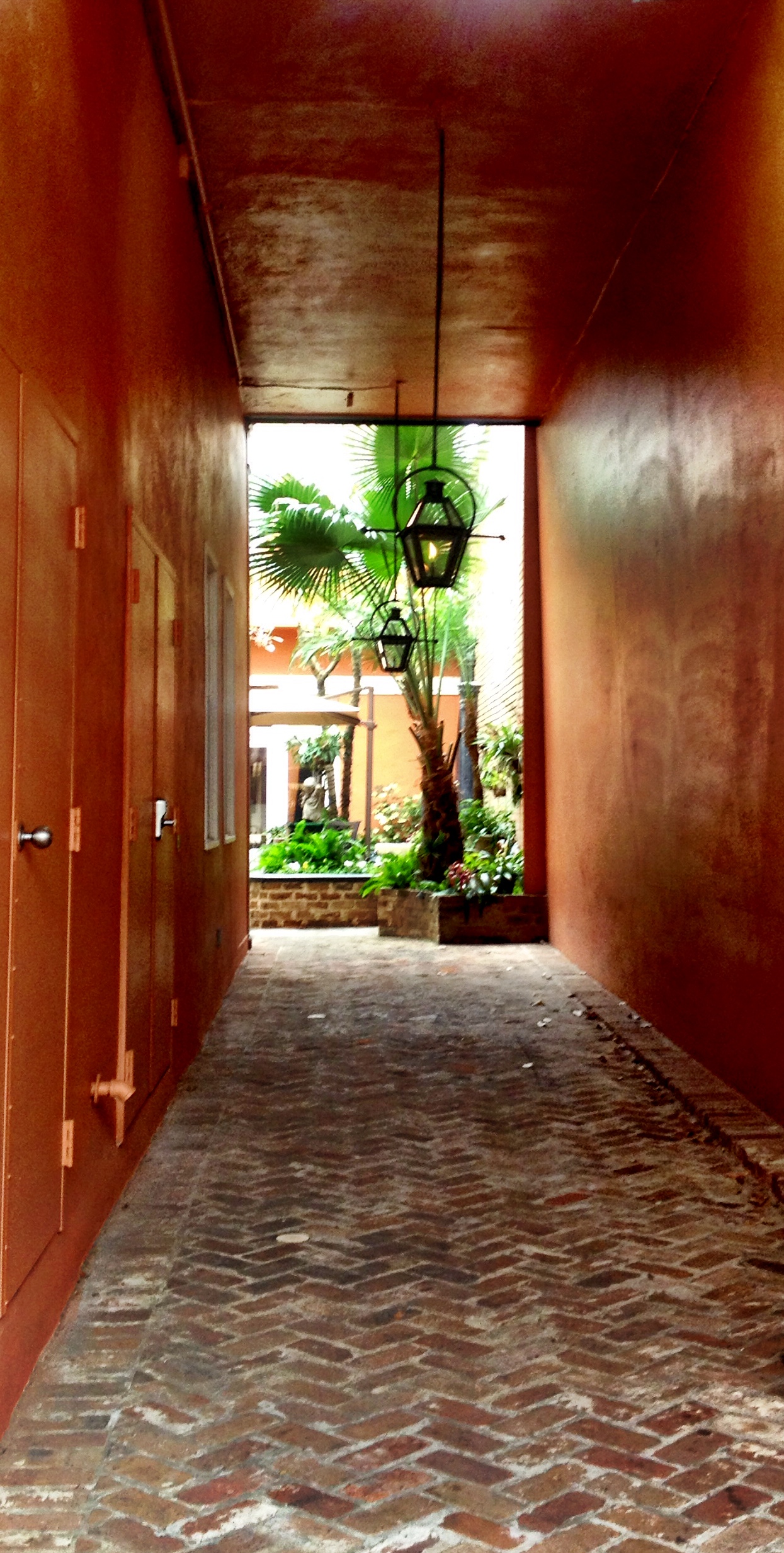
So I stared down the alleyways..the ones I used to thrill at seeing in NOLA, but now passed by. They led to their usual gorgeous open courtyards.

photo 3 (2)

And again I saw the funny gates that led to nowhere. A gate guarding a brick wall.

NOLA Gate

And I once again saw a city maybe falling apart. And a city with bizarre examples of its slow ruin scattered everywhere.

Stuff started to pop out at me that I hadn’t exactly seen before.

photo 3 (1)

And the grayness lifted for a second as I became curious. So I just kept on looking.

I realized it was the first time I’d been here in November. And I saw leftover Halloween decorations.

photo 2 (1)

And places that had never needed Halloween decorations. photo 5

And places that had funny signs.

photo 1 (2)

And places that were just paint.

Photo (4)

And I followed the sound of some church bells and stumbled onto a glass blowing school by accident.

photo 4 (1)

So I went inside and sat and watched glowing hot glass become birds and pumpkins…glass shaping itself from nothing to something right in front of me. I hadn’t seen glass blowing live since I’d been to Venice many years ago…and I’d always found it to be an unbelievably neat process. It still fascinates me.

And for a moment I felt happy.

photo 5 (1)

photo 2 (2)


And as I sat and watched liquids become solids I had to admit to myself that my New Orleans labels weren’t gone- they weren’t that easy to remove. But yesterday, through sheer will, I had set them aside for a second, and for a moment the grayness had lightened.

Ultimately, I couldn’t summon up the same amazing feelings as the first few times I’d been to New Orleans. I didn’t suddenly jump for joy. I didn’t burst into tears. I didn’t have a sudden revelation. But it was okay.

I felt…a much more subtle movement inside. Something raw. Something clear. Something new.


Bad Mood Relief with Meditation and Therapy

While I love winters for the hot toddies and for having a legit excuse to wear tights and chunky sweaters (and mind you, I still do this in LA!)  it does mean our days are getting darker earlier and we’re getting less sunlight. Our bodies begin to lack that essential mood boosting Vitamin D. I’ve been fighting the blues this past year, on and off, so I can’t say it’s a “winter” thing or SAD (Seasonal Affective Disorder). Most of my blues is from the ongoing transition from moving from NYC to LA, and grad school stress. While my favorite self-soothing remedies help (a glass of wine, pizza, and an episode of Parenthood. Clearly, I’m also a cheap date) temporarily, I’ve found some lasting change in two practices. Meditation and Therapy. I’d like to tell you a little more about how they worked for me.

Meditation 

Have you tried meditation? I’ve always wanted to, and have some meditations sporadically over the years, but I’ve only recently gotten more serious about keeping the habit.

There are lots of ways to do it. You can simply sit still and concentrate on your breathing for a specified amount of time, 5-20 minutes generally. Or you can try a guided meditation using links online. I know Laura likes using guided meditations, and I find them useful too. I’ve found that when I have nothing to listen to, it’s so hard to sit still for more than 5 solid minutes.

Right now, I’m participating in the Oprah and Deepak Chopra “The Energy of Attraction” 21-day challenge. There’s still time to sign up. It’s a free series of 20 minute meditations for 21 days Check it out here. https://chopracentermeditation.com/about-us

I put a little candle on and let Deepak and Oprah do the work.

Meditating

Post meditating

There are also specific types of meditation. Two years ago, my friend and I checked into Transcendental Meditation, which lots of people SWEAR by, but despite the organization being a non-profit, there’s a steep fee for the introductory course, which I think is about $750. There’s a 50% discount for students, and I considered doing it in LA, but ended up deciding to wait until I had some more funds. We enjoyed the free Q and A we attended, and I really believe they are doing great work but damn if I can’t see paying that much for meditation. The thing that makes TM meditation somewhat different is that you’re assigned a mantra. (Always reminds me of Annie Hall, “Help! I’ve lost my Mantra.”)

Therapy 

I’m a therapy evangelist! I went for the first time about 6 years ago when I was going through a bad breakup. It was very helpful, especially when my therapist had me join a group session for people going through breakups. It was such a relief to talk to people going through the same thing. Luckily, it was covered by my health insurance with a co-pay. I think the co-pay was quite high, something like $40, but it still felt like a good deal at the time.

Now I’m in therapy once-a-week for regular talking sessions. Normally I just talk about the week and how it’s going. There’s no agenda, other than to release my thoughts. I’ve noticed that every time I leave therapy, I start yawning like a mad person on the bus ride home. Once I noticed this pattern, I realized how much I was holding in during the week, and how relaxing it was to get my mind unburdened.

Think money is an issue? Or do you not have health insurance? Sliding scale therapy is offered by a lot of psychological training programs. That’s what I do, and it’s based on what I can pay according to my salary. Since I’m in grad school and only work part-time, it was agreed upon that I pay $20 a session. That’s not bad at all! My therapist is technically a recent grad, but he’s pretty damn good.

And, ultimately, with therapists, it’s ALL about the fit. You have to feel like your therapist is right for you. Don’t be afraid to choose another therapist. It’s all about finding the right fit and approach.

So those are just two of my favorite healing techniques. But with both of them, the results are subtle and incremental over time. And yeah,  some days, the best therapy is a glass of wine and a good phone chat with an old friend.