Missing Out by Not Having a Wedding

The other night I watched the first episode of the Netflix documentary series, Chelsea Does. It’s a non-fiction show by comedian Chelsea Handler where she explores one topic in-depth each episode, including topics like racism, silicon valley and marriage.

The first episode is about marriage. Chelsea says she’s never been one to fantasize about weddings. And quite frankly, neither have I.  The idea of walking down the aisle and being the center of attention sounds very unappealing to me.

But you know what does sound appealing? The celebration of friendship that weddings offer. Think about it – your closest pals give speeches, they throw you a bridesmaid party, and they write sweet, sentimental things about you in scrapbooks. Also, sometimes your bachelorette or bridal shower is the one time in your life that all of your female friends will be together. How awesome is that? It’s pretty amazing. I love going to bridal events and meeting all of the other friends my friends have from different periods of their lives.

So when I think about not yet being married or having a wedding, I think about missing out on those friend bonding experiences.

Maybe there should be an alternate event for those non-married folks? Like a mandatory all-close-friend birthday getaway?

challenge_92_02.jpg


Should I Play the Lottery In My Thirties?

Last week the Powerball jackpot was 1.5 billion dollars. A bunch of my friends bought tickets and a few of them even won…four whole dollars.

When one of my friends first told me he went and bought a bunch of tickets, I’ll be honest, I was little upset with the idea. He asked me if I was going to buy any myself, and I replied with a haughty, ‘no, I think I’m going to invest my money and save it, thank you very much.’

I kinda felt amazingly proud of myself- the lottery (and gambling in general) are things that I can easily control my response to and I value that about myself. I have insane self-control when it comes to spending money on things that I consider wasteful. I don’t know if I’ve ever purchased a lottery ticket- maybe I bought some for an ex many years ago.

However, something about my own response bugged me- was it really so bad to buy lotto tickets? That same week, I received an email newsletter from a writer I love, Ramit Sethi. He was talking about how silly it is to discourage people from buying lotto tickets, because, in a way, you’re discouraging them from dreaming. Ironically, he was actually writing in response to bloggers who scoffed at people who bought lotto tickets. He said:

Their articles [finance bloggers] reflect a total lack of understanding about WHY people buy lottery tickets. Hint: People who buy lottery tickets don’t really expect to win. People know the odds are astronomically, cosmically against them. So why would they do it?

The answer: They’re buying permission to dream about winning it.

If you think about it, $2 for a dream is well worth it. If you live a life where you’re counting pennies, isn’t it worth paying $2 for the dream of becoming fabulously wealthy — even if just for an hour? Hell, if you live a humdrum life of $60,000/year with 2% annual raises and one 2-day vacation a year, you can see why people would crave an escape.

By the way, there are a LOT of other ways we pay for an escape: Movies, fancy clothes, and so many more things. Isn’t it funny how lottery tickets cost less, but incur more wrath from judgmental people? It’s fun. It makes you feel good, and that’s a great reason to spend $2. OF COURSE lottery tickets are mathematically stupid. So is going to a bar to meet someone…but we do it anyway.

I never really thought about lotto tickets that way, but they’re a tiny price to pay to dream about something way bigger and more exciting in your life. Sure, we can all visualize and meditate and dream for free, but any tool that helps you feel happier and more passionate about life, is harmless, and only costs a couple of dollars, is absolutely, totally worth it. Use the tools that you discover- little indulgences here and there can help you feel better and dream exponentially bigger. Make the ‘silly’ choice sometimes.

51296_1280x720

The Pressure of Being An Unmarried Woman in Your 30s

While the number of single people in the United States is increasing (it’s now 50.2% of Americans…wowza!), the stigma attached to being a single woman in her 30s has not lessened. This is according a study that was done at the University of Missouri in 2009.

Here’s one of the study’s authors explaining how the pressure feels for women:

“We found that never-married women’s social environments are characterized by pressure to conform to the conventional life pathway. This pressure was manifested in women feeling highly visible and invisible. Heightened visibility came from feelings of exposure and invisibility came from assumptions made by others.”

-Larry Ganong, co-chair of Human Development and Family Studies in the College of Human Environmental Sciences.

Apparently, unmarried women feel the pressure most acutely between the ages of 25 and 35. As an unmarried 33 year old woman, I can definitely relate. Nothing shocking in that study. But for me, the pressure is less about conforming to a conventional way of life, and more about these silent judgmental feelings I think that other, married or older, people are thinking about me – the big WHY of me not being married yet. WHY haven’t I been “found” yet? It’s like the first round of a football draft – and having this feeling of not being a first round pick.

It takes a lot of self-work to get over those feelings, especially if you are someone who consciously wants to find a life partner and get married.

Another interesting tidbit from the study is that after age 35, the pressure dies down a bit. I guess that’s when the hub-bub of engagements, weddings and  first babies dies down, and the collective societal pressure relaxes a bit.

If the trend of ‘singledom’ in American continues to increase, do you think the stigma will lessen? Or is the stigma biologically and evolutionarily ingrained in us so that we can continue desiring a mate and ultimately, children?


Online Dating In Your Thirties

Online dating in your thirties is awesome. It’s also terrifying. I know some people who hate online dating and others who swear by it. I’ve gone to weddings of friends who met their significant others online, and have also listened to multiple friends tell me that they’d never go on an online date again.

If you’re single in your thirties and have never given it a go, I urge you to try. Obviously, stay safe and meet in public places and all that good stuff- but otherwise, be open to new experiences. If you want to be single for awhile, that’s awesome and perfectly okay, but if you’re trying to meet someone and don’t want to do online dating because it seems scary or ‘not genuine,’ I think you’re potentially missing out. I know that some of you may swear that you only want to meet your special someone IRL (In Real Life), but I feel like online dating only increases the number of people you end up meeting, and helps you connect with people who you might have had a hard time finding otherwise.

You’re busy and have a lot of things going on in your life and career- it’s hard to meet people, especially in big cities where everyone’s busy and rushing around. You probably don’t want to limit yourself to guys/ladies you meet at bars, or solely date your coworkers. Sure I know a few couples who’ve met in one of those ways, but I believe that dating is actually kind of a numbers game, and online dating exponentially increases the number of people you can meet. And meeting new people can be fun in its own right– even if you don’t find your soulmate right away.

So without further ado, here are some free online dating sites and apps to try:

OkCupidokcupid.com

OkCupid is probably one of the most tried and true free dating apps out there. It’s been around for a long time- it launched in 2004- so it has a lot of users, which is good. It’s both a website and an app, so this is a good one if you don’t want to be online dating on your smartphone only. OkCupid is one of the most writing intensive of the online dating sites- it requires you to fill out a bunch of question and answer statements (what they call ‘essays’, but they’re not essays). It’s a great app for sheer breadth of people you can meet, and, if you’re a stickler for grammar, it really showcases whether someone is a good writer or not.

Tinder gotinder.com

Tinder is a swiping app only, and is not a website. You swipe people either left or right depending if you like them or not- so Tinder is the opposite of OkCupid, in that it’s not writing based- solely looks based. Tinder is known more as a hookup site, but isn’t limited to that…so it can be a bit on the hazy side in terms of what people want from being on the app. The swipes on this app are unlimited, so it’s known to become an addictive habit. Most people who hate online dating are Tinder users, so I don’t recommend it for beginners to the online dating world. I’m also not a big fan of Tinder anyway, because of their semi-icky nature and ageist policies.

Hingehinge.co

Most people don’t know Hinge, but it’s slowly becoming an online dating fan favorite. It works by connecting you to friends of friends on Facebook, so it’s kind of like being introduced to your friends’ friends’ friends without the trouble of an introduction.  You don’t have to do much to set it up, because, as it works through Facebook, it’s able to pull a lot of your data from your FB profile- so you don’t have to upload any new photos or write that much at all. The Hinge profile is a profile you can create in minutes. Also, although Hinge, like Tinder, is also swiping app, it limits your swipes to only a couple of people a day, so you can put down your phone, stop the madness, and have a life outside of the app. Hinge is a great app for online dating beginners since it’s easy and user-friendly, especially if you have a good amount of Facebook friends (the more FB friends you have, the more recommendation possibilities for the app).

Bumble– bumble.com

Bumble is a swiping app, like Tinder and Hinge. However, there are a few major differences. One– it isn’t known to be a hookup only app the way Tinder is. Two– It doesn’t go through Facebook. Three (and most importantly)– It only allows women to message first. That’s the Bumble catch. So if you “match” with someone (you both swipe right= “yes”to liking each other), then only the woman can say the first hello. If she doesn’t, the match disappears within 24 hours and you’ll never speak again (on the app at least). Make of Bumble what you will, but I think it’s a neat and different little marketing concept. Bumble also has unlimited swiping- a la Tinder- so it can be addicting. And Bumble was actually started by Whitney Wolfe, one of the cofounders of Tinder. And Jane actually wrote about Bumble here before.

So go enjoy! Don’t be ashamed to be single in your thirties! You may never get to have this amazing time again, and some of your married friends may even be quite a good bit jealous of you. So go date, online date, and live it up!

large

Can You Make New ‘Besties’ in Your 30s?

Have you made a “bestie” in your 30s? Not a friend you already knew who you grew closer to, but someone completely new – someone you met in your 30s. I think it’s challenging, because you don’t have the built-in network of people your age because you’re not in social settings like school or after-school programs. And the workplace is a mix of people of varying ages and also, they have varying levels of desire to socialize outside of work. If people have families, most of the time they’re going to want to get out of work as soon as possible.

For me, I’ve been lucky because I’ve been pursuing film in graduate school and so, I’ve been around some people my age. But – not many! The majority of my classmates are in their 20s, and I feel a definite difference between us. But that could be my own bias.

I’ve also worked in jobs (including at a film school), where there were people with similar interests and passions, and so that naturally lent itself to friendships.

Can the depth of new friendship be the same, despite the fact that you haven’t known each other as vulnerable teenagers or college students? I answer that question with an emphatic yes! Especially if you’re single, because when you’re single, you generally have more time and radiate more of an openness to talk and connect. You can be looking for a more “serious” friendship if you’re not in a relationship. I realize that sounds a little funny, and so to clarify, what I mean is that if two people are single, they can devote more time to a new friendship – kind of like you did in your school days.

The same way you can find your soulmate at 45, you can meet a new best friend at any stage in your life, and have the same depth of connection. For instance, this summer I took a job at an arts summer camp, and while it began as a one-day temp job, it ended up getting extended to about seven weeks. And during the time, I made some amazing friends, and I am pretty confident I’ll be friends with them for a long time. We met over a short duration, but there was a deep understanding between us that we recognized immediately. I also happened to be in vulnerable stage when I met them and was going through some personal transitions, but wow – when I met them, I knew – I would be friends with them. I felt safe immediately and like I could be myself. More so than I had during my entire two years at graduate school. So, you just never know where and how you’ll meet your next ‘friend soul mate.’ In the same way we romanticize how we might meet our romance loves, I like to think about the magic of meeting a new friend who you just know will be a lifer.

  • images.jpeg

How Do You Deduct Tips You Pay In Cash While Traveling (To the Bellboy, Cab Driver, Housekeeping, etc) on your Taxes?

I’m currently working in Detroit and just was thinking about when I’d have some time to change a twenty for a bunch of ones when a friend of mine posted on Facebook asking about how, for her taxes, she can deduct cash tips she paid out while traveling.

I realized that I didn’t exactly know the answer to this except that my usual way of deducting the tips I pay out to people in cash is mild guesswork. I know that when I travel for work I almost always tip housekeeping about $2-$3 a day. I rarely use a bellboy to bring my suitcases anywhere, but maybe would use one approximately 4 times a year in order to help me carry something or other up, and tip $2-$3 each time. I’d tip a shuttle driver about $3 about 8 or 9 times a year. Etc, etc.

Make sure you deduct your cash tips to hotel or transportation staff anytime you travel for work. The tips are actual valid deductions. If you’re self-employed, these are no-brainer bona fide travel expenses. But even if you’re not self-employed, if you end up traveling for work, the tips you pay in cash while traveling can absolutely be deducted if you’re itemizing deductions.

The deduction would be under ‘business travel expenses’ and the way you would note them in your records would be to write the tip amount on some form of receipt related to the trip in question. So, for example, if you tipped housekeeping and the bellman during a business trip to Detroit, you would get the hotel receipt (even if it was $0.00 because your company paid for the hotel) and write the cash amount paid on the sheet of paper. Then you would keep that for your records.

This may seem like nickel and dimeing, but these deductions are valid and can really add up, so you might as well take them if you travel a lot for work and are itemizing your expenses.

In our thirties, we should try our darndest to get better at doing our taxes the best we can, so we can keep the most money. We might as well- why lose the money you’ve worked so hard to earn?

IMG_8978

View from my hotel in Detroit. I’m here for 16 days, and a lot of tipping happens in all that time.


Career Hopping in Your 30s

I was talking to a friend recently about how many people in our age range (32-36) are pursuing new career paths. These folks say they’re heading to their “second career” – maybe it’s teaching yoga, opening up their own business, or going back to graduate school in an entirely new field. It’s very admirable to take a leap into the unknown and explore whatever it is you’re curious about. So bravo to those who do!

When my friend and I thought about ourselves, we both expressed the same worry – we feel like we haven’t even had our first career yet! So how can we even think about a second one. Are we somehow behind? I thought about it a lot after my friend and I left the coffee shop, and instead of beating myself up for not having a very solid “first career” with tangible success markers, I redefined it for myself.

For those of us who did a little job bouncing in our 20s, we can define our first career as more of a hodge podge of jobs – kind of like when you order an appetizer sampler plate at a restaurant. That’s what our first careers were – samplers, avenues of exploration.

So let’s say you’re ready for a career change: where do you begin when you’re unsure what to do? Well, I found this article to be really fascinating:

Why and how to change career in your early 30s and the women who made it work

This other article  linked below has links to some great online quizzes you can take to see where your natural aptitudes lie.

The 11 Best Career Quizzes to Help You Find Your Dream Job 

Ultimately, it’s about doing your research and making sure you have the financial stability and a plan to make the jump. While it may be very scary to make a change, I’m a big believer that…

Unknown


Food For Thought- Do You Think Differently in Your Thirties?

I saw an acquaintance of mine yesterday who I hadn’t seen in over 3 years. She congratulated me on this blog and told me that she wanted to talk about how different things started feeling now that she’s in her late thirties- 36 to be exact.

She does what I do- she’s a presenter and product specialist. In our industry, it’s your job to look young and healthy, so she told me that she’s always told that she looks younger than thirty. However, it’s not her looks that necessarily felt different (although we both admitted that we do feel like we look different than we did in our twenties..what’s interesting about that is that even if you look good and young in your thirties, there’s a more mature quality about your looks too..or at least that’s what we concurred on.)

What felt different to her about the thirties was an almost invisible quality- she said that she was thinking differently. We didn’t get to talk about this in too much detail, but I feel like I definitely think differently in my thirties as well. It’s not just the obvious possible fear thoughts that women in their thirties may have – ‘will I ever get married?’ ‘Is there more to life than having children?’ ‘Why am I not at the top of my career yet?’ There’s a certain degree of experience that makes itself known in my thoughts as a thirty-something. I know my likes and dislikes more. I’ve been burned a few times, and I don’t trust as easily. There’s a certain ‘here we go again’ thought process that occurs lately that wasn’t there before. Sometimes it’s great- like when I start work on a project and can navigate its pitfalls like a pro. Sometimes it’s not so great- like when I meet a new person and red flags go off from the first conversation.

I don’t exactly know what to make of these new thought processes in my thirties. Somehow I always thought that I’d be exactly the same as I was in my twenties- but I don’t know why I thought that. The thirties have changed things.

What do you guys think? Is there a been there, done that feeling in your thirties? People that set off old alarms? Less naiveté? Let us know your thoughts.

FullSizeRender (1)

Today, at 31 years old, training day for CES (Consumer Electronics Show) and thinking back on all the CES’s from my twenties. Am I super different now?


Thoughts on the New Year

Happy 2016, everyone! We’re so excited that you’re on this journey of discovery with us, and we can’t wait to share our 2016 with you.

While I’m excited and hopeful for what 2016 will bring, I’ve been fighting a prevailing feeling of fear about the uncertainty in my life. It seems there’s so much to figure out that I don’t know where to begin; where to take action first or what the action steps are exactly. Have you ever felt that way?

I thought that by now, at 33, I’d have at least one part of my life “sorted out.” Perhaps I wouldn’t be happily married, but I’d have a great career. Or, I’d be happily married and still working to figure out my career. But I feel as though I’m still trying to figure both of those areas of my life out, so it feels as though I’m treading water.

Here’s the thing though. Deep down, I believe that I’m going to get to a more stable, happy place. I don’t know when and I don’t know exactly how, but I feel confident about it. The feeling reUnknown.pngminds me of this quote that an amazing friend sent to me:

Isn’t that beautiful? I think it’s a great reminder that we evolve and grow as we’re meant to. Maybe one year is awful, and the next makes up for it in a huge way. And by having faith in that, we can relax and be gentler with ourselves. At least that’s my hope for myself.

So, here’s to a fresh and hopeful start in 2016! Everything is moving as it should.

Have You Been Taking Advantage of Compound Interest in Your Thirties?

compound-interest

“Compound interest is the eighth wonder of the world”

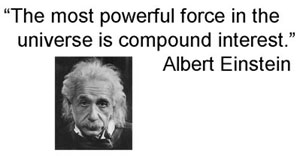
“The greatest invention of mankind is compound interest.”

Albert Einstein is attributed to have said some version of all of these quotes. Whether he did or did not actually say this remains to be determined, but the truth is that compound interest really is a force to be reckoned with.

Compound interest can cause your retirement fund to grow way more than what you could’ve contributed yourself, and you can end up living on what you never could have saved up in your wildest dreams. $5000 invested at the age of 18 in a Roth IRA and left alone can turn into half a million dollars by the age of 72 with an average 9% interest rate.

$5,000 + compound interest magic + time= $500,000 for you

Compound interest can also get you in tons of credit card debt- the kind of debt that you couldn’t imagine wracking up in your wildest dreams. $5000 of credit card debt at a 22% interest rate would become $44,235 in 10 years. 

$5000 + compound interest + time (not much) = $44,235 owed to your bank.

Now that you’re in your thirties, make sure you’re aware of this miraculous compounding power. You can make compound interest work for you, or you can let it wreak havoc on your financial life, but either way, you have to start now because compound interest compounds fast, and waits for no one.

If you learn one financial lesson in your thirties, let it be this one- use compound interest wisely and start now.

Here’s a chart of $5000 invested in an IRA at age 18, untouched until age 72, at various interest rates. If somehow you averaged a 13% interest rate, that $5000, without ever adding another penny, would become over 3.5 million dollars when you retire. Now that’s some powerful magic.

rothchart


Will You Own A Home in Your 30s?

Unknown.jpeg

I’ve been thinking a lot about the markers that seem to differentiate people in their 30s. In our early to mid-20s, it seemed as though we were all on the same path – trying to find our careers and our own identities. There was always common ground on which to relate.

But now, two people in their 30s can be vastly different because of their choices on marriage, children, career and finances. Home owning is also one of those markers.

The average age for a first-time homeowner is between 31 and 34, depending on what study you’re looking at. I’ve even read some studies that put the age for first homeownership at 39. So it’s hard to say what’s exactly accurate.

One thing is for sure, though. People are waiting longer for first homeownership. Maybe that’s the economy or student loans or a host of other factors like people marrying later.

Personally, I’m not at all close to buying for two equally measured reasons. Firstly, I don’t have enough saved for a down payment. And secondly, I’m not sure where I would want to buy a place. I haven’t settled on my “heart home” or “forever home.”

How about you? Do you think you’ll own a home in your 30s, or do you already?

Here are some fun facts about first time home buyers:

Six Interesting Things About First Time Home Buyers

Love and Delight on the Holidays

We want to send so much love to you, our amazing readers, always and especially during the holiday season. We’re truly grateful that you’re reading, and for your thoughtful comments and stories and feedback.

We love you, are honored that you’re here, and hope you continue to grow with us.

I just started reading the book “Big Magic,” by Elizabeth Gilbert. Jane lent it to me saying that it was a must read, so I’m excited to keep going with it. In the first few pages, the author quotes a favorite poet of hers, Jack Gilbert, who says “We must risk delight. We must have the courage to accept our gladness in the ruthless furnace of this world.”

Those sentences moved me greatly. I want to have courage to risk my own delight, despite what may happen around me. Who knew it could be such a worthwhile risk?

I hope that you too get to risk your own delight this holiday season.

Have some fantastic holidays with your loved ones, and Merry Christmas!

IMG_8384

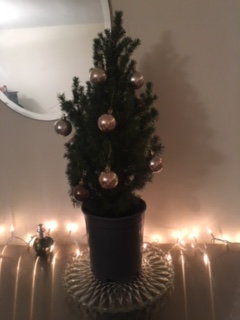
My living Christmas tree, Seneca, and I


The More Time and Less Time of Stopping

I recently went through a period where I had trouble feeling grateful for things. I wrote about some of my struggles in What Happens When You Start Feeling Empty – I came to a point where I realized I was having difficulties accessing any feelings at all, never mind grateful, peaceful ones.

I’ve started to come out of that funk, at least for awhile, and I think the return of some peace in my life has a lot to do with having gone through the emptiness in the first place, acknowledged it, and just stopped.

Stopped. Cold.

Instead of trying to push through the empty feeling and just get it out of my life by sheer force, I sat with it. I stopped what I was doing- the things I could stop anyway- the busyness and busy rituals that I felt I needed to do but actually didn’t. The emptiness was trying to tell me something and I needed to listen. Jane talks about sitting with feelings of sadness in her last post The Solstice and Acknowledging the Harder Parts of the Holidays. I think you can sit with any feeling, including an empty lack of feeling.

I turned the non-feelings over in my head. I wrote about them here. And then, slowly, painstakingly at first, the feelings changed. And I changed what I was doing. Tiny, experimental changes. I starting a new morning ritual instead of my beloved meditating. I exercised in a different way. I started seeing more friends and changed my work habits a bit. I read a different book.

I didn’t make major changes. Just small ones that felt a bit better. And then I started to feel a bit better.

I didn’t have any more time in my life to sit with my thoughts or change my routines or stop what I was doing. But time is a funny thing. It’ll expand when something is important to you.

Even though the holidays are busy and stressful sometimes, give yourself the gift of your own time for awhile. Peace will come.

And isn’t that what the holidays are all about anyway?

IMG_8250


The Solstice and Acknowledging the Harder Parts of the Holidays

The Winter Solstice is the shortest day of the year in the Northern Hemisphere, and thus the darkest time of the year. In the United States, that day is either December 21st or 22nd of each year.

What I love about this Winter Solstice is this idea that it’s a time to reflect on our lives before we move into a new year. It’s a time of rebirth.

Many cultures/religions/spiritualities throughout history have celebrated the Winter Solstice. In Christianity, there’s actually services on December 21st called “Blue Christmas” or “Longest Night” services. They are services for those who aren’t feeling all the “joy” of the holidays – people who have experienced loss and trauma in the past year. Those who have dealt with a death, divorce, injury, or any kind of grief/loss may find relief in these services.

I love this idea – because so often, we’re force fed this concept of everything being immensely joyful during the holidays. But there’s great healing when you can also acknowledge the darker/sadder parts of life before you move on.

This reminds me of a quote my yoga teacher said years ago during class:  “What you resist, persists.” So, just because it’s the holidays, doesn’t mean you can’t let in a little sadness or melancholy. By allowing yourself to feel those feelings, you open yourself up to a fresh start in the New Year.

blue-christmas.jpg

What About Those Creative Projects In Your Thirties?

When I just got out of college, straight out of the drama program, I was hungry for creative work.

I had just gotten out of the directing/acting program at NYU and I wanted to work on plays- I didn’t feel like there was any other choice. I was buzzing with musical moments- I was inspired. I yearned to put my excited thoughts to work. Whenever a possible project came up, I jumped at the opportunity. The projects always felt like opportunities- maybe scary or difficult ones sometimes, but never a drag. I was reading plays all the time and in and out of long rehearsal processes- all of this felt like a hardcore part of my career.

Of course, there were bad moments where I felt like rehearsal processes took up all of my time- and would occasionally cause fights with my ex-boyfriend when he claimed every spare moment of my time was taken up by theater work- with not a second left for him. And that was a problem, but I kept working on theater projects anyway- they were just constantly popping up because I was surrounded by people in the industry, and connected to a lot of theater groups. I tried to find some balance, and I would apologize to my ex and to friends profusely when I was in tech week (AKA Hell Week, when your life is completely claimed by the theater and you eat, sleep, and breath a play yet still never have enough time before opening night).

Through it all, I felt like theater projects were extremely important. I didn’t question why. They just were.

Then, maybe four years ago, another ex-boyfriend of mine changed the way I felt about theater. He never understood my love of theater, and was never into the fact that I loved it. He didn’t come to some of my biggest and proudest productions, always claiming some excuse or another. When he did come to the plays, he always seemed upset for whatever reason and made me nervous.

He reminded me again and again that the audiences of most of my plays consisted solely of friends and families of the cast and of myself. This was basically true. It’s rare that strangers decide suddenly to attend an off-Broadway play unless there’s a celebrity in the cast. He said I wasn’t reaching the people I’d hoped to reach anyway. This was possibly also true. I was hoping to reach many people- and if the audiences only consisted of the same people who always got ‘dragged out’ to support me or my cast, then what was the point? I was making theater in a vacuum.

Even worse, once I believed that I was making theater in a vacuum, for no one, I couldn’t stomach the fact that I did it for almost no money. Most of my theater projects have been a labor of love, with minor stipends paid to me at the end, if that. Yet, as I said before, I still felt like the theater projects were very important, and still worth working on.

Once I felt like theater projects weren’t worth my time anymore, I went on an official ‘hiatus’ from theater. I stated that I had to pay off my student loan before I ever could do a full rehearsal process again. I haven’t yet finished paying my student loan, but that wasn’t the real reason I stopped working on theater- honestly, I felt artistically defeated. I felt cheated- like theater had lied to me. I wasn’t really helping anyone. I was giving my time away for free. Theater is one of the only industries where people are expected to give their time away for nothing- and even compete to be able to do so.

Instead of the theater defeat wearing off once my former boyfriend and I broke up, it grew stronger. I still didn’t want to work on a full rehearsal process- I couldn’t shake the ‘what’s the point of it all if there’s no money in it’ feeling.’ I blamed my ex. But then I blamed myself. How could I lose such an integral part of myself? How do I get it back? What do I do if I still kinda believe that I’m not reaching people with this medium, or that theater is a dying art form that barely pays and is only attended by foreign tourists and the friends and family of the production team?

I still don’t know exactly what to do with these beliefs that continue to cling on. I wish I could press a button and feel like theater is important and worth it again.

Two summers ago, right after the breakup with that same ex, half in protest towards my ex’s dislike of theater, I’d started writing a play. For a moment, in my thoughts of protest towards his beliefs that summer, the passion returned. My anger fueled me and a character came out onto paper. Musical thoughts started to flow through my fingers. The eager audience in my head returned to cheer me on. I felt a bit crazy- a bit wild. Then life got in the way. I slowed down on the script and my project screeched to a halt. The passion was gone.

The other day, when I was feeling empty, I randomly took out the script again for the first time in over a year. It felt distant and removed from my life now, hard to relate to, which cause me some stress.

Would I ever get those passionate, wild theatrical feelings back? I started reconfiguring the script, rewriting and reworking. I manually stuck with it for awhile. Some ideas came to my head- they were shadowy and new, but for a second they felt musical and raw and wild.

And you know what, who cares if no one sees my creative projects but maybe friends and family? Who cares if my creative side work will never make me any money? This kind of work has made me feel more alive than I’ve ever felt without it. So maybe there’s something to it after all.

EMPTY-STAGE-2


Happy Holidays! And Where Is Your ‘Heart Home’?

Happy Holidays, wherever you are! Hope you’re staying in festive spirits and spending time with family and friends.

I’ve just arrived back home in NYC after two airplane flights and two bus rides. And I have to say, there’s something about traveling for me – as in, the actual act of commuting, that puts me in a hyper reflective state of mind. Do you feel that way, too?

In the past few years, plane rides have become evaluation periods – time to look back on how I feel about my life. And today, perhaps because it was the holidays, I was thinking about the idea of home. I felt a weird sense of not knowing if home was LA or if home was NY. I’ve lived in LA now for almost two and a half years, and while it’s increasingly feeling like “my city,” it’s still foreign to me. And yet, I don’t feel as though NY is my home either. People I love are here, but there’s no professional tie for me.

homeandheart_flickr.com_

In my travels today, I started wondering the percentage of people who live where they grew up. And thanks to the power of Google and diligent researchers around the world, we can find that information pretty easily.

Apparently, according to a Pew Social trends report (from 2008), 37% of American adults have never left their hometown.

I was very surprised by this. And I got a small swell of pride for having the courage to try living in a new place.

But, this was even more shocking to me: 57% of Americans have not lived out of the current home state in the US. 

I also loved this part of the study: the idea of a “heart home;” a place where you feel most deeply connected. According to their research, more than one-in-five-U.S.-born adults say they don’t feel they are currently living in their “heart home.”

Are you?

Personally, I’m really not sure. But maybe I can have two “heart homes.” Or do you have to be monogamous to a place for it to be your “heart home”?

Interesting food for thought.

Wherever you find yourself this holiday season, “heart home” or not, try and appreciate whatever ways, however small, that it feels like home to you.