I’m Pimping Out the Amy Schumer Show

Have you watched The Amy Schumer Show on Comedy Central? It’s amaze-balls. It’s a sketch comedy show created by and starring comedian Amy Schumer. What I love most about the show is that Amy tackles really big issues (rape, wage inequality, female body issues) in hilarious ways.

For women in our age bracket, 20s and 30s, her sketches are really resonant. She’s got one sketch about how hard it is for women to accept compliments from other women, as in, we always downplay the compliment. Or, another great sketch is about a girl who’s dating a loser wannabe rapper bad boy, and how she always ditches her best friend for him though clearly he is like the WORST BOYFRIEND EVER.

Want a get a taste of her humor? Check out her speech from three days ago at The Glamour Awards 2015.

How to Talk to A Grieving Friend in Your Thirties

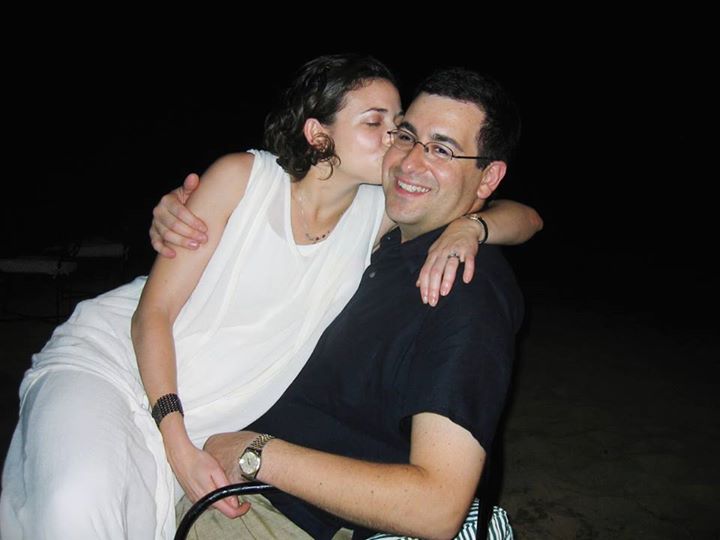
Sheryl Sandberg wrote a beautiful statement today on Facebook about mourning the death of her husband. He died very suddenly in a tragic accident on a treadmill while they were on vacation in Mexico.

The statement was made after she came out of 30 days of intense mourning for him- a tradition in Judaism known as shiva. Even though it’s been 30 days, I can’t imagine her pain is anything less than fresh and intense, so I’m amazed she put out an incredible brief on Facebook so early on in her grieving process.

Sandberg’s statement is incredibly sad, but it’s also helpful as well as brave. I remember trying to talk to a friend last month whose grandmother had recently died. I didn’t want to upset her and I didn’t know what to say, so I ended up shamefully trying to avoid her until I gathered up my nerve to speak.

Even now, in my thirties, I feel like I never really know the right thing to say to a grieving friend, or relative. But there are definitely better things to say than others.

Sheryl has some great ways to approach (or not approach) this difficult subject. Here are a few:

1. Don’t tell your friend that it’s going to be okay

“A friend of mine with late-stage cancer told me that the worst thing people could say to him was “It is going to be okay.” That voice in his head would scream, How do you know it is going to be okay? Do you not understand that I might die? I learned this past month what he was trying to teach me. Real empathy is sometimes not insisting that it will be okay but acknowledging that it is not.”

2. Ask your friend how he or she is doing today instead of a simple “how are you doing?”

“When I am asked “How are you?” I stop myself from shouting, My husband died a month ago, how do you think I am? When I hear “How are you today?” I realize the person knows that the best I can do right now is to get through each day.”

3. You don’t have to reassure the other person in order to empathize

“When people say to me, “You and your children will find happiness again,” my heart tells me, Yes, I believe that, but I know I will never feel pure joy again. Those who have said, “You will find a new normal, but it will never be as good” comfort me more because they know and speak the truth.”

Other things to say to someone who has lost a loved one include:

– Simply addressing the situation: “I heard your _______ died. I’m so sorry”

– Be genuine: “I’m not sure what to say, but I want you to know I care”

– Offer support: “Is there anything I can do for you?”

– Be willing to just sit and listen with compassion.

Things NOT to say include:

-“I know how you feel” – You can never really know how the person feels.

-“They’re in a better place now.” -You never know if the person you’re talking to believes this.

– “It’s part of God’s plan” – This can cause the person to get angry and actually say something like “What plan? I wasn’t aware of any plan.”

– “You need to get on with your life.” Grief moves at its own pace. This statement is unlikely to help anyone to actually get on with their life.

Thank you for sharing such a vulnerable and devastatingly sad yet extremely positive statement, Sheryl. I’m sorry for your loss and am extremely sad for you and your family.

11205967_10155617891025177_7133272550254997213_n

How Harmonious Does Your Life Feel?

One of my favorite email newsletters is Jason Hirschhorn’s @MediaREDEF, which offers a daily curated collection of great media and tech related articles. At the top of each newsletter, there’s normally a quote, and today’s quote really resonated:

“But what is happiness except the simple harmony between a man and the life he leads?”
– Albert Camus

What does that mean exactly? What is that simple harmony in one’s life? I definitely know the opposite of harmony, so I suppose that’s a start. The most glaring example from my own life experience is that terrible feeling you get when you work at a 9-5 job that doesn’t seem to suit you or fit within your values. I’ve had two such jobs that each lasted about a year, and I remember how awful I would feel day-in and day-out, completely mis-understood and under-utilized. I would have to find small ways to cope, like finding delicious but overpriced and unhealthy lunch spots.

I also feel that horrible lack of harmony when I find myself spending time with someone who makes me feel kind of icky or unhappy inside – more lonely than I would be spending time alone. Thankfully, that’s a very rare feeling these days, as I’ve learned to keep those people out of my life. Reflecting on it now, I actually can’t remember the last time that happened.

How does one find harmony in his/her life? What does a harmonious life look like? I imagine it’s when you find yourself feeling like you’re in the right place at the right time in your life. Kind of like deja vu, but more all-encompassing.

Throwing It All Away In Your Thirties

I’m currently on a minimalism kick.

I’m throwing away as much as possible. It’s been hard.

The easy part is getting rid of items I’m relieved to toss- the stuff I never really wanted in the first place. The hard part is getting rid of the “sometimes” items: the ones I occasionally use, find somewhat useful and sort of like.

And then I heard the wise words: “Get rid of anything that does not spark joy,”

The quote is from the number one Amazon bestselling book “The Life-Changing Magic of Tidying Up: The Japanese Art of Decluttering and Organizing” by Marie Kondo. Jane read the quote to me, and now I have to read the book. I’ve seen multiple articles about it including this one about having an entire Marie Kondo decluttering party.

But even without reading Kondo’s book, her quote is enough to change the way I look at items in my home. I’ve collected so much in my 30 years, but how much of it sparks joy?

The answer is almost none at all. Surprisingly, minimalism has begun to spark more joy in me than most of those items ever could.

images

What If You’re Ambivalent About Having Children?

When I should have paying attention to my professor in class this afternoon, I found myself riveted by this article in NY Mag, I Was a Proud Non-Breeder. I Changed My Mind by Michelle Goldberg. In the article, she talks about how she never wanted children and publicly declared so in an essay on Salon when she was 27 years old. But by the time she turned 35, her perspective started to shift. Her realization began this way:

“My own transformation didn’t begin with an unbidden outbreak of baby lust or a sudden longing for domesticity. It began, weirdly enough, when I learned about corpses becoming fathers. In 2011, I reported a piece for Tablet Magazine about the strange Israeli campaign for posthumous reproduction. Israel is the world capital of reproductive technology, and a legal group called New Family wanted to give parents who had lost adult sons the right to extract their sperm and create grandchildren. I have mixed feelings about making dads out of dead men, particularly if they hadn’t donated their sperm while living, but I remember being seized by the realization that if my husband were to die young, I’d want to be able to do it to him.”

How interesting that what sparked Goldberg’s shift towards the idea of possibly having children was other people’s inability to do so. This article got me thinking about my own feelings about having children. I’m not ambivalent per say, because I know I would like children eventually. But I don’t feel the urge right now, which is problematic being that I’m 33 years old. I feel like I want to accomplish more in Babiesmy career, and get further ahead before I bring a little one into the world. But I also fear that if I have a child before I’ve succeeded, I may resent my child for taking up my time when I could be writing and producing creative work.

Often times, I wish I had a very strong pull towards having children – one that would usurp all other purposeful pulls in my life. However, for now having children seems to rest in a more nebulous area of my ‘life wants.’ In two years, when I’m 35, my soon-to-be husband and I will have to start really diving into that nebulous area and make a solid plan.

So the tricky thing is, what do you do when you don’t feel an incredibly strong urge to have children, but you’re approaching your mid-thirties?