Being A Good Friend

I read this article in Sunday’s NY Times titled How to Be a Friend in Deed, and it really resonated with me. The article talks about how old-fashioned modes of friendship can be lifesavers for friends in need. Instead of the more tech/social media communication like texts, emojis, sympathy wall posts, and emails – the author advocates for being present with your friends. Showing up. Casseroles. Taking them to drinks unprompted.

The author, Bruce Feiler, talks about how we sometimes we:

“succumb to the drive-by badges of contemporary friendship — a “like,” an emoji, a hashtag (#JeSuisThinkingofYou). What if you don’t believe all those platitudes: “Love ya! You’ll get through it! Everything happens for a reason!”

He goes on to talk about how sometimes, when our friends are suffering, we have a tendency to shift the obligation to them instead of initiating. We tell them that if they need anything, they should reach out. I’m sad to admit I’m guilty of this! My emails, texts or voicemails to a friend in need have sometimes included a line like this: “Let me know if you need anything” or “If you want to get together, let me know!”

I should really know better! When it’s me dealing with a crisis or feeling particularly down,  I rarely ask for help. I don’t want my friends to think I’m a sad sack so I tend to stew quietly alone until I feel at least a little better. BUT, when someone does break that barrier, it feels amazing. I feel this rush of gratefulness.

As we move into our thirties, hard life stuff happens with more regularity. Job loss, parental illness, death of friends and family,  financial struggle and all of those tragic things that come with being an adult.

So I found this article to be a  great reminder that our physical presence – even just a phone call – can make all the difference in the world to someone struggling.

The article is definitely worth a read. I especially loved this part of the article:

Alain de Botton, the best-selling author of many books, including “Art as Therapy,” told me that he was once deeply worried about “a mess I was in with the media.” “A friend of mine did the best thing,” he said. “Rather than say everything would be O.K., he said quite simply: ‘I will like you if I’m the last person to do so. There’s nothing you can do to put me off you. You’re stuck with me for life. You may hate yourself, and the world may, too; but I won’t follow suit.’ ”

How beautiful is that? If that’s not friendship, I’m not sure what is. I know that I’m going to try harder to be a better friend. To be present for the people I love. How about you?

Would You Volunteer to Die on Mars?

Feeling bored of Earth after more than 30 years here?

Can you live without sex?

If your answer to both of the above questions is yes, perhaps you’d consider going on the trip of a lifetime.

A not-for-profit company called Mars One is currently raising money to send 4 people on a trip to Mars.

Below is a fascinating 10 minute video about some of the selected finalists and why they want to go to Mars.  The interviewed applicants all seem slightly jaded by time so far here on Earth. Perhaps that’s one of the reasons they want off this planet.

Anyone can apply to be a part of the Mars mission- you don’t need any special qualifications other than robust physical health.

There’s only one catch: you can never return. Not ever.

Mars One received over 200,000 applications for their one-way Mars mission and have just narrowed it down to around 700 finalists.

The chosen spacefarers will train for 10 years on Earth before heading to Mars in 2025. Mars One is currently in the process of raising 6 billion dollars for the project- tens if not hundreds of billions less than any manned mission to Mars proposed by NASA.

Here’s what the space-travelers won’t have:

  • Sex! (Intercourse will discouraged because there won’t be supplies to support the arrival of a baby in space.)
  • Connection to friends and family (you think internet is slow here, imagine it 35 million miles away)!
  • Delicious Mac and Cheese (Spacefood will be limited …and cheese, if it exists, will likely be Kraft- making any mac and cheese concoction a lot less delicious.)
  • The ability to travel (once on Mars, you’ve already taken the absolute grand slam of a trip…and you’ve traded in all smaller trips for that one.)
  • Everything else we take for granted here on Earth!

Who knows if the Mars mission will actually happen? But it’s a serious undertaking, a potential reality show, and it’s getting a whole lot of press right now.

It’s funny to think about how we’ll feel if this ever becomes reality. We’ll be like ‘remember when we thought the whole going to Mars thing was never going to happen..or was even impossible?’

But we also have to remember that we’re the generation that grew up without laptops. We used card catalogues. We had land line phones. We lived in a world of no internet! A lot of technological magic was suddenly thrust upon us in our early lives. We understand the reality of really quick changes.

Just imagine all the potential ahead.

20131206082046-camera-15b


Would you volunteer to die on Mars?

If Your Job Sucks Right Now, Read This…

Stuck in a crappy work situation? Feel either completely stressed out or in a job that you have zero passion for? Well, here’s the good news. You’re not alone. Apparently, this may be typical for thirty-somethings. According to new research, people in their late 20s to early 40s report lower levels of job satisfaction and higher levels of emotional exhaustion than other age groups.

The reasons for this have been hypothesized here, and may be 1) Social support at work is less because people are competing for higher level jobs. Additionally, when you’re younger you want to have more of a social network at work, but you don’t seek it out as much when you’re older because you possibly have a family and children and other social networks to maintain. 2) Many people in their thirties also have caregiving support to give at home, and thus less downtime for themselves.

While you could wait it out until your 50s (the decade when people reported highest job satisfaction), maybe it’s best to find a way to make your job more accommodating to your shifting life demands.

A lot of my friends have asked for flexible working schedules – they work from home 1 or 2 days a week, or they have a part-time schedule with freelance work.

And if it’s just that you find yourself in a job you hate, it’s time to re-evaluate. Life is too short to spend your hours miserable. Here’s a list of signs that it might be time to quit your job.

Am I Any Closer to Self-Acceptance Yet?

Jane recently wrote two posts on Self-Acceptance: Radical Self-Acceptance and The Paradox of Self-Acceptance. In her latter post she asked a question that I ask myself almost every day:

“How do we completely accept who we are, but also self-improve?”

I’ve grappled a lot with the idea of dualities: two ideas that seem conflicting, but actually go together. In the road leading up to my thirties, I’ve desperately wanted to accept myself right now while still working on a better version of myself. This feels really hard to do without beating myself up for not yet being the person I’m working towards being.

Meditation, as Jane also mentioned in her last post, is definitely helpful. In fact, I believe that’s the main point of meditation- to get yourself into the now and accept yourself now, even while knowing that there is no choice but to grow and evolve. A lot of this is talked about in my favorite meditation podcast, Learn To Meditate, from the Mediation Society of Australia (but I will also try Headspace. Thanks, Jane!)

How to self-accept yourself completely in the now but still change at the same time is one of those questions where the answer has always felt like a slip and slide; However, this year I found a great way to look at it which always brings me back to center:

Think about a tiny oak tree seed that will one day grow into a giant oak tree. The potential for a giant oak tree is always inside the small seed, but the seed hasn’t yet grown up into what it will be. Do we hate the seed for not yet being an oak tree? Do we beat it up? Do we say “why aren’t you a giant oak tree yet??” Of course not.

For the tiny seed to become a giant oak tree, time is always involved- plus water and soil and care. That’s the way it is and the way it has to be. There is no rushing it. There is only caring for it. All we can do is love and accept the seed for being what it is and let time, nurturing and growth take their course.

You can still accept yourself and know that you’re a small seed growing into a giant oak tree.

At the same time that you love the small seed that you are, give yourself the nurturing energy, patience, and love needed to grow into the giant oak tree that’s been living inside you the whole time. Your best self is already there!


historic-angel-oak-tree

The Paradox of Self-Acceptance

Remember last week when I wrote about “Radical Self-Acceptance“? Yeah. Well. That’s really hard. I mean, duh. I knew that. But besides being hard, something always bothers me about this concept of 100% self-acceptance.  How do we completely accept who we are, but also self-improve? This week, I asked my therapist this question. I asked him how to reconcile these two opposing ideas. He said that he gets that question a lot, which immediately made me feel better because clearly the answer (if there is one) is not obvious. Anyhow, I got kind of lost in his answer, but basically he said something about harnessing the energy of self-acceptance and “playing around with it.” Typing that now I realize it sounds kind of ridiculous, but in the moment it made sense. Or, some kind of sense. I think what he meant was that accepting ourselves give us the freedom to change things up and take risks.

Do you have any idea how to reconcile these ideas? I’m still working on formulating my own opinion, so I have nothing concrete to share at the moment.

Meditation has made me ponder these questions a lot more lately. A few folks have asked me where to begin with a meditation practice, and I’ve recommended this amazing app called Headspace. It’s free to start, and there’s a ten day free trial with 10-minute practices everyday. There are also neat little videos along the way that clarify complex concepts. The man who leads the meditations has an incredibly soothing, Australian accent and I believe he used to be the voice behind an app called Buddify, which I loved a few years back. It’s $12.95 a month after your free trial, but in my mind, it’s a small price to pay for solid, guided meditations.

To happy pondering and self-acceptance!

Self-acceptance


Help! I Have No Money In My Thirties And Am Not Able To Follow Any of Your Money Advice

Somewhere around the second month or so of this blog, I’d written a few posts on finances-saving money and putting money into retirement accounts and wasn’t sure what people wanted to hear about next financially. I asked Jane, my co-blogger, what financial advice she might want to hear next.

Jane said to me, “I’m wondering what advice we can give to people who feel like they can’t follow any of the retirement account advice or the savings account advice. What about the people who are barely making ends meet? What about people who are just like ‘I’m broke and can’t do any of this?”

She told me about this teacher of hers who didn’t really want to save money and didn’t want to start a retirement account. He basically wanted to “live in the now” and said he didn’t have enough money to put away for any retirement account or savings account anyway. “All this money advice is BS for people who don’t have enough money,” he said.

At the time I was completely stumped. The topic filled me with fear. I was pretty new at following this financial growth advice myself and I told myself I’d simply get back to the ‘not enough money’ topic.

Then a few days ago I was talking to a coworker about how I put 10 percent of my money into savings, 10 percent into retirement, and 10 percent into additional student loan payoff.

In turn, he told me how he divided his money. He  had a pretty sophisticated system. He put aside 20 percent right off the bat for taxes (he’s self employed like me.) He had a separate account to hold that tax money. He also had multiple accounts reserved for different things- one for investments, one for savings, a special account just for spending money, another for classes (investment in learning.) It was a quite complicated and well laid out system and I felt mildly overwhelmed for a bit. He asked me what I might be investing in, and I was stumped. I wasn’t investing in anything in particular- not in a separate account anyway. I was ‘only’ investing in my Roth IRA…I hadn’t ‘gotten to the investment step yet.’ I’m still killing off my student loan that was originally over $100,000 but is now finally less than half of that.

I started to feel like I might not be as well-prepared financially as I thought I was, and I felt intimidated by how far ahead of me some people seemed to be. There was still so much  investment research I wanted to do- so much more money I still wanted to make and save. But then I started to feel proud of myself once again for all that I financially accomplished so far in just the last two of my thirty years. I was perhaps not as financially ahead of the game as I’d like to be at thirty, but I had made a major dent.

And I flashed back to a time when I felt absolutely overwhelmed by the killer student loan in my life. A time where I cried at the thought of  just getting by monetarily from month to month. Where I would have laughed at the thought of retirement or savings accounts, and could barely pay for a dinner out. Where just paying rent every month put true fear in my heart.

They say that money doesn’t buy happiness, but I’ll say very honestly that it can take away a huge amount of fear.

So if you’re feeling afraid and maybe even embarrassed that you don’t have enough money in your thirties to follow the retirement plan or savings account steps laid out for you by certain financial sites or advisors, let’s start with a simple first step:

1. You’re not alone. And it’s okay.

It’s really okay. The fear is real, but so is the truth. And the truth is that everyone moves at their own pace. Not everyone starts at the same point. Perhaps you have multiple student loans or have gotten yourself into some bad credit card debt. Or you’re making no money or are in school or have just declared bankruptcy. The most important thing is that you will change and want to change and grow your wealth.

2. You recognize that you want to change your finances and are ready to take small steps.

Dave Ramsey says this best with his talk of Baby Steps. Take things little by little. If you’re not making enough money to follow any financial advice, then your focus should be on hustling to make more money. It’s that simple. Dave Ramsey will sometimes tell people to ‘deliver pizzas for extra money’ when they call into his show and tell him they’re broke. That may seem below your sense of dignity, but sometimes you may truly have to hustle.

I’ve worked outside in the snow in the dead of winter, taught SAT prep in my spare time, sold insurance, traveled two hours to Staten Island to work gigs and much more in the past in order to meet the quota for money I needed to make that month. Hustling for money can be hard and grueling, but it can be done.

3. Do what you can. It does get better. Really.

I recently paid off a student loan that I wasn’t supposed to pay off until 2022. It was quite a feat, and I’m very proud of myself. Did I get it paid off early because I’m rich? Not at all- I got it paid off 7 years early because I got angry at the loan and I set my mind to getting it out of my life. My other big loan is still ahead, but you better believe I plan to attack it with all I’ve got. I don’t make a ton of money, but I try my best to take baby steps to get rid of my student loan debt and save as much money as I can. Right now I have a mini retirement account started and a small savings account. It can be done. It’s just little by little.

Times can be hard and finances can be scary. Please know that I understand and I’ve been there. Im still there sometimes. But I believe that I things can get better and they’ve been slowly getting there. And I know you can do it too. I believe in you.

 

2014-07-26 16.28.50

Have You Lived Alone?

There seems to be this idea that if you’re in you’re in your 30s and can afford it, it’s time to say goodbye to roommates and live alone. It’s like there’s a certain period of time for roommates and then it ends. Obviously, this is different in major, expensive cities like NYC (where I think the cheapest studio in a safe neighborhood would begin around $1200 – and that’s a very low estimate. More likely it’s $1300 now.)

A recent NY Mag article, Does Living Alone Drive You Mad? inspired this post today. The article is mostly about older people who live alone, and the author zigs and zags across different ideas, types of people living alone, and varying circumstances. Deep down, the writer seems terrified of living alone for a long period of time, which is understandable as she was married for over 20 years and now has a live-in partner. But it bothered me that the article had a somewhat negative slant.

I lived alone for nearly three years. I loved it! I loved my space, decorating however I liked, coming home to quiet (heaven for an introvert), cooking whatever I pleased, and on and on. But, I guess I assumed, deep down, that it would be temporary. I didn’t know that for sure of course, but I knew that my intention was to meet someone and get partnered up one day. Perhaps that changed my idea then, of what living alone was really like?

I think what the author of the article neglected to talk about was that living alone (if done correctly) forces you to engage with the world outside your door in a more unique, meaningful and appreciative way that living with other people. When I lived alone, I treasured going outside and made a much bigger effort to see friends, go to activities and even just take small walks to the coffee shop.

Unknown

Imagine – this is all yours to decorate as you choose. Living alone can be like getting to fulfill all your pinterest board fantasies and needing no feedback from anyone else

The Things We’re Attached To In Our Thirties (or Paste the Space)

This is not my original post. I have some intense money posts planned for the coming days, but today I just have to talk about the pain of losing something I love.

I never realized how important a certain thing was to my mood until it was gone:

Two days ago, I opened up a bottle of fizzy water and it exploded. What I thought was a small amount of water hit the keyboard of my laptop.

I immediately wiped off the water and put a washcloth on the keyboard to absorb any remaining water. The computer seemed fine. Everything was working perfectly. So I forgot all about it. I went to the hotel gym for the next 45 minutes. When I came back upstairs, a few keys on my keyboard wouldn’t work.

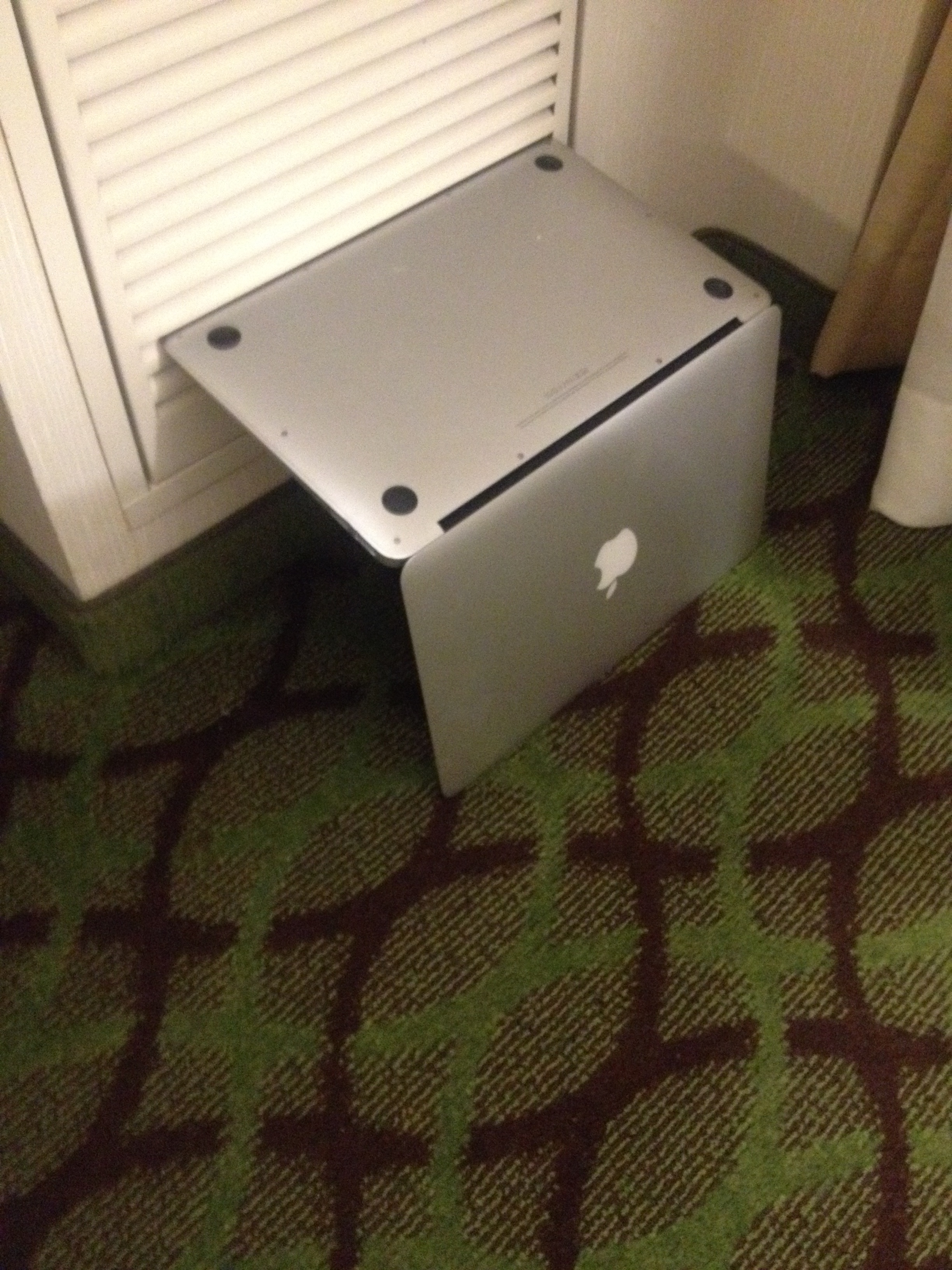
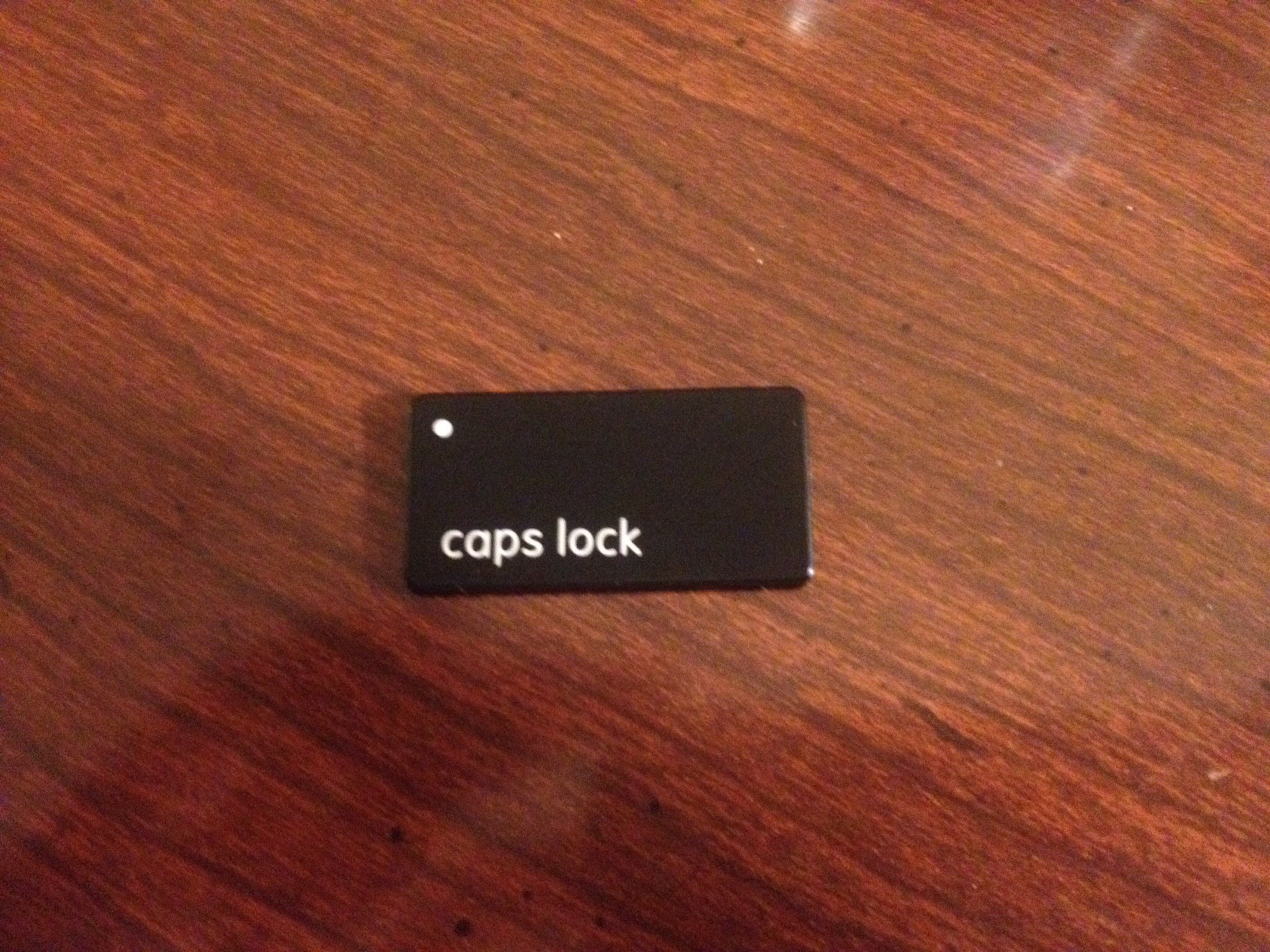
I freaked out. I googled every possible forum on how to get keyboards working again. I turned my laptop upside down. I put it near the air vent in the hotel room (Im working an auto show in Philly). I gave it time. Nothing has happened. My keys (including the spacebar, delete, and tab key- all pretty important) haven’t returned to usability.

photo 5 (4)

My poor, hurt Mac Air has left me sad and hurting for it.

Since I’m out of town and working all day most days, I haven’t yet taken the laptop to the Apple Store. I’ve heard it’s too expensive to have them fix it anyway (it’s out of warranty), so I’ve been googling about other ways to fix it. No definite decisions yet.

image

I was out at dinner tonight with my friend Kate and I realized how much the hurt laptop was affecting my mood. She was talking about her injured cat and dog and I was talking about my injured laptop. Staring at it upside down by my airvent made me not even want to be in my hotel room anymore. It completely changed the happy mood of getting off work and relaxing at ‘home.’

I hadn’t felt so upset about a computer since college, when I had to spend two hundred dollars or so (my life savings at the time) to fix an errant Dell laptop that went kaput. Tonight I didn’t realize how overblown my emotions about the computer were until I was lamenting my sadness about the computer to Kate, and mentioned how I had to use copy/paste to put spaces between words because of my broken spacebar. She started laughing hysterically (though sympathetically).

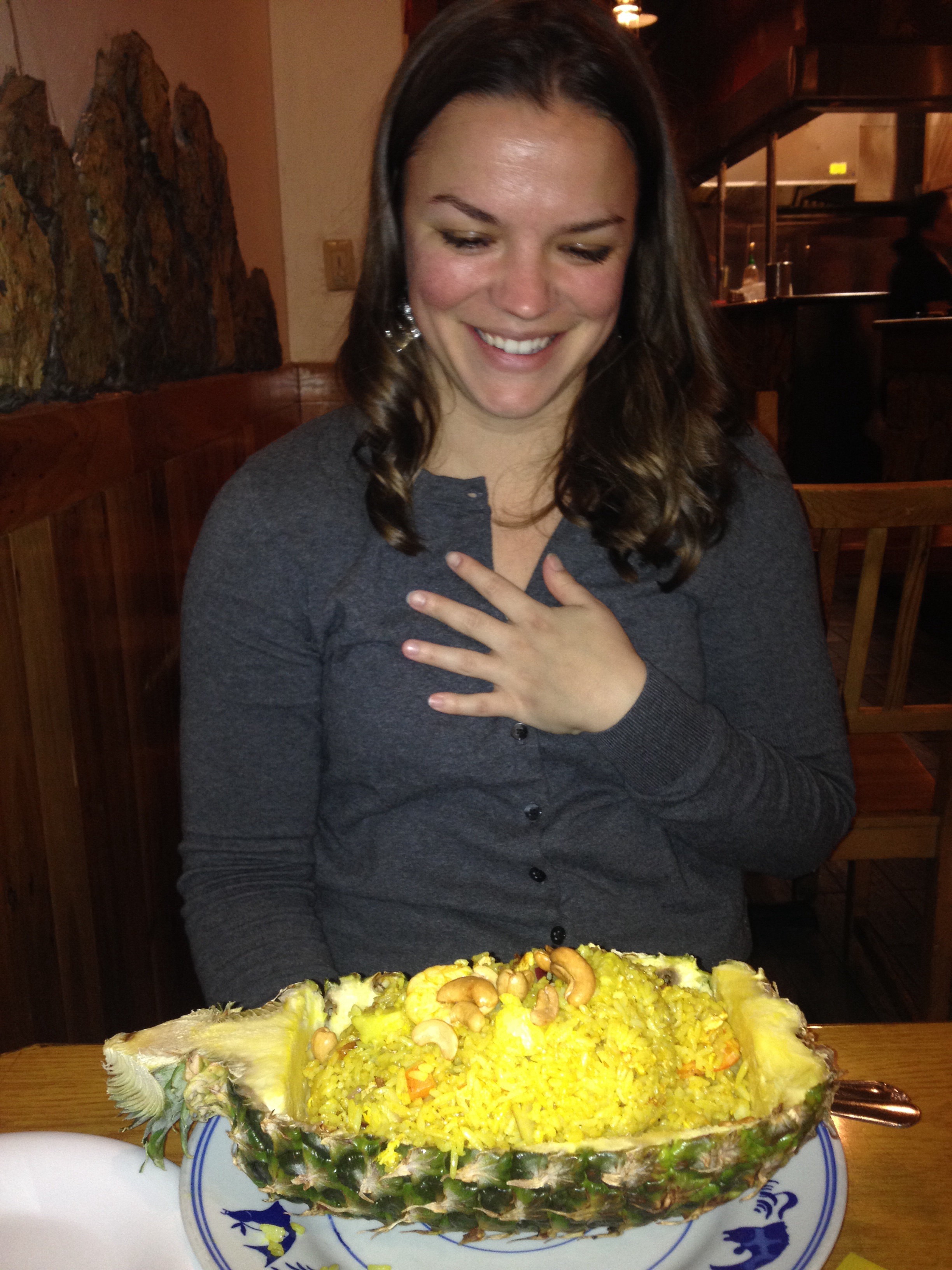
And then the food arrived and we laughed even harder at how her food was served in a pineapple.

image

I suddenly realized that I was missing all the fun of the present moment. I was having tons of fun with a friend I barely see and most of my thoughts were still bordering on obsession with fixing the laptop.

Now that I’m thirty I would hope I could put problems in relative perspective, but apparently little things can happen that still throw me completely off balance. Talking with Kate helped me feel lighter about the whole thing.

Of course I still feel my obsession with the broken keyboard hovering over my other thoughts. And I never think of myself as a very obsessive person.

I’m typing this using a combination of my phone, speech to text (which is something I didn’t know I could do in WordPress), and copy/pasting all spaces. Itshardtogowithoutspacebarordeleteortab.I’ve learned a lot about replacing a keyboard and exactly why my techie ex-boyfriend used to get upset at me for any drinks being within 10 feet of either of our laptops. I learned that even though I hate typing on a phone, it can be done. Im learning and adapting. I’m trying to laugh at myself and the whole situation.

But I must admit, it’s a challenge. Even at 30. Or maybe even more at 30- I’m attached to a certain thing being around and working well, and when it’s not, a whole week can feel messed up. Or a whole two days that feel like a week.

I think it helps to develop an awareness of the little things that can change your mood completely. So then, when youre upset, you can figure out why and break it down.

What do you think? Are there little things you rely upon that would change your days completely if removed or broken? Can you combat this by talking about it or shedding light on it? Do you find yourself taking seemingly ‘little things’ in your life way too seriously?


Radical Self-Acceptance

Do you mentally beat yourself up? Maybe you tell yourself you’re not doing enough, not working enough, not being the best you that you can be. I do all of that. A lot. For a long time, I thought the only way to silence this voice in my head was to simply do more. Work harder, write more, exercise more, eat more vegetables, meditate more, and on and on…

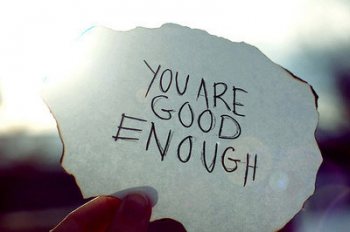
But in the past year, I’ve been trying to work on the idea that everything I am right now is enough. Everything I need to be I already am.

I think the thirties is the decade where we do more of this work than ever before – this work of self-acceptance. You realize that you have to embrace and accept your own imperfections. Those negative voices that tell you, “You’re lazy! Be more productive!” and “You need to do more” and all of those voices, don’t serve you at all. You have to be kind to yourself. I wish I knew exactly how to do it, and sadly I really have no idea. But I do know that it begins with loving all the parts of yourself – the lazy parts, the sad parts, the goofy parts, all of them.

“Clearly recognizing what is happening inside us, and regarding what we see with an open, kind and loving heart, is what I call Radical Acceptance. If we are holding back from any part of our experience, if our heart shuts out any part of who we are and what we feel, we are fueling the fears and feelings of separation that sustain the trance of unworthiness. Radical Acceptance directly dismantles the very foundations of this trance.”
― Tara Brach, Radical Acceptance: Embracing Your Life With the Heart of a Buddha