How Polite Are You?

Politeness is one of the most underrated skills I know. Even knowing that, I continually underrate it myself.

The word ‘polite’ makes me think of ‘table manners’ and ‘finishing school.’ I equate it with place settings and buttoned up shirts. It feels outdated somehow. Who puts ‘polite’ at the top of their list of self traits?

Would you strive to be exceptionally polite?

Although ‘polite’ and ‘proper’ are two similar words that aren’t exactly the same, they overlap, which makes me politeness only seem good up to a point. Saying please and thank you is good; keeping your elbows off the table is boring. When someone holds a door for me, that’s nice; when someone reprimands me for holding a fork ‘like a shovel’- that’s not so nice (this has happened in my adult life).
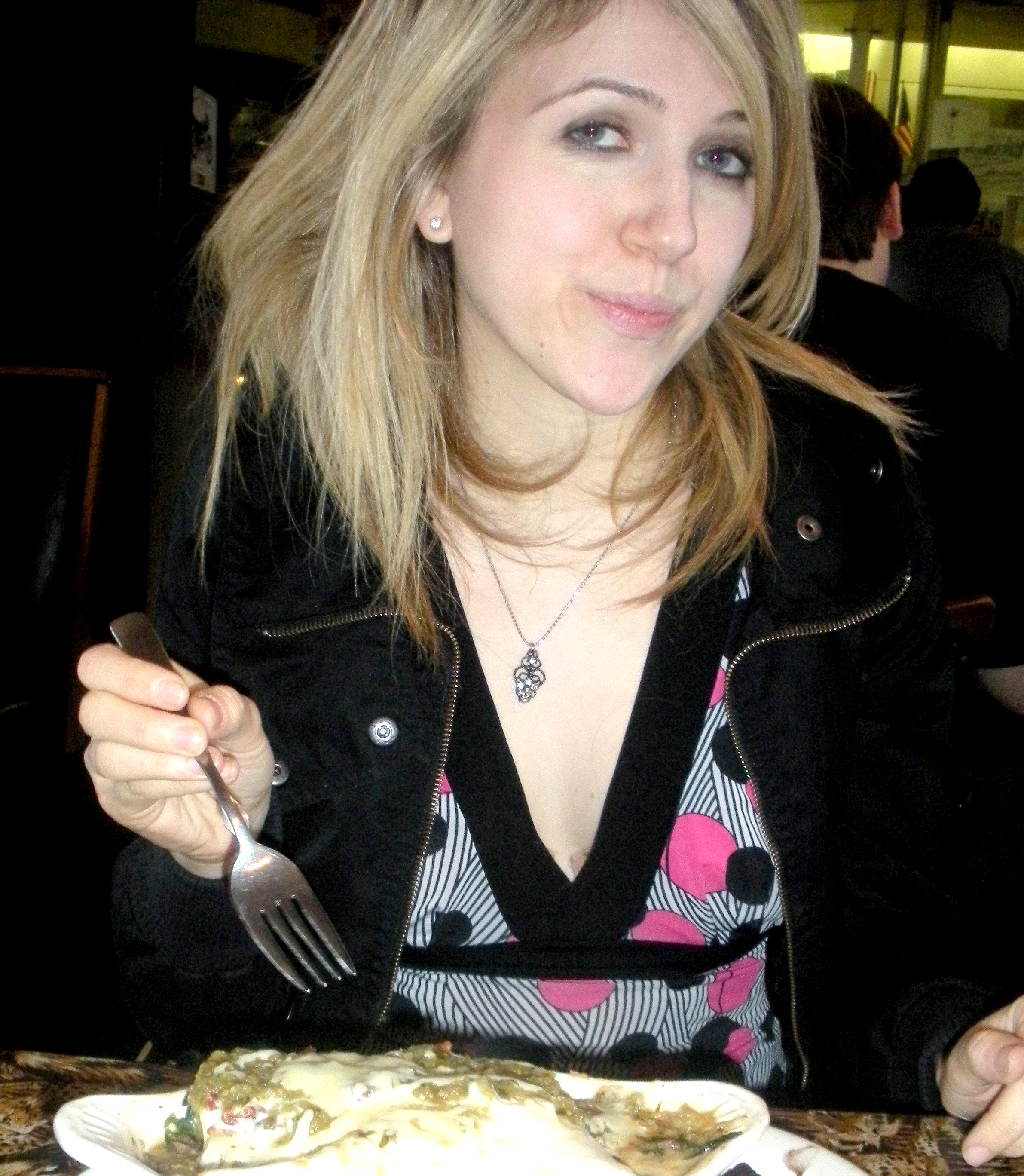
Holding a fork correctly is apparently a major skill.

Holding a fork correctly is apparently a major skill.

Am I polite? I try to be. I give up my seat when I see pregnant women on trains. I hold the door for the person behind me. ‘Please and ‘thank you,’ are regular parts of my vocabulary, as is the phrase “I’m sorry” (probably to an overblown extent). I try not to push tourists when they stop on the street for a photo.

But is that the extent of politeness? I read this article the other day called ‘How To Be Polite’ (which, from the title alone, I already thought was a bizarre, ‘too proper’ sounding article) that ended up broadly expanding upon politeness in a very surprising way.

The author describes his politeness as being way more than just well-mannered. He makes sure whoever he’s talking to in a conversation is heard. He asks probing questions and lets the other person talk while he truly listens. He writes emails of apology if he believes he’s wronged someone and believes in giving people second chances… even if he hated them the first time he met them. And if he hated them the first time, he’s polite enough that they’d never know. He also believes in virtually invisible politeness- never being polite in a showy way, but instead weaving it subtly through his interactions.

For him, politeness is really respecting other people- treating them as you’d want to be treated yourself. It becomes holding yourself to a certain standard, but not necessarily expecting that standard back from others. Because you never know what’s really happening in someone’s life:

“People silently struggle from all kinds of terrible things. They suffer from depression, ambition, substance abuse, and pretension. They suffer from family tragedy, Ivy-League educations, and self-loathing. They suffer from failing marriages, physical pain, and publishing. The good thing about politeness is that you can treat these people exactly the same. And then wait to see what happens.”

Perhaps politeness isn’t outdated and stodgy at all, but is something that desperately needs to to be rethought and brought back to life. If politeness was equated with second chances and empathy, with listening and not asking for anything in return, it can become a trait of very high value.

And maybe we just need to claim politeness as an important trait and build upon it. I’ve always been extremely empathetic, and I’m a pretty great listener, though not to the extent of the author in his conversations:

“I am often consumed with a sense of overwhelming love and empathy. I look at the other person and am overwhelmed with joy. For all of my irony I really do want to know about the process of hanging jewelry from celebrities. What does the jewelry feel like in your hand? What do the celebrities feel like in your hand? Which one is more smooth?”

That’s a lot, but it would be nice to feel that way! Politely overwhelmed with love and empathy for others! Politely full of a curious passion for the stories people tell! Even if they’re boring. Even if you hate them at first. When I think of politeness, that’s how I want to feel!

What if the word ‘polite’ went beyond ‘please’ and ‘thank you’ and equated itself with curiosity, love, and second chances? I’ve already newly adjusted it into my vocabulary.
 

Would you be friends with your mom if you were the same age?

How beautiful is this photo series by photographer Danielle Delph?

http://danielledelph.com/If-I-Had-Known-My-Mother-Back-Then

In a nutshell, this photographer took old photos of her mother at her age and photoshopped herself in, so it looks like her and her mother are hanging out together. It’s really sweet and touching.

I’d like to think I’d be friends with my mom if we met in different circumstances and were the same age. And even if we weren’t the same age, I’d like to think we’d still be friends. (FYI, I’m fascinated by friendship between women of vastly different ages, so if you’ve got  a story, please share with me.)

This photo series made me think about how I’ve discovered my parents personalities in deeper ways in the past 5-7 years and how even people closest to us can maintain a sense of mystery. I think when parents retire, a shift from obligation to personal exploration seems to happen for them. With my own parents, they both began to try new opportunities and almost gained a kind of youthful curiosity about certain things. It was exciting to see, and almost somewhat scary. Sometimes you think of your parents are immutable beings, steadfast and fixed in your memory and consciousness.

Accepting that my parents are growing just like I am is a beautiful thing. I’m learning about my parents as human beings, in much the same way new parents get to know their babies as they grow up into toddlers with their own distinct personalities.

Friendships and good ol’ phone calls

How do you communicate with your friends? Are you more of an emailer, texter, or caller? How do you maintain your relationships? For me personally, it’s a mix of all of the above. But I realized that I don’t talk on the phone at length with my newer friends, and by newer friends, I mean friends made in the last 5-10 years. I generally use emails, texts and social media to communicate with them.

I started thinking about this after reading the article, Is Voicemail Over? One interesting statistic from the article was a study from 2012 that said people use their phones for actual calls only 12 minutes a day.

Most of the people I talk to on the phone I’ve known for a really long time, and we grew our friendships by speaking on the phone, so it’s normal to continue that habit, and there’s something quite comforting about it. I remember that new, fresh period of my high school friendships when a friend and I would begin talking on the phone, and how intimate it felt, even though it was just two voices, laughing and chatting. Usually it involved me sitting on the rolling office chair in my room, attempting not to lean back too far, staring out the window at the adjacent apartment, gossiping about the Backstreet Boys, and being interrupted by my dad yelling, “Get off the phone or you’re not going to that Hanson concert!” (Oh god, did I really just admit that to the world? Yes.)

My phone doesn’t ring often. The only friends I talk to on the phone are older friends. I think somehow the phone as calling and talking device hasn’t gotten a bad rap – people see the a ringing phone as an intrusion. Nowadays, people text first to ask “Can I call?” or email to say, “Let’s set a phone date!”

I guess there’s nothing at all wrong with that, but I do miss the days of getting a random call and spending an unplanned hour of your afternoon catching up with a friend. And do you think hearing our friends actual voices and having to reply on-the-spot brought us closer together?

The Difficult Simplicity of You Celebrating You

Have you ever wanted to become somebody else?

Perhaps you’re at a party and a friend starts telling hilarious jokes or pulls out her best French accent. You suddenly wish you knew more jokes or had a fun accent ready to go as well.

Then you’re scrolling through Facebook and you see an acquaintance with a perfect bikini body who always seems to be drinking Mai Tais in Cancun. And/or you’re slammed with post after post of perfect engagements or amazing job titles. You wonder why you’re single and pasty white from lack of beach time fun..and also, how come you never tried to become an opera singer? Why didn’t you have the idea 10 years ago to begin computer programming or get an MBA?

Jane recently wrote about five things you should leave behind in your twenties. “Go where you are celebrated, not tolerated” slammed me in the face as the hardest lesson I’ve grappled with this year. It’s a difficult lesson when you’re constantly unsure how to celebrate yourself…because you’re not exactly sure who it is you’re celebrating.

I’m an extremely curious person and I’ve spent a lot of life wanting to be everyone at the same time. I’m in a state of constant wonderment about other lifestyles, other careers, and other ways of living. I make decisions about who I am slowly and carefully…and as I’m trying to pick a lifestyle from an endless array of choices, I ignore the lifestyle I’m already living. The hardest person for me to see has always been myself.

As I’ve realized this in my absolute latest twenties, life has gotten slightly easier. Maybe I don’t have to be the person who has tons of jokes up her sleeve or can command a room with a party quirk…maybe I can keep my natural ways of being a great listener and observer instead. That’s more the person I organically am.

And when I turn away from Facebook for awhile, and alternatively enjoy a morning mediation, I even feel comfortable alone with myself in the moment, far away from the stress of who I might become.

Perhaps, like me, you’ve had trouble knowing how to celebrate yourself. A major key is to find the difference between two desires: the desire to better who you are and the desire to become a different person. One desire is healthy and will push you forward (even though it may feel scary and difficult at times), but the other desire will scatter your energy and throw you out of balance …because it isn’t you.

Bettering yourself can mean anything from embracing your natural tendency towards unique clothing choices to signing up for a half marathon because you love running to letting yourself feel confident while remaining silent. Don’t beat yourself up because you’re not naturally sarcastic, or naturally size 0, or a naturally a great software developer.

Yes, of course you can change, but it’s easiest to change into the best version of the self that comes naturally, easily, when no one is looking.

Celebrate that person, no matter where and who you are right now.


2014-10-03 11.13.32-1


Friendship Changes in Your Thirties

Five years ago, I was 27. When I think back to that time, I realize that I still have the same group of close friends now. We may not see each other that often because of living across the country from each other, or having children or marriages that demand time and responsibility, or a host of other reasons. But when we reconnect, the closeness always feels there, though the frequency of our communication  has shifted over the years, ebbing and flowing.

But, when I think back to when I was 23 and to who my friends were then, I realize the circle was quite different and I’ve lost about three very close friends. One was about a specific incident, one happened because we simply changed and faded away from each other, and the other one was somewhat inexplicable. It lowered my self esteem for years; I wondered what was wrong with me – had I changed in some profound way that made me unlikeable? Was something fundamentally wrong with me because I couldn’t keep lifelong friendships?

I’ve found none of the above to be true. Actually, what I’ve found seems to happen in your early-mid twenties is a kind of subconscious friendship purge. As you go through your twenties, you change rapidly and your friends starting to reflect the changes in your life. You’ve brought a lot of baggage from your “college self” and your “adolescent self” into your twenties and you’re shedding it as you move through that decade of your life- and your friendships are bound to reflect that shedding process.

Now that I’m 32, I feel like the close friends I have now will remain close in the future. Once you get to your early 30’s, you’ve weeded out most of the people that just aren’t working for you.

In your thirties, you start to realize you really need to be uplifted from your friends. Toxicity just won’t do. Life is too short for people who don’t celebrate you. I love this quote from Mother Teresa- and it’s applicable to friendships:

 “Let no one ever come to you without leaving you better and happier.” – Mother Teresa