A Crazy Relationship Study

Do you know that old Woody Allen quote, “I’d never join a club that would allow a person like me to become a member”? I love the quote because it so perfectly describes something so many of us experience, this somewhat deep rooted feeling of not being good enough, especially when it comes to dating. Do you ever find yourself attracted to people who aren’t interested in you? Or perhaps you’re simply not attracted to people who come on too strong and tell you how great you are?

Well, I read a fascinating relationship study the other day that reminded me of this quote. The study was done at the University of Virginia with female undergraduates. The subjects were shown Facebook profiles of attractive, ”likeable” men and then, the researchers told the women how the men felt about them.

One group of women were told that four men liked them the most, a second group were told that these men rated them as average, and a third group heard that the men might like them.

And guess what happened? Well, as you might think, women were more attracted to men who found them attractive than men who rated them average. That makes sense. But here’s what was crazy.  The women who found the men most attractive were in the third group – where they were told the men might like them.

I thought that was interesting. Is it because women also like the chase? Do we want a chance to “win someone over”? Is it because we’re ambivalent about ourselves and therefore are attracted to people who feel similarly? Unknown

Facebook and My Self Esteem

So, tonight I was watching the awesome “Master of None” – comedian Aziz Ansari’s new show, and I decided I wanted to post about it on Facebook. But I kept second guessing myself. I thought: Is anyone really interested? Does anyone even read my posts? Am I yelling into a vortex that this is how I spend my Friday nights, Netflix and pizza? And will anyone “like” this post?

The last two things I posted on Facebook got exactly ZERO likes. For having 762 “friends,” that was surprising. I rarely get zero likes. For some reason, that really bothered me. I wondered why no one was liking my posts. They weren’t terrible; it’s not like I was posting pro-Donald Trump messages or advocating for the NRA. One of my posts was a link to an article on friendship, and another was a quote from one of my favorite movies. When no one liked them, I felt invisible. I’ve always told myself, “Who gives a shit about Facebook?” and pretended like I was holier than thou, but then, I found out that clearly I care.

The thought of having these “zero” likes would float to my head every once in awhile this past week. I wondered why the quote I posted didn’t resonate with anyone. Or why no one could relate to the article I posted about friendship in adulthood.

But then. Tonight, as I posted my Aziz Ansari TV show plug, Facebook asked me if I wanted to keep my privacy settings for posting as “Only Me.” I sat there, looking at my computer screen, feeling like a dummy. Because I had inadvertently made my last posts completely private, so that only I could see them.

As I sat there, I realized just how much I let Facebook affect my self-esteem. The whole time, I thought the “world” was ignoring me. And yet, it was my administrative mess-up.

So for awhile, without me realizing it, my only audience was myself. But as corny as it may sound, there’s something kind of beautiful about that.In the same way when you feel most isolated (after a break-up or a friendship ending), you learn to dive a little deeper into your own reserves and find you’re stronger than you think.  You become your own rock, not because you want to, but because you’re forced to.

What did I learn from all this? That at the end of the day, we are our own most important audience.

Let’s impress ourselves.

Income Gaps Between Friends

Do you ever notice income disparities between you and your friends? Whether a friend suggests dining at a restaurant you can’t afford or a take a trip that’s out of your budget, is there some time your friendship has been affected by income? Personally, I’ve definitely felt weird about certain things but for the most part, my friends are generous and understanding. But I do feel as though I’m limited in terms of activities and trips I can suggest.

There’s a wonderful article in the International Business Times called Millenials And The Wealth Gap: What To Do When Your Friends Are Richer Than You, that’s fascinating. Here’s a crazy factoid from the article:

Wealth inequality among millennials is more pronounced than in any other American generation. Engineering majors fresh out of college command lavish Silicon Valley salaries designing apps that feature “content” written by their poorly paid peers who studied literature. Graduates of law and business schools walk into six-figure incomes while friends struggle to make their way in nonprofit or government jobs.

Here’s another crazy one:

One-third of Americans who earn over $500,000 a year are under the age of 35, according to market research firm FutureCast. They exist in an income bracket dominated by lawyers, executives, engineers and entrepreneurs.

Jeez. That was pretty startling to me, but I guess it makes sense when you think about it. I tend to think of the age of 35 as still being somewhat fresh in one’s career, but I’m a writer, and our paths are quite different from lawyers, engineers and entrepreneurs.

What’s most interesting to me is this section of the article, when they describe a woman (Belk) who is choosing an artistic career path (writing).

Now that Belk lives on her own, she gravitates toward people who share her beliefs about money. Many of her co-workers have become close friends. Like Belk, they spend their free time focusing on artistic pursuits. Most of them do not picture a house or kids in their future.

“In a way, it’s freeing because I’ve found people taking a similar financial path to me,” Belk says. “When you have money, it’s hard to comprehend the reality of living with financial constraints or that a person may be happy not making as much. This is a lifestyle choice.”

What I find fascinating is this idea that sometimes income gaps may actually reflect lifestyle choices, and not how hardworking or talented we are. Maybe our new friends that we make as adults will tend to make the same amount of money we do. And perhaps, income gaps may more often than not affect our oldest friendships, when we didn’t yet know who/what we would become.

Origin of the Expression “Dirty Thirty”

When you turned 30, did you or people you know make reference to “dirty thirty”? Maybe you hosted or attended a ‘dirty thirty’ birthday party, or maybe someone just said “Ooooh, the dirty thirty” when you told them you were turning 30. I always wondered the origin of the expression. Is it a time when people let loose and go wild? I assumed it involved drinking and questionable behavior. Kind of like bachelorette party style fun.

I never bothered to look it up – until yesterday, when I saw that a comedy film titled “Dirty Thirty” was green lit (the film industry term for a film getting made), and that it would star YouTube celebrities Grace Helbig, Mamrie Hart, and Hannah Hart. I was immediately intrigued and decided it was finally time I researched this expression.

So, I did a little googling and found out that the origin of the expression is far more upsetting than I suspected.images

The top definition on Urban Dictionary is:

The age at which single women without children realise that their biological clock is ticking, As a consequence they may lower their standards and increase their willingness to perform sexual acts as a matter of desperation in order to find a mate/sexual partner. They may also attempt to hook up with younger males as an attempt to elongate their youth.

AAH! That is not what I thought it would be at all. Yuck. I hate it.

I’ve decided that I will officially ban myself from using that expression. Granted, that’s only the Urban Dictionary definition, but still. I don’t like it one bit.

Thankfully, the film “Dirty Thirty” doesn’t sound like it’s anything about women lowering their standards, so that’s good.

Evolving Friendships in Our 30s

How have your friendships changed in your 30s? Because I’m certain they have. I’m sure lots of your friends have settled down, gotten married and had children. Many of mine have. Or, maybe your friends aren’t married but they’re spending most of their time with their serious significant other. Which means they don’t have as much time for friends. Friends are compartmentalized in a different way. And look, I get it. That was me. For six years, I wanted to be with my boyfriend most of the time. I relished our nights of take-out and Netflix, and while I did see friends, I didn’t make as much of an effort to make new friends when I moved to LA – because I already had a close confidante to spend most nights with.

And that plan worked. Until it didn’t work anymore. Because we broke up. And I realized that I was alone in a city where I didn’t have a strong enough support system to sustain me. I am lucky because I did go to graduate school here, and did make a few wonderful friends (thank you!), but the geography of the city, me not being a driver, and the newness of my friendships has made it challenging. I don’t want to burden my new friends with my depression and heartache. In fact, most of the people I talk regularly are from home…NYC. Be it via phone, text or on g-chat. I don’t know if that’s entirely healthy, but it works. Friends are friends, right?

I’m kind of obsessed with friendship (being an only child and all) and this recent article in The Atlantic resonated with me, How Friendships Change In Adulthood. The article is fascinating and worth the read. Here are some fun factoids I took away from the read:

There are three main expectations of a close friend that most of us have:

  • Somebody to talk to
  • Someone to depend on
  • Someone to enjoy

The author writes that by middle age, we have three different types of friendships.

These friendships fall into three categories: active, dormant, and commemorative. Friendships are active if you are in touch regularly, you could call on them for emotional support and it wouldn’t be weird, if you pretty much know what’s going on with their lives at this moment. A dormant friendship has history, maybe you haven’t talked in a while, but you still think of that person as a friend. You’d be happy to hear from them and if you were in their city, you’d definitely meet up. A commemorative friend is not someone you expect to hear from, or see, maybe ever again. But they were important to you at an earlier time in your life, and you think of them fondly for that reason, and still consider them a friend.

-Julie Beck

It’s an interesting way to characterize friendships. Do you feel these are accurate buckets for friendships? I think there’s a lot of overlap between active and dormant friendships.

Personally, I know I need to work to gain more active friendships. A lot of that is on me.  I get nervous initiating plans, and over-think asking someone to hang out. But it’s something I’m aware of and can work on.

How do you feel your friendships have changed in your 30s?

Wanting to Settle Down vs. Wanting to Explore

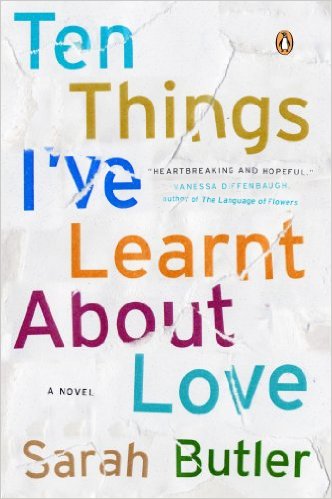
I’m a big reader, and escaping into other worlds is one of my favorite ways to relax and disengage my brain from the pressures of daily life. Despite the fact that I’m often looking to escape, I’m drawn to books about people struggling with the same things I am. The latest book I’m reading is no different. It’s Sarah Butler’s “Ten Things I’ve Learnt About Love,” and it’s about a woman who is about to turn 30, and all the various things she’s struggling with, including where her “home” really is.

The Amazon synopsis reads:

“About to turn thirty, Alice is the youngest of three daughters, and the black sheep of her family. Drawn to traveling in far-flung and often dangerous countries, she has never enjoyed the closeness with her father that her two older sisters have and has eschewed their more conventional career paths. She has left behind a failed relationship in London with the man she thought she might marry and is late to hear the news that her father is dying. She returns to the family home only just in time to say good-bye.”

517R5zRxdaL._SX330_BO1,204,203,200_

I’ve just started the book, but already I’m captivated by the world Butler has drawn. I can relate to Alice already, especially her conflicting desires to explore the world and also settle down. That seems to be a huge question looming over a lot of thirtysomethings I know, especially the artists among us. We want to create – be it writing, filmmaking, acting, etc. but we also feel the internal tug to settle down and create more of a home base. It’s hard to merge the two, especially because having a creative career can mean financial instability and uncertainty for a long time. It’s hard to imagine having a family when you’re working a day job where you’re barely saving money. On top of that, I think a lot of us are afraid of giving up our own personal time to create and explore our passions, when we barely have enough time as it is. It’s hard to imagine carving out time to write if I had a job, children and a husband. It’s an interesting dilemma I know a lot of us are facing these days.

So, I’m excited to keep reading this book, and see how a fictional character handles all the challenges thrown her way as she creates her own definition of home.

I’ll keep you posted on how it is!

Escaping the Cubicle Life

For about the past two years, I’ve been fortunate enough to be in graduate school for something I love. And I get to do it FULL-TIME.  Yes, I’ve had a part-time job throughout my time at school, and this summer I worked two FT jobs. But overall, my lifestyle has been free of 9-5 office jobs. That means no wasted hours of the day when I’m surfing the internet looking for ways to ‘change my life’ and get out of the situation I’m in.

I was talking to Laura on the phone tonight and I realized just how lucky we both were to have the lifestyles we do. Laura is a brand presenter and gets to travel around the country on behalf of major companies, and like me, we don’t have set schedules. It’s kind of incredible, really. I didn’t realize how grateful I was for this lifestyle until the past few weeks. My time is my own; I can work when I’m personally most productive, not just during the set hours of 9-5pm.

But, for me, unless I can find a way to make this continue, my lifestyle will look a lot different come 2016. I’ll have to find a way to support myself and have health insurance, which most likely means a FT job. Maybe not – maybe I’ll be fortunate enough to get one of the writing fellowships I’m applying for, or maybe I’ll find a few teaching jobs and cobble together a living. That’s the ultimate goal, I think. I’ve realized how much I value working at my own pace and on my schedule.

Apparently so do a lot of other Americans. Did you know that one in five Americans works from home? That’s no shabby figure. The other 80% of us spend about 8.7 hours a day in the office, according to the American Time Use Study (what an amazing name for a study, BTW). That’s a heck of a lot of time! Not only that, but most of us don’t actually work that full 8.7 hours. Many studies have shown that the average person spends 1.5 –  3 hours per day on personal activities at work.

Here’s my thing. I feel like when I work at my pace, in my own way, I get work done efficiently and to the best of my abilities rather than when I’m forced to work set times in a set place. What I’m saying probably resonates with a lot of people out there, and the question becomes – how can we escape the cubicle life?

Well, I’m still working on it. But I think becoming a master of your personal brand and owning your skill set is definitely a start. And saving and investing your money wisely.

Nancy Meyers and Thirtysomethings

I’ve been reading a few interviews with the female film director Nancy Meyers lately, mainly because her new film, The Intern with Robert DeNiro and Anne Hathaway, has been getting a lot of publicity. She has some very interesting thoughts on being a thirtysomething in today’s world.

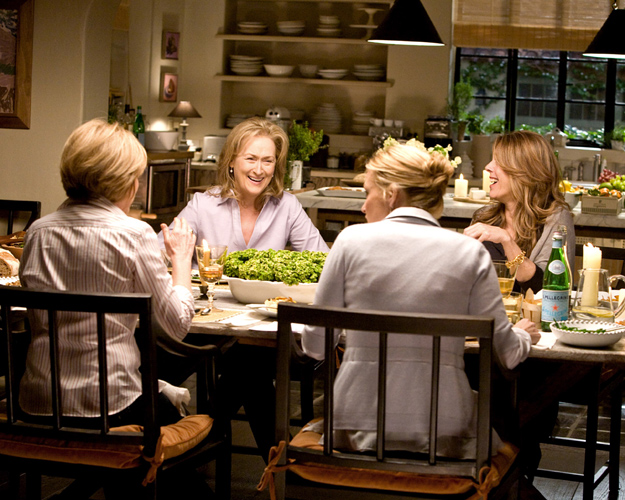
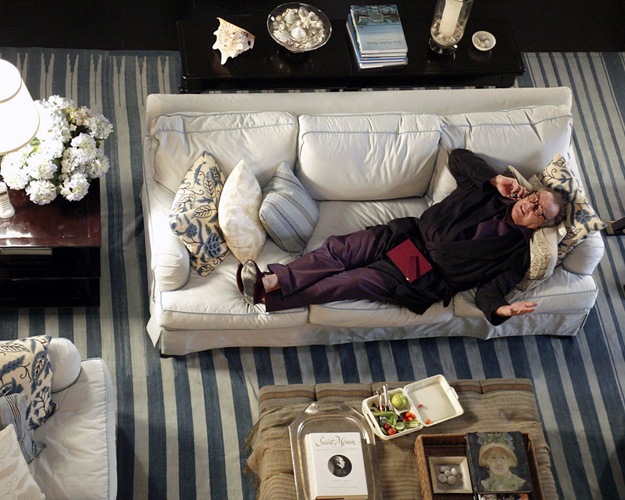
If you’ve seen a Nancy Meyers movie (Something’s Gotta Give, It’s Complicated, The Intern, to name a few), chances are you’ve drooled over the lush interiors of her characters’ homes. They’re always so cozy, well-appointed, and warmly lit, that you just want to plop down on one of those beautiful couches with a glass of wine and a thick novel. See below. I mean, WHO wouldn’t want to live in these worlds?

54c95203c6169_-_nancy-meyers-movies-interiors_04 54c95202eac04_-_nancy-meyers-movies-interiors_02

I aspire to get to a point in my financial life where I can live in a home and environment like these when I’m in my 60s. Apparently, there’s a lot of young women in their 20s and 30s who feel the same way. So much so that a group of women recently had a Nancy Meyers themed bachelorette party – complete with turtlenecks, glasses and roast chicken. In a recent NY Magazine article, Meyers talked about that bachelorette party and why she thinks her work resonates with younger women in our generation:

I think it’s because they see a really super-functioning, confident woman who’s made a life for herself, who bought herself this house. And they’re all starting their careers, and I think they must look ahead and say, “Yeah, I like that for my future.” And she’s a divorced woman, but she’s not an unhappy divorced woman. The women in my movies are not seeking romance. It happens when they’re not looking for it.

I really liked that quote, especially that last part. Romance seems to be a by-product of going after and living the life you want. In the article, Meyers also had some interesting thoughts about thirtysomething men in this day and age. She was talking about the difference between Robert DeNiro’s character in The Intern, a 70-somethign year old man who goes back to intern for Anne Hathaway’s company, and millennial men today. She says:

Well, the difference between this man and the millennials. I’ve seen it in my own life. I see guys in their mid-30s with their little boys, and they’re wearing the exact same outfit. They’ll wear like the same T-shirt, same kind of shorts, same sneakers, and I just remember when men didn’t dress like their 4-year-olds.

When my kids were growing up, they had Take Your Daughter to Work Day. It didn’t cross my mind that there was no Take Your Son to Work Day, because it was expected the men will grow up and go to work. I think my generation, brought up by Oprah Winfrey, really got behind girls in a great way, and I think the boys … the line in the movie is “Well, maybe they didn’t get left behind, but you know, there’s definitely some kind of gap.” I’m not talking about all men, of course. But I don’t think the Peter Pan quality is something women want in their men, that’s for sure.

What do you think? I definitely have noticed that a lot of men have that Peter Pan quality. I don’t necessarily think it’s a bad thing, but I do agree with Meyers in that many women don’t want that in their men. I haven’t seen The Intern yet, but I hope to check it out this weekend.

The more interviews I read with Meyers, the more she’s becoming my role model in this industry.

When You’re Far From Where You Want to Be

Oh guys, I’ve been in a funk the past couple of days. Over a lot of things, but the overall feeling is that I’m so far from where I want to be at this age (33). I know we’ve talked a lot about this on the blog, and most days I can buoy my spirits by telling myself “You can’t compare yourself to others!” and “Everyone walks their own journey” or a new, personal favorite “Trust the timing of your life.” But some days, those mantras just don’t work. Some days, you just feel down and you can’t help it. That’s been my week.

Why? Well, it’s a lot of things. But the main thing is that ever since I was a little kid, I wanted a big family. I’m an only child without a large extended family, so it makes sense that I would desire that connection. I thought I was on my way to possibly starting my own family – I was engaged, and I figured I’d have children within the next few years. But then we broke up. And man, it’s hard to go through a breakup at this age, because if you want kids and don’t have them already, that ticking clock only gets louder and louder. I’ve been reassured that I have until I’m 37, but that doesn’t provide me much reassurance at all.

I was feeling okay that my career was moving slowly – because A) I chose something incredibly challenging, screenwriting and dramatic writing, and B) I had found my partner with whom I could have children, so that provided some relief. But when the floor fell out from B), it affected how I felt about my slow-moving career. Because now I have this other huge life goal I want to accomplish: having a family. Which distracts me from my writing, and has in fact caused me some legitimate writer’s block. I’ve never really believed in the concept of writers block, but lately, I do feel like my creative well has been parched.

I didn’t realize the extent of my frustration until I reached a tipping point last night while catching up on Season 4 of Homeland. I found myself getting jealous and angry of Carrie (Claire Danes’ character) for having a baby when she doesn’t even want one! It sent me down a spiral of frustration at all those people, err…TV characters…(how about Mindy on The Mindy Project!) who have children who never really wanted them to begin with. Again, I have to bring myself back down with all those mantras and reminding myself “my time is coming.” And also, laugh at myself, of course, because umm…when you’re jealous of TV characters, well…enough said.

So how do you begin to change your life when all your goals seem so far away? I don’t know. For now, I’m trying to take everything hour by hour, day by day, and hope I get to a place someday that feels like home.

How to Be a Better Friend (Part 1)

Who do you call when you have an experience that makes you feel ashamed or dirty inside? I bet there’s only one or two people you call when you have those moments, despite having lots of close friends. Because sometimes it’s not about how “close” you feel to someone, but how they can handle certain types of emotions.

Have you ever had a bad experience and relayed it to a friend and gotten a reaction like this? “Awh, honey”  or “you poor thing.” That’s someone replying to you with more sympathy than empathy. And while your friend is probably well-meaning in their intentions, it can sometimes feel passive-aggressive.

What if we switched our reactions from sympathy (which can sometimes border on pity) to empathy? An empathetic reaction would be more like, “Oh, I remember when that same thing happened to me! I get it.” Or, what if we could try to feel what that experience was like for them? I know I would love it – it would re-fill me and make me feel as though I wasn’t alone in the world. And who doesn’t want that? A small change like that can mean the world to your friend.

Another small change you can make when reacting to a friend is not being the person who says, “Oh, I’m sure it wasn’t so bad,” or “You must be exaggerating.” It takes away from our friend feeling like her experience was authentic and real, when we should support him/her for being so vulnerable.

I know that when I call a friend after a particularly bad time, and they are able to love and support me through both my successes and my struggles, that’s when I know I’ve found a keeper.

Small changes can make for much deeper friendships.

Is Your Phone Ruining Your Friendships?

When you’re out with your friends, do you use your cell phone? Is it sitting on the table as you have your monthly catch-up dinner? Well, I used to be very cognizant of not using my phone around my friends, but I’ve noticed that in the last year, I’ve gotten worse. I’ve actually texted while having a conversation with someone (without having to look down at my phone), and texted during my graduate level classes while discreetly holding the phone under the table. I feel embarrassed even writing that, because I pride myself on giving all of my attention to anyone I’m talking to and really being present during school lectures.

This opinion piece in the NY Times is a beautifully written wake-up call to all of us; Stop Googling. Let’s Talk. The author, MIT Professor Sherry Turkle makes the case that it’s time for us to start connecting with others in a face-to-face way and to be okay with solitude sans our digital devices. It’s a beautifully written article and worth a read.

She brings up some fascinating statistics about phone usage and connection. This one in particular blew me away:

Studies of conversation both in the laboratory and in natural settings show that when two people are talking, the mere presence of a phone on a table between them or in the periphery of their vision changes both what they talk about and the degree of connection they feel. People keep the conversation on topics where they won’t mind being interrupted. They don’t feel as invested in each other. Even a silent phone disconnects us.

-Sherry Turkle

I thought that was fascinating! That even just having a phone in the vicinity of your interaction with a friend can affect the depth of that conversation. It sure does for me. For example, I have a close friend who lives out of town, and I go to dinner with her when she’s in town for a film shoot (she’s a producer) and because of the nature of her job, she’s always got to have her phone on the table. Invariably, at least once during a meal together, she stops to check her email, reply to someone, and then reply to another text that’s come through during dinner. Now look, I’m not complaining, because I relish any time I spend with her,  however little or distracted it may be,  but I miss the days when we were totally focused on each other, diving deep into  funny, odd and more vulnerable conversation territory.

Attention is one of the biggest gifts you can give to your loved ones. And, at the end of the day, we can’t forget that we’re animals – we connect via our eyes and body language. We need to keep that an integral part of our “connecting”  to other people.

Turkle’s suggestion to us all was simple and optimistic:

It is not about giving up our phones but about using them with greater intention. Conversation is there for us to reclaim. For the failing connections of our digital world, it is the talking cure.

So let’s reclaim conversation. With friends. Family. Strangers.

I’ve made a pact with myself to put away my phone when talking to my friends. What will you do?

“Second-Class Citizen” in Hollywood – At 38?

Do you have personal beauty icons? Those people who have a “look” you love and would want for yourself – and a lot of times, it’s not just their physical attributes, but rather, this unexplainable glow or draw they possess. Though they evolve, my beauty icon mainstays are Michelle Williams, Natalie Portman and Liv Tyler…

So, I was really disappointed to read an interview with Liv Tyler in the October issue of More magazine. Not because of her, she’s as awesome and lovely as ever. No, I was disturbed by something she said about being a woman in Hollywood.

liv-tyler-talks-aging

Liv Tyler

In the article, she says that thirty-eight “is a crazy number. It’s not fun when you see things start to change. When you’re in your teens or 20s, there is an abundance of ingenue parts which are exciting to play. But at [my age], you’re usually the wife or the girlfriend — a sort of second-class citizen.”

Ack. I think Liv Tyler is undeniably gorgeous. I would imagine most men from age 18 and up would agree. And so, while not surprising, I think it’s sad.

Maggie Gyllenhaal also recently said this to the Hollywood website The Wrap, “I’m 37 and I was told recently I was too old to play the lover of a man who was 55. It was astonishing to me. It made me feel bad, and then it made me feel angry, and then it made me laugh.”

The big problem for me is that we’re not going to see a richness of women on screen if this doesn’t change. I don’t want to spend my 30s going to movies about gorgeous 22 year old female protagonists. I want to see more women like me on screen, especially as I head into my mid-30s.

Yakudoshi – Or, Is Your 33rd Year Unlucky?

I’m in my 33rd year of life, and I can say it’s been one of the rougher years I’ve had in awhile. There’s been a lot of upheaval and transition in my personal life. The bright side is that I feel better equipped to handle these changes now that I’m in my 30s; nothing seems quite as dramatic as it did in my 20s. I’ve accepted that we all have u-turns in life, and I’m sure I’ll have more of them in the future. Strangely, they probably won’t be any less shocking when they happen.

So. Let me get to the point. I learned something fascinating this weekend. Apparently, in Japan, the 33rd year of a woman’s life is considered to be one of the most unlucky. This comes from something called Yakudoshi, which is a set of believed “unlucky” years (in a person’s life). For women, the unlucky years are 19, 33, and 37, with 33 being the most unlucky. For men, the numbers are 25, 42, and 61.

Yes, it is a superstition of sorts – based on no real hard facts. Wikipedia suggests that perhaps: “For women, rearing children and living a life of housework could cause unseen accidents and illness which again is proposed evidence for this theory.” Clearly, this stems from dated information. But still. I read that if you pronounce the number 3 (san) and 3 (san), it sounds like the Japanese word for misery (sanzan). With my own tumultuous year happening as I type this, I can’t help but wonder…Is there some nugget of truth here?

Perhaps. But, fear not if you’re still under 33! Aside from cleansing rituals and visiting a Buddhist shrine in advance of your 33rd year for blessings, the key seems to be to move slowly, don’t make any rash life decisions, and also…be grateful. As this article on Wow! Japan suggests, “Stop resisting your destiny. Leave your fate in the hands of deities. Just enjoy your troubles.”

And if there are indeed troubles, from the research I’ve done, it appears there’s a beautiful yin/yang quality to the idea of Yakudoshi. Yes, there are ‘unlucky’ years but they are balanced by great years of your life. And isn’t that the case in life, generally? There is no light without darkness. Happiness can’t exist without it’s counterweight of sadness, otherwise, what would it be but our natural status quo?

null

Something, Anything: A Gem of a Netflix Find

The other day I was scrolling through Netflix when I saw a film titled Something, Anything. It was described as: When tragedy shatters a Southern newlywed’s plans for domestic bliss, she leaves her husband and begins a journey of self-discovery.

It sounded like it could be a great Eat, Pray, Love situation (the book, not the movie) and I knew I could get down with that, especially since I’m going through a breakup right now. I’m voraciously intaking any culture and media that’s about self-discovery and fresh starts. Anyway, I start watching.

In the first ten minutes of the movie, we see a gorgeous woman in her late 20s/early 30s who is following the life script so many of us women (and men too, I suppose) have been fed. It begins when her boyfriend proposes with a fancy diamond ring, then they plan their lush wedding, picking out items at some fancy home good store for their registry, and finally, they get pregnant. I don’t want to give you any spoilers, but let’s just say, there’s a rub in their plan.

Here’s where it gets really interesting. Through a series of small encounters, the woman decides to pursue a more spiritual life, eventually entertaining the idea of perhaps becoming a monk at a monastery in Kentucky. She sells her car and all of her belongings, and heads out into the great unknown of life.

I haven’t seen many films about a woman’s spiritual journey that isn’t inspired by a man – be it from a breakup, unrequited love, etc. so this film was a refreshing, ambitious treat. As a caveat, I did find some flaws with the movie that were a bit distracting – namely it looked like the lead actress was wearing a wig the entire time and it drove me crazy. Unless people really do have hair that perfect. Who knows!

You can watch the trailer below. I’d highly recommend this movie, because how often do you see films about 30-something women ambitiously going “off-script” and doing something unconventional?

Being Single Is the New Married

This month last year, for the first time in over 40 years, the percentage of single adult Americans tipped over 50% to about 50.2%.  This is in stark contrast to the 1950s, when about 22% of adult Americans were single. So if you’re feeling bad about being single in your 30s, or feeling like a third wheel when you go to another BBQ at your married friends house, remember that the majority of us out there are single.

Surely there are lots of reasons for this trend, and lots of interesting speculation from experts in various disciplines.  Eric Klinenberg, a sociology professor at New York University and the author of Going Solo: The Extraordinary Rise and Surprising Appeal of Living Alone, had some interesting things to say about why people are choosing not to settle down.

“People are spending a big chunk of their lives — much of the 20s and even into their 30s, increasingly — becoming a grown up. They’re investing their time in their job, they feel anxious about their career and they’re having a very difficult time moving into that next stage of what we’ve traditionally thought of as grown-up life.” – Eric Klinenberg

I like that quote because it makes me feel better about the fact that often times I still feel like I’m clawing my way into adulthood.

Klinenberg also talked about how single people may be reluctant to give up living alone.

“People who live alone have a degree of control over their time and space that very few other people have. They have a chance for solitude, and kind of a productive solitude. We live in this moment of incredible hyper-connection and we’re always engaged with social life through social media. When you live alone, you have a little oasis in your apartment.”

Having lived alone for over three years, I can relate to that sentiment. While I also loved living with a partner, there’s an undefinable sweet joy about creating a “room of one’s own.”

So what do you think? Is this a trend that will continue to rise upward?

If You’re in Your 30s, You’re Not Old

While I was scrolling through Facebook this morning, I saw this status update from a fellow female writer in LA:

Hey female friends in their 30’s, every time you call yourself “old” the patriarchy wins. ‪#‎Don‬’tBuckleToBullshit

I don’t want to invade her privacy by telling you who she is, but I also don’t not want to give her credit for this awesome piece of advice. So if you’re reading this right now, FB friend, you’re awesome.

This piece of wisdom was so resonant for me! I always self-deprecate and call myself ‘old,’ around younger people especially. When I worked at an arts camp this summer and everyone was younger than me, I would always refer to myself as ‘old.’ Or when I’m interacting with fellow MFA students who are in their early-mid-20s, I call myself ‘old.’

But why am I doing that?  There’s simply no reason to! Being in your 30s is young! In fact, a study showed that women feel their most attractive at age 32. When did we get this idea that you’re an older lady when you turn 30? It’s just not true. In terms of physical appearance, I think there’s such a thing as “growing into your looks.” In your 30s, you understand what looks good on you and how to make your natural assets shine.

Additionally, so many people have started new career paths entirely in their 30s and beyond. Famed comedian Rodney Dangerfield was selling aluminum siding in his 30s, and his film career peaked when he was in his 50s and 60s. That’s just the one example that always comes to mind, but there are a ton of others.

So how about we make a pact to not call ourselves old? Cause it’s kind of like when super attractive people can’t acknowledge how attractive they are. And we all know that sucks.