Startling Statistics About Single Women

This NY Magazine article, Single Women Are Our Most Potent Political Force by Rebecca Traister, was sent to me two days ago, and wow – I can’t stop thinking about it. The article (though not explicitly about this) cited many reasons why being single until you’re later in life can be very beneficial. Most startling was this nugget:

The “Knot Yet Report,” published in 2013, revealed that a college-educated woman who delays marriage until her 30s will earn $18,000 more per year than an equivalently educated woman who marries in her 20s. Women without college degrees also gain a wage premium if they delay marriage into their 30s, though only an average of $4,000 a year.

I know a lot of amazing, very intelligent unmarried women in their 30s. Myself included. And sometimes, I feel ‘less than’ my married counterparts, or I question whether something is inherently wrong with me that I haven’t married yet. But this article made me feel powerful and part of a group. I didn’t realize how large the demographic of us single women was. Here’s a small excerpt from the article:

In 2009, the proportion of American women who were married dropped below 50 percent. In other words, for the first time in American history, single women (including those who were never married, widowed, divorced, or separated) outnumbered married women. Perhaps even more strikingly, the number of adults younger than 34 who had never married was up to 46 percent, rising 12 percentage points in less than a decade.

It’s nice to hear realize you could be part of a major societal shift and not even realize it.
Would You Take a Dating Sabbatical?

I read about the concept of “dating fasts” in a recent NY Times Wedding announcement and was immediately intrigued. Basically, you take 6 months or longer and you abstain from dating and romance to focus on yourself and your personal growth. One might decide to participate in a dating fast if she/he finds herself/himself in a holding pattern in relationships, dating the same types of people over and over again.

Pastor Craig Holliday, a minister of the Brooklyn Tabernacle Church in Brooklyn, who suggested a dating fast to the groom (pre meeting his now wife) in the above article, said this about why someone might want to take a dating fast:

It’s important because unless you begin to identify the areas in your own life that you need help in, by God’s grace, then all you will do is jump from one bad relationship to the next because you have brought these problems with you.

So, when I deep some research into this concept of abstaining from dating, it seemed very strongly linked to religion. However, I think it’s a useful idea for secular folks as well. I recently read a quote I loved and it applies to dating and this idea of taking a sabbatical to re-assess:

images.jpeg

We can’t always be ‘on’ and looking for love. It just doesn’t work that way. Sometimes our minds aren’t in a romantic place – we have to accept that romance isn’t an everyday thing. During our downtimes from dating, we can discover a great deal about ourselves – who we are as individuals; what excites us and motivates us, and ultimately, what we want in a relationship and what we can give.

I love the idea of a dating fast. But at nearly 33, I’m not sure I want to take a 6 month one. Seems a bit long when I’m hoping for children and a family. But I do love the idea, and maybe a month wouldn’t be too bad an idea.

Would you ever take a dating sabbatical?

Less FOMO in Your 30s

Perhaps I’m stating the obvious here, but I’ve found that I have much less FOMO (Fear of Missing Out) now that I’m in my 30s. I distinctly remember feeling very unsettled on Friday and Saturday nights in my 20s when I didn’t have plans. I’d wonder what everyone else was doing and feared that I was missing out on establishing key bonds and friend/romantic opportunities because I wasn’t out on the town.

But now, I spend at least one Friday or Saturday night per weekend at home, vegging out. Usually that involves wine and good TV/movies (now it’s Showtime’s Billions, Hulu’s The Mindy Project, HBO’s Getting On, and the list goes on…). I also love reading, and books give me lots of warm fuzzies during my downtime.

I used to have guilt about using this time to be by myself and enjoy my own company on a  weekend, but not anymore.

Maybe one of the reasons is that I don’t really go on Facebook a lot – I’m more an Instagram type of girl, and my favorite posts are usually inspirational posts from Elizabeth Gilbert and my celeb girl crushes. So, my social media usage doesn’t bring me down, but instead serves to lift me up (most of the time).

Psychological studies have proven that most FOMO is derived from social media. In fact, there’s a quiz you can take called “Rate my FOMO” that seems to gage your level of FOMO based on your social media usage. You can check it out here, Rate my FOMO.

Studies have shown that FOMO seems to happen when your social/psychological needs aren’t being met, and thus you turn to social media for connection. Then, the vicious cycle begins – you see your ‘friends’ doing fun activities without you, and you wonder why you’re not doing these cool activities.

So, maybe in our 30s, we know how to take care of ourselves better. We know how to meet our psychological and social needs, and we know the basics of self-care.

What do you think? Do you have less FOMO than you used to?

When People Ask “How Are You?”

Lately, when people ask how I’m doing or what my plans are when I’m officially done with graduate school in five weeks, I tell them some variation of this: “I’m just trying to take it day by day.” Because truthfully, that is what I’m doing. While I know I’ll need to get a job, and I know I’ll never stop writing, that’s the extent of my plan.

But today, as I wrote my stock “taking it day by day” reply in an email to a friend, I started doubting myself. Maybe I should have more of a plan. Because in our 30s, shouldn’t we be planning more? Creating a roadmap of where we want to be in a few years? Doesn’t it feel solid and stable to have a plan?

I mulled over that today, and have been thinking about this for awhile, and I came to the conclusion that for me, it’s less about having a plan and more about having guiding principles. Values. Those guide me more than my “plan.” While I don’t know what exact job I will have in six months, I know that I will try and live kindly and simply, spend time with those people I love, and make the world a better place for people whenever I can.

I also know my “target feeling.” It’s a weird phrase that I know I’m stealing from somewhere that I don’t remember (I think it was a social anxiety blog), but the idea is that you should consider how you ideally want to feel in a given situation. So, in an ideal world, what would you want your target feeling to be for most of your days? I know I’d want to feel exuberant, generous, and in-flow with something bigger than myself. And so, I must let my choices in how I spend my time be made by what will help me achieve this “target feeling”?

I was reading quotes on writing today, and I came across this one below, that is quite appropriate to this post today.

And P.S. – If you aren’t familiar with Anne Lamott, I highly recommend you check out her work. She’s got an amazing book for writers titled Bird by Bird.

E.L. Doctorow said once said that ‘Writing a novel is like driving a car at night. You can see only as far as your headlights, but you can make the whole trip that way.’ You don’t have to see where you’re going, you don’t have to see your destination or everything you will pass along the way. You just have to see two or three feet ahead of you. This is right up there with the best advice on writing, or life, I have ever heard.
– Anne Lamott, Writer

Missing Out by Not Having a Wedding

The other night I watched the first episode of the Netflix documentary series, Chelsea Does. It’s a non-fiction show by comedian Chelsea Handler where she explores one topic in-depth each episode, including topics like racism, silicon valley and marriage.

The first episode is about marriage. Chelsea says she’s never been one to fantasize about weddings. And quite frankly, neither have I.  The idea of walking down the aisle and being the center of attention sounds very unappealing to me.

But you know what does sound appealing? The celebration of friendship that weddings offer. Think about it – your closest pals give speeches, they throw you a bridesmaid party, and they write sweet, sentimental things about you in scrapbooks. Also, sometimes your bachelorette or bridal shower is the one time in your life that all of your female friends will be together. How awesome is that? It’s pretty amazing. I love going to bridal events and meeting all of the other friends my friends have from different periods of their lives.

So when I think about not yet being married or having a wedding, I think about missing out on those friend bonding experiences.

Maybe there should be an alternate event for those non-married folks? Like a mandatory all-close-friend birthday getaway?

challenge_92_02.jpg


The Pressure of Being An Unmarried Woman in Your 30s

While the number of single people in the United States is increasing (it’s now 50.2% of Americans…wowza!), the stigma attached to being a single woman in her 30s has not lessened. This is according a study that was done at the University of Missouri in 2009.

Here’s one of the study’s authors explaining how the pressure feels for women:

“We found that never-married women’s social environments are characterized by pressure to conform to the conventional life pathway. This pressure was manifested in women feeling highly visible and invisible. Heightened visibility came from feelings of exposure and invisibility came from assumptions made by others.”

-Larry Ganong, co-chair of Human Development and Family Studies in the College of Human Environmental Sciences.

Apparently, unmarried women feel the pressure most acutely between the ages of 25 and 35. As an unmarried 33 year old woman, I can definitely relate. Nothing shocking in that study. But for me, the pressure is less about conforming to a conventional way of life, and more about these silent judgmental feelings I think that other, married or older, people are thinking about me – the big WHY of me not being married yet. WHY haven’t I been “found” yet? It’s like the first round of a football draft – and having this feeling of not being a first round pick.

It takes a lot of self-work to get over those feelings, especially if you are someone who consciously wants to find a life partner and get married.

Another interesting tidbit from the study is that after age 35, the pressure dies down a bit. I guess that’s when the hub-bub of engagements, weddings and  first babies dies down, and the collective societal pressure relaxes a bit.

If the trend of ‘singledom’ in American continues to increase, do you think the stigma will lessen? Or is the stigma biologically and evolutionarily ingrained in us so that we can continue desiring a mate and ultimately, children?


Can You Make New ‘Besties’ in Your 30s?

Have you made a “bestie” in your 30s? Not a friend you already knew who you grew closer to, but someone completely new – someone you met in your 30s. I think it’s challenging, because you don’t have the built-in network of people your age because you’re not in social settings like school or after-school programs. And the workplace is a mix of people of varying ages and also, they have varying levels of desire to socialize outside of work. If people have families, most of the time they’re going to want to get out of work as soon as possible.

For me, I’ve been lucky because I’ve been pursuing film in graduate school and so, I’ve been around some people my age. But – not many! The majority of my classmates are in their 20s, and I feel a definite difference between us. But that could be my own bias.

I’ve also worked in jobs (including at a film school), where there were people with similar interests and passions, and so that naturally lent itself to friendships.

Can the depth of new friendship be the same, despite the fact that you haven’t known each other as vulnerable teenagers or college students? I answer that question with an emphatic yes! Especially if you’re single, because when you’re single, you generally have more time and radiate more of an openness to talk and connect. You can be looking for a more “serious” friendship if you’re not in a relationship. I realize that sounds a little funny, and so to clarify, what I mean is that if two people are single, they can devote more time to a new friendship – kind of like you did in your school days.

The same way you can find your soulmate at 45, you can meet a new best friend at any stage in your life, and have the same depth of connection. For instance, this summer I took a job at an arts summer camp, and while it began as a one-day temp job, it ended up getting extended to about seven weeks. And during the time, I made some amazing friends, and I am pretty confident I’ll be friends with them for a long time. We met over a short duration, but there was a deep understanding between us that we recognized immediately. I also happened to be in vulnerable stage when I met them and was going through some personal transitions, but wow – when I met them, I knew – I would be friends with them. I felt safe immediately and like I could be myself. More so than I had during my entire two years at graduate school. So, you just never know where and how you’ll meet your next ‘friend soul mate.’ In the same way we romanticize how we might meet our romance loves, I like to think about the magic of meeting a new friend who you just know will be a lifer.

  • images.jpeg

Career Hopping in Your 30s

I was talking to a friend recently about how many people in our age range (32-36) are pursuing new career paths. These folks say they’re heading to their “second career” – maybe it’s teaching yoga, opening up their own business, or going back to graduate school in an entirely new field. It’s very admirable to take a leap into the unknown and explore whatever it is you’re curious about. So bravo to those who do!

When my friend and I thought about ourselves, we both expressed the same worry – we feel like we haven’t even had our first career yet! So how can we even think about a second one. Are we somehow behind? I thought about it a lot after my friend and I left the coffee shop, and instead of beating myself up for not having a very solid “first career” with tangible success markers, I redefined it for myself.

For those of us who did a little job bouncing in our 20s, we can define our first career as more of a hodge podge of jobs – kind of like when you order an appetizer sampler plate at a restaurant. That’s what our first careers were – samplers, avenues of exploration.

So let’s say you’re ready for a career change: where do you begin when you’re unsure what to do? Well, I found this article to be really fascinating:

Why and how to change career in your early 30s and the women who made it work

This other article  linked below has links to some great online quizzes you can take to see where your natural aptitudes lie.

The 11 Best Career Quizzes to Help You Find Your Dream Job 

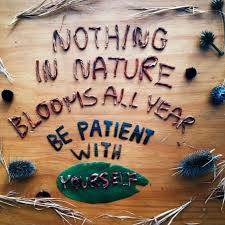
Ultimately, it’s about doing your research and making sure you have the financial stability and a plan to make the jump. While it may be very scary to make a change, I’m a big believer that…

Unknown


Thoughts on the New Year

Happy 2016, everyone! We’re so excited that you’re on this journey of discovery with us, and we can’t wait to share our 2016 with you.

While I’m excited and hopeful for what 2016 will bring, I’ve been fighting a prevailing feeling of fear about the uncertainty in my life. It seems there’s so much to figure out that I don’t know where to begin; where to take action first or what the action steps are exactly. Have you ever felt that way?

I thought that by now, at 33, I’d have at least one part of my life “sorted out.” Perhaps I wouldn’t be happily married, but I’d have a great career. Or, I’d be happily married and still working to figure out my career. But I feel as though I’m still trying to figure both of those areas of my life out, so it feels as though I’m treading water.

Here’s the thing though. Deep down, I believe that I’m going to get to a more stable, happy place. I don’t know when and I don’t know exactly how, but I feel confident about it. The feeling reUnknown.pngminds me of this quote that an amazing friend sent to me:


Isn’t that beautiful? I think it’s a great reminder that we evolve and grow as we’re meant to. Maybe one year is awful, and the next makes up for it in a huge way. And by having faith in that, we can relax and be gentler with ourselves. At least that’s my hope for myself.

So, here’s to a fresh and hopeful start in 2016! Everything is moving as it should.

Will You Own A Home in Your 30s?

Unknown.jpeg

I’ve been thinking a lot about the markers that seem to differentiate people in their 30s. In our early to mid-20s, it seemed as though we were all on the same path – trying to find our careers and our own identities. There was always common ground on which to relate.

But now, two people in their 30s can be vastly different because of their choices on marriage, children, career and finances. Home owning is also one of those markers.

The average age for a first-time homeowner is between 31 and 34, depending on what study you’re looking at. I’ve even read some studies that put the age for first homeownership at 39. So it’s hard to say what’s exactly accurate.

One thing is for sure, though. People are waiting longer for first homeownership. Maybe that’s the economy or student loans or a host of other factors like people marrying later.

Personally, I’m not at all close to buying for two equally measured reasons. Firstly, I don’t have enough saved for a down payment. And secondly, I’m not sure where I would want to buy a place. I haven’t settled on my “heart home” or “forever home.”

How about you? Do you think you’ll own a home in your 30s, or do you already?

Here are some fun facts about first time home buyers:

Six Interesting Things About First Time Home Buyers

The Solstice and Acknowledging the Harder Parts of the Holidays

The Winter Solstice is the shortest day of the year in the Northern Hemisphere, and thus the darkest time of the year. In the United States, that day is either December 21st or 22nd of each year.

What I love about this Winter Solstice is this idea that it’s a time to reflect on our lives before we move into a new year. It’s a time of rebirth.

Many cultures/religions/spiritualities throughout history have celebrated the Winter Solstice. In Christianity, there’s actually services on December 21st called “Blue Christmas” or “Longest Night” services. They are services for those who aren’t feeling all the “joy” of the holidays – people who have experienced loss and trauma in the past year. Those who have dealt with a death, divorce, injury, or any kind of grief/loss may find relief in these services.

I love this idea – because so often, we’re force fed this concept of everything being immensely joyful during the holidays. But there’s great healing when you can also acknowledge the darker/sadder parts of life before you move on.

This reminds me of a quote my yoga teacher said years ago during class:  “What you resist, persists.” So, just because it’s the holidays, doesn’t mean you can’t let in a little sadness or melancholy. By allowing yourself to feel those feelings, you open yourself up to a fresh start in the New Year.

blue-christmas.jpg

Happy Holidays! And Where Is Your ‘Heart Home’?

Happy Holidays, wherever you are! Hope you’re staying in festive spirits and spending time with family and friends.

I’ve just arrived back home in NYC after two airplane flights and two bus rides. And I have to say, there’s something about traveling for me – as in, the actual act of commuting, that puts me in a hyper reflective state of mind. Do you feel that way, too?

In the past few years, plane rides have become evaluation periods – time to look back on how I feel about my life. And today, perhaps because it was the holidays, I was thinking about the idea of home. I felt a weird sense of not knowing if home was LA or if home was NY. I’ve lived in LA now for almost two and a half years, and while it’s increasingly feeling like “my city,” it’s still foreign to me. And yet, I don’t feel as though NY is my home either. People I love are here, but there’s no professional tie for me.

homeandheart_flickr.com_

In my travels today, I started wondering the percentage of people who live where they grew up. And thanks to the power of Google and diligent researchers around the world, we can find that information pretty easily.

Apparently, according to a Pew Social trends report (from 2008), 37% of American adults have never left their hometown.

I was very surprised by this. And I got a small swell of pride for having the courage to try living in a new place.

But, this was even more shocking to me: 57% of Americans have not lived out of the current home state in the US. 

I also loved this part of the study: the idea of a “heart home;” a place where you feel most deeply connected. According to their research, more than one-in-five-U.S.-born adults say they don’t feel they are currently living in their “heart home.”

Are you?

Personally, I’m really not sure. But maybe I can have two “heart homes.” Or do you have to be monogamous to a place for it to be your “heart home”?

Interesting food for thought.

Wherever you find yourself this holiday season, “heart home” or not, try and appreciate whatever ways, however small, that it feels like home to you.

How Many Hours a Week Do You Work?

When Laura was visiting me in LA, we had periods of time that we designated as our “working” time. I had to finish up a screenplay for class, and Laura was working on a few career related tasks. Together, we used the Pomodoro method so we could be as efficient as possible. Do you know about the Pomodoro method? If you don’t, you should.

Here’s the sweet and simple explanation, direct from the Pomodoro Technique website, http://pomodorotechnique.com/get-started/.

But in a quick summary, you basically work in intense 25 minute intervals with 5 minute breaks in between. During the 25 minutes in which you work, you don’t check your text messages, pick up calls, deviate from the task at hand, eat snacks, etc. It’s deep, focused work on whatever task needs getting done.

And man, it’s effective. I’ve been using it for years to help with my writing, and Laura just got on board while she was in town. She’s now a convert.

You do as many Pomodoros as you, but I normally average at 4 per day for writing.

It’s named the Pomodoro method after the tomato shaped kitchen timer that they suggest using.

I thought a lot about the Pomodoro method after reading this killer article about Japan’s 105-hour workweek. Yup, you read that right. 105 hours. Jeez.

The author worked at one of Japan’s elite law firms, and wrote about his experiences, which included a daily schedule of working 10am to 3am.

In practice it’s common for lawyers to block out a period of a few hours for some personal time and designate that as their weekend. Japanese lawyers work an average of 300-plus hours per month. Annually, they take less than ten days of leave. – Peter Bungate

Say what?! Man, do I feel lazy. It’s a cultural thing apparently, and it’s about making sure every task is completed perfectly in the best way possibly. While that’s incredibly admirable, you can imagine the havoc those hours inflict on people’s personal lives.

This was an interesting to tidbit from the article:

The consequences of overwork stretch into retirement. A well-known anecdote is called the “Narita Divorce,” named after Tokyo’s main international airport. Upon retirement the company will pay for a round-the-world airfare for the retiree and his wife in recognition of a lifetime of service. Being sometimes the only lengthy period spent together during the husband’s working career, the couple comes to the realization that they are incompatible and, immediately upon returning to Narita airport, decide to separate rather than spend their retirement years together. – Peter Bungate

How crazy is that?

So the question remains. How many hours a week do you really work? I probably work around 35 (including my temp job and my writing.) While that sounds meager, I’m not including reading and corresponding with professional contacts “work.”

How do we even measure hours at work anyway, especially when we’re self-employed or pursuing a more artistic path?

What Big Changes Did You Make In Your 30s?

Transitioning out of your 20s into your 30s feels somewhat like a spring cleaning. You identify habits that aren’t working for you and you actively work on changing them.

Here some of the changes I’ve made in my own life as I moved into being a thirtysomething.

Ditch the Energy Vampires 

You know those people who, after you spend time with them, make you feel exhausted or unhappy? In my twenties, I had a few people in my life who made me feel like that. That was because I… A) Kept making excuses for reasons why they were in my life, B) Was afraid to be alone and felt like I wouldn’t make other, new friends who were better fits for me. Once I realized that my time was better spent with people who made me feel excited about the world, I slowly moved on from the other people who didn’t. It doesn’t mean they were bad people, but their energy just wasn’t the right fit for me. You will find your tribe if you keep looking for them. And being alone can often be incredibly satisfying.

“It is better to be alone than in bad company.”
-George Washington

Take At Least One Step Each Day Towards Achieving Your Dream

Yes, most of us have day jobs and aren’t actually pursuing our life dreams for 8 hours a day. We’re in jobs that pay the bills but don’t make us incredibly happy and fulfilled. So we have to use our ‘down time’ wisely. Even 10 minutes a day spent going after your dream is something, that time is better than doing nothing at all. It starts the momentum going.

For me, that can be as small a step as writing for a half hour or submitting my work to a screenplay contest.

Invest in Yourself 

And I mean, literally. As in, spend some of your earned income on your education and self-improvement. I started graduated school when I was thirty-one years old and it was one of the the best decisions I’ve ever made.

I read somewhere that you should invest 3% of your income in your self-improvement. Whether that means a graphic design or photoshop class, or investing in an online continuing education class – there’s always something you can do to increase your knowledge and your hire-ability.

Once you have identified a passion, invest in yourself. Figure out what you need to know, what kind of experience and expertise you need to develop to do the things that you feel in your heart you will enjoy, and that will sustain you both mentally and economically.                              –Martha Stewart

What habits/mindsets did you change in your 30s?


Did You Reach Your Career Goals By 27?

Did you fulfill your career goals or make significant progress in your career by 27? Well, if you did, congrats for you! According to a new study done at the University of Edinburgh, people who accomplished their career goals by 27 (men, in particular) were happier later in their life.

I read about this study in an email newsletter that Laura forwarded to me. The title of the newsletter, written by a prominent career blogger, was: “Travel is terrible for your career.” Laura passed it along to me because she does travel often for her career and she was questioning her choice.

One of the points in the newsletter about why travel is bad for your career was the aforementioned study. When I read this study, linked below, I felt a little frightened and sad inside. I didn’t accomplish my career goals or make significant progress by the time I was 27. I’m a turtle, a late bloomer. Did this mean I was doomed to less happiness than my peers who had accomplished their goals by 27?

Well, I took a deeper dive into this study, and read the linked article (which was quite low on facts and information about the study) and…

This study was born on people born in 1936! OF COURSE people accomplished their career goals earlier – the average life span for both sexes in 1935 was 61.7 years. So yes, your career will start and end earlier.

I felt like the inclusion of the study in this newsletter was alarmist and unfair information meant to scare people. And I realized, there’s a lot of that information aimed at us 30-somethings, especially at women. Whether it’s about fertility, career, health or money, there’s so much pressure to do things fast and by a certain time.

Well, I call bullshit. So don’t get scared when faced with time pressures. For the most part, they’re societally imposed. And definitely don’t take everything you read at face value.

What Do You Value Most In A Friendship?

Is is loyalty? Acceptance? Similar interests? Kindness? Ability to make you laugh?

Has what you valued in your friendships changed as you’ve gotten older?

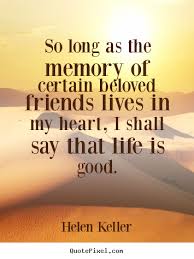
Loyalty is pretty high up there for me, but I would say I’m most drawn to open minded people who are free-spirited. Also, the word wild keeps coming up for me when I think of characteristics I value in a friend. I don’t mean “wild” in a  party-all-the-time type of way (though I do love a good drinking buddy), but rather, up for adventures, new projects, and a general open-mindedness to how we, as human beings, can exist in the world. I’m often attracted to people who march (happily) to the beat of their own drummer. Friends like that encourage me to do the same.

As I’ve moved into my 30s, I’ve found it more difficult to make friends, so one quality that I now always look for is someone who prioritizes friendships. People who don’t call me to hang out only when their boyfriend is out of town, or when they want some specific information from me. I want friends who value friendship – and see that it has an equally important place in one’s life as romantic partners and even family.

“One of the most beautiful qualities of true friendship is to understand and to be understood.”
– Lucius Annaeus Seneca

“I define friendship as a bond that transcends all barriers. When you are ready to expect anything and everything from friends, good, bad or ugly… that’s what I call true friendship.”
– Harbhajan Singh

“What do you most value in your friends?
Their continued existence.”
― Christopher Hitchens, Hitch-22: A Memoir

images.jpeg