Togetherness and Continuing to Find Yourself In Your Thirties

One of my favorite new HBO shows, Togetherness, just got cancelled a few weeks ago. It’s a darn tragedy, because the show was brilliant and touching and all about the thirties.

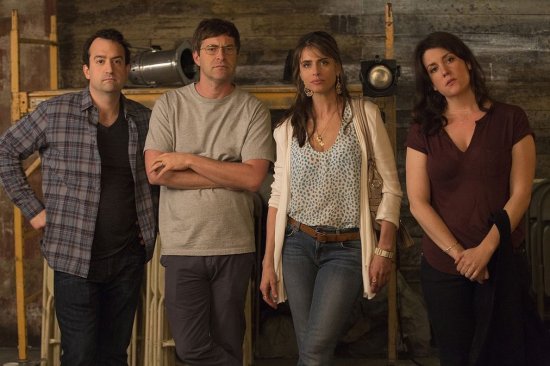
Togetherness features four thirty-somethings all in unique places in their romantic and career lives. Two of them are a married couple with a house and kids. The other two are single, with one’s career (as an actor) taking off and the other’s (as the bringer of blow up castles to parties (really) ) stalling.

Throughout the two season series, the marriage of the main couple shows some slow-building cracks and begins to fall apart. The husband quits his job as a sound designer for movies and starts driving an Uber. The wife adds a volunteer job of starting a charter school to her stay-at-home-mom life and finds some happiness and power in doing that. Hook ups happen, cheating happens, drugs happen,  moments of intense clarity happen, kick the can in the park happens, characters grow into new jobs, characters find new parts of themselves, characters find new friends, characters fight, characters crash on couches, characters crash cars. Basically, a lot of the tumult and highs and lows and crazy and silly of the twenties happens here… in a more…grown up way? It’s hard to explain it except that I recognize it, and it’s amazing how this show has managed to capture it. Characters have already grown into themselves, but they’re growing into themselves again and again and again in their thirties.

What this show captures is what Jane and I have been trying to figure out here on this blog, but haven’t ever completely been able to pin down: that feeling of starting to know who you are and then using that knowledge to go with the new version of yourself that’s already begun to develop and will develop differently again and again. There’s a fluidity to a thirty-something that grows out of a solid foundation already built earlier. Meaning: you’ve already found a lot of yourself during or right before your thirties, but that self changes and grows and shifts and then is found over and over again. The thirties are about recognizing, from the self that you’ve already found, the changes that are happening to you. A thriving thirties decade is also about being able to communicate those changes with both yourself and with others. Also it’s about recognizing that you can’t compare your life with the lives of your friends and relatives- some people will have their careers laid out, some people will be switching around. Some people will have kids, some will stay single, some will get divorced. Your road is your own.

What makes the characters in Togetherness amazing is their ability to communicate with each other (eventually) throughout the series. Sometimes it takes a complete breakdown in communication, but the ‘togetherness’ of Togetherness stems from each fiercely independent character equally fiercely wanting to reach out to one another. The early marriage breakdown in the show stemmed from very slow communication breakdowns- nothing huge or obvious, just slow cracks. The show begins with shedding light on the cracks, which have to be revealed in order to be repaired. I feel like a lot of finding yourself in your thirties is about shedding light on slow cracks that have built up, tending to them, and rebuilding again and again.

Hopefully, there will be other shows this good at capturing the thirties decade. Meanwhile, if you haven’t seen Togetherness, what are you waiting for? Go watch it and enjoy!
togetherness-season-2_article_story_large

30 Women Around the Globe Reflect on Life at 30

International Women’s Day was just last week- March 8th. In honor of that day, Stylist magazine interviewed 30 women, all age 30, from all over the world. Here’s the link to that article: This is what 30 looks like: women across the world share their experiences. 

The women talked about their careers right now, whether they were single, married, or in a relationship, whether or not they had children, whether they were where they thought they’d be at 30, and more.

The biggest thing I noticed about the article was the discrepancy in the experiences and the voices. Every woman was at a different point in their life- some were 30 and worried about being single, some were 30 with 3 kids. Some were 30 and stay at home moms, some were 30 and running their own business. Some were 30 and worried about money. Some were 30 and worried about going outside at night because in their country they might be raped or killed. “Women aren’t safe. I can’t walk the streets for fear of being killed or raped; this is the product of patriarchy in my country.” – Sandra de la Cruz, Lima Peru.

Some were super happy with their lives while single, some super happy while married with kids. Some seemed unsatisfied while single, some seemed unsatisfied married with 3 kids. I feel like reading about all these different experiences for women at 30 really fights the FOMO (Fear of Missing Out) issue that I sometimes have. I want to do everything at once. I want to experience life with my own business, and also maybe have a life learning at another company. I want to experience being pregnant and having a child, but also experience being happily married into my fifties and sixties without a child interrupting, and without the life-changing responsibilities of a child.

It’s hard to want everything at once, and to want everyone else’s experiences too. This happens to me sometimes- I’m in a happy vacuum alone, enjoying my time, but then someone will tell me about something they’ve done, and I’ll want to do it too.

The article really brought home how different experiences can all be valid and happy-making, and there’s no one portrait of what a thirty-something’s life should be like. Follow your own happiness and make your own life and you won’t miss out on anything.

1390973327_international_womens_day_wallpaper

A Beautiful Frustum In Your Thirties

Seth Godin, one of my favorite business bloggers, recently wrote a blog about pyramids without a top. In geometry, these types of shapes are called frustums.

We spend our career lives trying to get to the top of our pyramid- we want to be the career elite, the famous, the special, the 1%. And why not? Fantastic career success is a big and beautiful possibility.

However, with the advent of the digital age, more and more of us will find it easier than ever to get our work out there in some form, but harder and harder to gain the fame and well-known 1% type of success (because everyone else is getting their work out too). For example, it’s easier than ever for anyone to publish a book all by themselves, but now there are more books available than ever before. Instead of waiting to get a book published, you can publish your book and sell it on Amazon or multiple other internet sources completely free. You can do the same with music and web tv (webisodes)- you can quickly and easily get your music or webseries online and direct to users all by yourself and for almost no cost.

Will you be the next Taylor Swift or Lady Gaga? The next Stephen King or Tina Fey? Maybe. Maybe not. But can you be a success and make good money and have a powerful, impactful, positive life without being a headliner like the above names? Absolutely.

The hard part isn’t in being in a frustum of an industry- where there’s no real peak, just more and more opportunity for entry- the hard part is in accepting the frustum and knowing you can still make a great life. There’s lots of room in frustums for lots of people to be successes- it’s just a different kind of success.

Even when you’re not well-known or at what you think is the peak of your career pyramid, you can still be a pretty damn good school teacher or time-share seller or yoga instructor or animal shelter manager. You can write amazingly good books or make insanely gorgeous music and get it all out into the world easier than ever because the base of the frustum is wider than ever. If you can accept this shapeshifted new world change, you may just realize that you’re more successful (and happier) than you ever dreamed you could be.

Pentagonal_frustum.png

When People Ask “How Are You?”

Lately, when people ask how I’m doing or what my plans are when I’m officially done with graduate school in five weeks, I tell them some variation of this: “I’m just trying to take it day by day.” Because truthfully, that is what I’m doing. While I know I’ll need to get a job, and I know I’ll never stop writing, that’s the extent of my plan.

But today, as I wrote my stock “taking it day by day” reply in an email to a friend, I started doubting myself. Maybe I should have more of a plan. Because in our 30s, shouldn’t we be planning more? Creating a roadmap of where we want to be in a few years? Doesn’t it feel solid and stable to have a plan?

I mulled over that today, and have been thinking about this for awhile, and I came to the conclusion that for me, it’s less about having a plan and more about having guiding principles. Values. Those guide me more than my “plan.” While I don’t know what exact job I will have in six months, I know that I will try and live kindly and simply, spend time with those people I love, and make the world a better place for people whenever I can.

I also know my “target feeling.” It’s a weird phrase that I know I’m stealing from somewhere that I don’t remember (I think it was a social anxiety blog), but the idea is that you should consider how you ideally want to feel in a given situation. So, in an ideal world, what would you want your target feeling to be for most of your days? I know I’d want to feel exuberant, generous, and in-flow with something bigger than myself. And so, I must let my choices in how I spend my time be made by what will help me achieve this “target feeling”?

I was reading quotes on writing today, and I came across this one below, that is quite appropriate to this post today.

And P.S. – If you aren’t familiar with Anne Lamott, I highly recommend you check out her work. She’s got an amazing book for writers titled Bird by Bird.

E.L. Doctorow said once said that ‘Writing a novel is like driving a car at night. You can see only as far as your headlights, but you can make the whole trip that way.’ You don’t have to see where you’re going, you don’t have to see your destination or everything you will pass along the way. You just have to see two or three feet ahead of you. This is right up there with the best advice on writing, or life, I have ever heard.
– Anne Lamott, Writer

Career Hopping in Your 30s

I was talking to a friend recently about how many people in our age range (32-36) are pursuing new career paths. These folks say they’re heading to their “second career” – maybe it’s teaching yoga, opening up their own business, or going back to graduate school in an entirely new field. It’s very admirable to take a leap into the unknown and explore whatever it is you’re curious about. So bravo to those who do!

When my friend and I thought about ourselves, we both expressed the same worry – we feel like we haven’t even had our first career yet! So how can we even think about a second one. Are we somehow behind? I thought about it a lot after my friend and I left the coffee shop, and instead of beating myself up for not having a very solid “first career” with tangible success markers, I redefined it for myself.

For those of us who did a little job bouncing in our 20s, we can define our first career as more of a hodge podge of jobs – kind of like when you order an appetizer sampler plate at a restaurant. That’s what our first careers were – samplers, avenues of exploration.

So let’s say you’re ready for a career change: where do you begin when you’re unsure what to do? Well, I found this article to be really fascinating:

Why and how to change career in your early 30s and the women who made it work

This other article  linked below has links to some great online quizzes you can take to see where your natural aptitudes lie.

The 11 Best Career Quizzes to Help You Find Your Dream Job 

Ultimately, it’s about doing your research and making sure you have the financial stability and a plan to make the jump. While it may be very scary to make a change, I’m a big believer that…

Unknown


What About Those Creative Projects In Your Thirties?

When I just got out of college, straight out of the drama program, I was hungry for creative work.

I had just gotten out of the directing/acting program at NYU and I wanted to work on plays- I didn’t feel like there was any other choice. I was buzzing with musical moments- I was inspired. I yearned to put my excited thoughts to work. Whenever a possible project came up, I jumped at the opportunity. The projects always felt like opportunities- maybe scary or difficult ones sometimes, but never a drag. I was reading plays all the time and in and out of long rehearsal processes- all of this felt like a hardcore part of my career.

Of course, there were bad moments where I felt like rehearsal processes took up all of my time- and would occasionally cause fights with my ex-boyfriend when he claimed every spare moment of my time was taken up by theater work- with not a second left for him. And that was a problem, but I kept working on theater projects anyway- they were just constantly popping up because I was surrounded by people in the industry, and connected to a lot of theater groups. I tried to find some balance, and I would apologize to my ex and to friends profusely when I was in tech week (AKA Hell Week, when your life is completely claimed by the theater and you eat, sleep, and breath a play yet still never have enough time before opening night).

Through it all, I felt like theater projects were extremely important. I didn’t question why. They just were.

Then, maybe four years ago, another ex-boyfriend of mine changed the way I felt about theater. He never understood my love of theater, and was never into the fact that I loved it. He didn’t come to some of my biggest and proudest productions, always claiming some excuse or another. When he did come to the plays, he always seemed upset for whatever reason and made me nervous.

He reminded me again and again that the audiences of most of my plays consisted solely of friends and families of the cast and of myself. This was basically true. It’s rare that strangers decide suddenly to attend an off-Broadway play unless there’s a celebrity in the cast. He said I wasn’t reaching the people I’d hoped to reach anyway. This was possibly also true. I was hoping to reach many people- and if the audiences only consisted of the same people who always got ‘dragged out’ to support me or my cast, then what was the point? I was making theater in a vacuum.

Even worse, once I believed that I was making theater in a vacuum, for no one, I couldn’t stomach the fact that I did it for almost no money. Most of my theater projects have been a labor of love, with minor stipends paid to me at the end, if that. Yet, as I said before, I still felt like the theater projects were very important, and still worth working on.

Once I felt like theater projects weren’t worth my time anymore, I went on an official ‘hiatus’ from theater. I stated that I had to pay off my student loan before I ever could do a full rehearsal process again. I haven’t yet finished paying my student loan, but that wasn’t the real reason I stopped working on theater- honestly, I felt artistically defeated. I felt cheated- like theater had lied to me. I wasn’t really helping anyone. I was giving my time away for free. Theater is one of the only industries where people are expected to give their time away for nothing- and even compete to be able to do so.

Instead of the theater defeat wearing off once my former boyfriend and I broke up, it grew stronger. I still didn’t want to work on a full rehearsal process- I couldn’t shake the ‘what’s the point of it all if there’s no money in it’ feeling.’ I blamed my ex. But then I blamed myself. How could I lose such an integral part of myself? How do I get it back? What do I do if I still kinda believe that I’m not reaching people with this medium, or that theater is a dying art form that barely pays and is only attended by foreign tourists and the friends and family of the production team?

I still don’t know exactly what to do with these beliefs that continue to cling on. I wish I could press a button and feel like theater is important and worth it again.

Two summers ago, right after the breakup with that same ex, half in protest towards my ex’s dislike of theater, I’d started writing a play. For a moment, in my thoughts of protest towards his beliefs that summer, the passion returned. My anger fueled me and a character came out onto paper. Musical thoughts started to flow through my fingers. The eager audience in my head returned to cheer me on. I felt a bit crazy- a bit wild. Then life got in the way. I slowed down on the script and my project screeched to a halt. The passion was gone.

The other day, when I was feeling empty, I randomly took out the script again for the first time in over a year. It felt distant and removed from my life now, hard to relate to, which cause me some stress.

Would I ever get those passionate, wild theatrical feelings back? I started reconfiguring the script, rewriting and reworking. I manually stuck with it for awhile. Some ideas came to my head- they were shadowy and new, but for a second they felt musical and raw and wild.

And you know what, who cares if no one sees my creative projects but maybe friends and family? Who cares if my creative side work will never make me any money? This kind of work has made me feel more alive than I’ve ever felt without it. So maybe there’s something to it after all.

EMPTY-STAGE-2


How Many Hours a Week Do You Work?

When Laura was visiting me in LA, we had periods of time that we designated as our “working” time. I had to finish up a screenplay for class, and Laura was working on a few career related tasks. Together, we used the Pomodoro method so we could be as efficient as possible. Do you know about the Pomodoro method? If you don’t, you should.

Here’s the sweet and simple explanation, direct from the Pomodoro Technique website, http://pomodorotechnique.com/get-started/.

But in a quick summary, you basically work in intense 25 minute intervals with 5 minute breaks in between. During the 25 minutes in which you work, you don’t check your text messages, pick up calls, deviate from the task at hand, eat snacks, etc. It’s deep, focused work on whatever task needs getting done.

And man, it’s effective. I’ve been using it for years to help with my writing, and Laura just got on board while she was in town. She’s now a convert.

You do as many Pomodoros as you, but I normally average at 4 per day for writing.

It’s named the Pomodoro method after the tomato shaped kitchen timer that they suggest using.

I thought a lot about the Pomodoro method after reading this killer article about Japan’s 105-hour workweek. Yup, you read that right. 105 hours. Jeez.

The author worked at one of Japan’s elite law firms, and wrote about his experiences, which included a daily schedule of working 10am to 3am.

In practice it’s common for lawyers to block out a period of a few hours for some personal time and designate that as their weekend. Japanese lawyers work an average of 300-plus hours per month. Annually, they take less than ten days of leave. – Peter Bungate

Say what?! Man, do I feel lazy. It’s a cultural thing apparently, and it’s about making sure every task is completed perfectly in the best way possibly. While that’s incredibly admirable, you can imagine the havoc those hours inflict on people’s personal lives.

This was an interesting to tidbit from the article:

The consequences of overwork stretch into retirement. A well-known anecdote is called the “Narita Divorce,” named after Tokyo’s main international airport. Upon retirement the company will pay for a round-the-world airfare for the retiree and his wife in recognition of a lifetime of service. Being sometimes the only lengthy period spent together during the husband’s working career, the couple comes to the realization that they are incompatible and, immediately upon returning to Narita airport, decide to separate rather than spend their retirement years together. – Peter Bungate

How crazy is that?

So the question remains. How many hours a week do you really work? I probably work around 35 (including my temp job and my writing.) While that sounds meager, I’m not including reading and corresponding with professional contacts “work.”

How do we even measure hours at work anyway, especially when we’re self-employed or pursuing a more artistic path?

Did You Reach Your Career Goals By 27?

Did you fulfill your career goals or make significant progress in your career by 27? Well, if you did, congrats for you! According to a new study done at the University of Edinburgh, people who accomplished their career goals by 27 (men, in particular) were happier later in their life.

I read about this study in an email newsletter that Laura forwarded to me. The title of the newsletter, written by a prominent career blogger, was: “Travel is terrible for your career.” Laura passed it along to me because she does travel often for her career and she was questioning her choice.

One of the points in the newsletter about why travel is bad for your career was the aforementioned study. When I read this study, linked below, I felt a little frightened and sad inside. I didn’t accomplish my career goals or make significant progress by the time I was 27. I’m a turtle, a late bloomer. Did this mean I was doomed to less happiness than my peers who had accomplished their goals by 27?

Well, I took a deeper dive into this study, and read the linked article (which was quite low on facts and information about the study) and…

This study was born on people born in 1936! OF COURSE people accomplished their career goals earlier – the average life span for both sexes in 1935 was 61.7 years. So yes, your career will start and end earlier.

I felt like the inclusion of the study in this newsletter was alarmist and unfair information meant to scare people. And I realized, there’s a lot of that information aimed at us 30-somethings, especially at women. Whether it’s about fertility, career, health or money, there’s so much pressure to do things fast and by a certain time.

Well, I call bullshit. So don’t get scared when faced with time pressures. For the most part, they’re societally imposed. And definitely don’t take everything you read at face value.

What’s a “Real” Job In Your Thirties?

Continuing along Jane’s career topic from the last post, I have a “what the heck is a “real” job anyway?” story from this weekend.

So I was working in Vegas for the past few days- doing my “real job” of being a self-employed presenter and product specialist at tradeshows, conventions, events and autoshows. For the past three years or so, I’ve thought of this as my ‘real job.’ There are three reasons for this:

  1. I do this job full time.
  2. I enjoy doing this job
  3. I make money from doing this job- in fact, I make just about all of my full time income from this job.

The reason I’ve only considered this my real job prior to the last 3 years, even though I’ve been doing the same thing for more than 9 years, is because I used to consider my real job:

1.PASSIONATE THEATRE DIRECTOR EXTRAORDINAIRE. OCCASIONAL VERY PASSIONATE ACTOR EXTRAORDINAIRE.

I stopped considering theater jobs as my “real job” for one very simple reason:

  1. I don’t make money from doing those jobs.

*At least not close to enough money to support myself and my formerly six figure student loan (now down to an impressive 5 figures! Woot!)

However, while working the convention this weekend, an attendee said to me in a confidential whisper, “so, what’s your ‘real’ job?

I informed him that this was, in fact, my real job. That I do this full time in differing aspects.

He wouldn’t accept my answer. He kept pushing for what my ‘real job’ really was. I attempted to explain to him that I’m building up my current job to do even more in the field of presenting. He wasn’t satisfied. He didn’t believe me. He was sure I was holding back.

I mentioned that I’m entrepreneurial and have multiple side projects, some of which are online. I even attempted to explain some of the side projects. None of this information satisfied him.

Now, at this point, I was looking for an escape route, or at least a way to get back to work and end the conversation.

Finally, I said, “Ok, I direct theater. I’m an actor. I have a theater company”

THIS answer he accepted. “I ‘KNEW IT!” he shouted. “You have a real job after all!”

And after talking my ear off for a few more minutes, and attempting to get my card, he finally went on his merry way, leaving me slightly more annoyed than before he arrived.

I guess some people just have an idea in their head of what a ‘real’ job is.  Being an ‘Actor,’ whether it makes you any money or not, is a ‘job’ that people understand. I always thought acting was the thing people kind of made fun of because a lot of the time ‘actors ‘ end up serving you in restaurants. But I guess the “real job” title of “Actor” is glamorous in it’s own way, even when it’s not.

I could’ve said “pursuing acting left me in abject poverty. Directing theater took up so much of my time that I couldn’t make money working other jobs that actually paid. I made such little money as a theater director that there was no way I could buy a weekly Metrocard, never mind pay my rent from the sad stipends I received. This “real job” that you don’t consider a real job saved my financial life.”

But I feel like he would’ve just said some platitude like, “Keep smiling, kid. Live your dreams. ”

So I simply let him walk away in ignorant bliss. Sometimes it’s just not worth it.

Escaping the Cubicle Life

For about the past two years, I’ve been fortunate enough to be in graduate school for something I love. And I get to do it FULL-TIME.  Yes, I’ve had a part-time job throughout my time at school, and this summer I worked two FT jobs. But overall, my lifestyle has been free of 9-5 office jobs. That means no wasted hours of the day when I’m surfing the internet looking for ways to ‘change my life’ and get out of the situation I’m in.

I was talking to Laura on the phone tonight and I realized just how lucky we both were to have the lifestyles we do. Laura is a brand presenter and gets to travel around the country on behalf of major companies, and like me, we don’t have set schedules. It’s kind of incredible, really. I didn’t realize how grateful I was for this lifestyle until the past few weeks. My time is my own; I can work when I’m personally most productive, not just during the set hours of 9-5pm.

But, for me, unless I can find a way to make this continue, my lifestyle will look a lot different come 2016. I’ll have to find a way to support myself and have health insurance, which most likely means a FT job. Maybe not – maybe I’ll be fortunate enough to get one of the writing fellowships I’m applying for, or maybe I’ll find a few teaching jobs and cobble together a living. That’s the ultimate goal, I think. I’ve realized how much I value working at my own pace and on my schedule.

Apparently so do a lot of other Americans. Did you know that one in five Americans works from home? That’s no shabby figure. The other 80% of us spend about 8.7 hours a day in the office, according to the American Time Use Study (what an amazing name for a study, BTW). That’s a heck of a lot of time! Not only that, but most of us don’t actually work that full 8.7 hours. Many studies have shown that the average person spends 1.5 –  3 hours per day on personal activities at work.

Here’s my thing. I feel like when I work at my pace, in my own way, I get work done efficiently and to the best of my abilities rather than when I’m forced to work set times in a set place. What I’m saying probably resonates with a lot of people out there, and the question becomes – how can we escape the cubicle life?

Well, I’m still working on it. But I think becoming a master of your personal brand and owning your skill set is definitely a start. And saving and investing your money wisely.

Nancy Meyers and Thirtysomethings

I’ve been reading a few interviews with the female film director Nancy Meyers lately, mainly because her new film, The Intern with Robert DeNiro and Anne Hathaway, has been getting a lot of publicity. She has some very interesting thoughts on being a thirtysomething in today’s world.

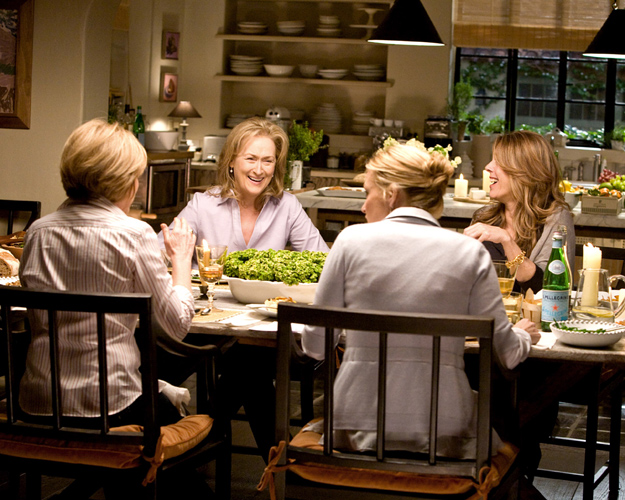
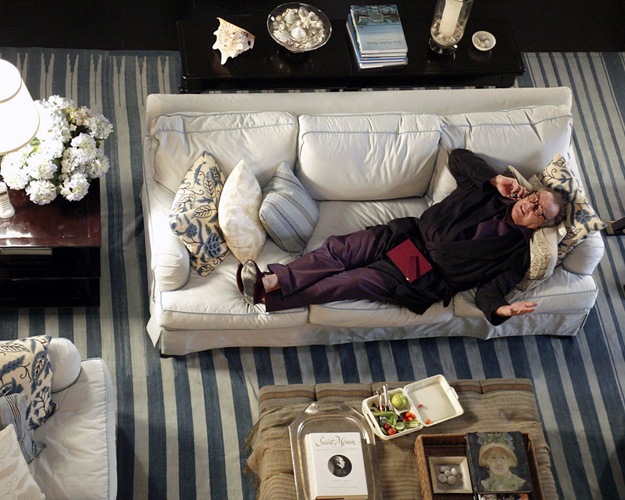
If you’ve seen a Nancy Meyers movie (Something’s Gotta Give, It’s Complicated, The Intern, to name a few), chances are you’ve drooled over the lush interiors of her characters’ homes. They’re always so cozy, well-appointed, and warmly lit, that you just want to plop down on one of those beautiful couches with a glass of wine and a thick novel. See below. I mean, WHO wouldn’t want to live in these worlds?

54c95203c6169_-_nancy-meyers-movies-interiors_04 54c95202eac04_-_nancy-meyers-movies-interiors_02

I aspire to get to a point in my financial life where I can live in a home and environment like these when I’m in my 60s. Apparently, there’s a lot of young women in their 20s and 30s who feel the same way. So much so that a group of women recently had a Nancy Meyers themed bachelorette party – complete with turtlenecks, glasses and roast chicken. In a recent NY Magazine article, Meyers talked about that bachelorette party and why she thinks her work resonates with younger women in our generation:

I think it’s because they see a really super-functioning, confident woman who’s made a life for herself, who bought herself this house. And they’re all starting their careers, and I think they must look ahead and say, “Yeah, I like that for my future.” And she’s a divorced woman, but she’s not an unhappy divorced woman. The women in my movies are not seeking romance. It happens when they’re not looking for it.

I really liked that quote, especially that last part. Romance seems to be a by-product of going after and living the life you want. In the article, Meyers also had some interesting thoughts about thirtysomething men in this day and age. She was talking about the difference between Robert DeNiro’s character in The Intern, a 70-somethign year old man who goes back to intern for Anne Hathaway’s company, and millennial men today. She says:

Well, the difference between this man and the millennials. I’ve seen it in my own life. I see guys in their mid-30s with their little boys, and they’re wearing the exact same outfit. They’ll wear like the same T-shirt, same kind of shorts, same sneakers, and I just remember when men didn’t dress like their 4-year-olds.

When my kids were growing up, they had Take Your Daughter to Work Day. It didn’t cross my mind that there was no Take Your Son to Work Day, because it was expected the men will grow up and go to work. I think my generation, brought up by Oprah Winfrey, really got behind girls in a great way, and I think the boys … the line in the movie is “Well, maybe they didn’t get left behind, but you know, there’s definitely some kind of gap.” I’m not talking about all men, of course. But I don’t think the Peter Pan quality is something women want in their men, that’s for sure.

What do you think? I definitely have noticed that a lot of men have that Peter Pan quality. I don’t necessarily think it’s a bad thing, but I do agree with Meyers in that many women don’t want that in their men. I haven’t seen The Intern yet, but I hope to check it out this weekend.

The more interviews I read with Meyers, the more she’s becoming my role model in this industry.

“Second-Class Citizen” in Hollywood – At 38?

Do you have personal beauty icons? Those people who have a “look” you love and would want for yourself – and a lot of times, it’s not just their physical attributes, but rather, this unexplainable glow or draw they possess. Though they evolve, my beauty icon mainstays are Michelle Williams, Natalie Portman and Liv Tyler…

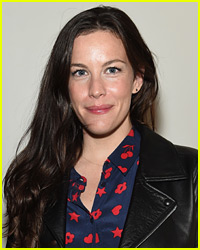
So, I was really disappointed to read an interview with Liv Tyler in the October issue of More magazine. Not because of her, she’s as awesome and lovely as ever. No, I was disturbed by something she said about being a woman in Hollywood.

liv-tyler-talks-aging

Liv Tyler

In the article, she says that thirty-eight “is a crazy number. It’s not fun when you see things start to change. When you’re in your teens or 20s, there is an abundance of ingenue parts which are exciting to play. But at [my age], you’re usually the wife or the girlfriend — a sort of second-class citizen.”

Ack. I think Liv Tyler is undeniably gorgeous. I would imagine most men from age 18 and up would agree. And so, while not surprising, I think it’s sad.

Maggie Gyllenhaal also recently said this to the Hollywood website The Wrap, “I’m 37 and I was told recently I was too old to play the lover of a man who was 55. It was astonishing to me. It made me feel bad, and then it made me feel angry, and then it made me laugh.”

The big problem for me is that we’re not going to see a richness of women on screen if this doesn’t change. I don’t want to spend my 30s going to movies about gorgeous 22 year old female protagonists. I want to see more women like me on screen, especially as I head into my mid-30s.

Knowing the Difference Between Labor Day, Veterans Day and Memorial Day by Your Thirties

Happy Labor Day! Today’s post is a repost from this past Memorial Day, but I thought it was timely. Hope you had some good barbecue and are enjoying every last bit of the summer!

Last year on Labor Day, a friend of mine was wondering whether or not to thank the military. (Short answer- sure, thank the military- but not because of Labor Day. Labor day has nothing to do with the military- it’s about American workers.)

Last Memorial Day, I overheard someone asking the difference between Memorial Day and Veterans Day. This was not a child asking- it was someone in their fifties

So in case you’re not sure of the differences between the holidays, but are too embarrassed to ask, lets clear up the confusion right now, anonymously 😉

Memorial Day: Memorial Day is for honoring and remembering military personnel who died serving their country, particularly those who died in battle or as a result of battle wounds. The holiday originated right after the Civil War and is always celebrated the last Monday in May because that’s when flowers are blooming to decorate the graves of the dead. Read more about Memorial Day here.

Veterans Day: Veterans Day is a day to thank EVERYONE who’s served in the military, whether in wartime or peacetime. The day is especially to thank living veterans for their service, and to really show that all those who served, and not just those who died, have done their duty. Veterans Day was created after World War I and is always celebrated on November 11. Read more about Veterans Day here

Labor Day: Labor Day is dedicated to the contributions and achievements of American workers. It was created in 1887 by the Central Labor Union and the Knights of Labor. It’s always celebrated the first Monday in September. Read more about Labor Day here.

Hope your fantastic Labor Day weekend carries you into the fall and beyond!

map_grill

Is Having a “Respectable” Job In Your Thirties Worth Your Happiness?

Something I’ve been thinking a lot about lately is having a ‘respectable’ job in your thirties.

In my twenties, I’ll admit, I hustled for money a lot…I was concentrating on my “real passion” – theater – so I was working a lot of random event jobs in between the Tradeshows I normally worked..also for extra money to support my theater career. I had jobs where I worked outside in the snow and handed out orange juice. I had jobs catering parties where people wouldn’t look at or talk to me. I had jobs at bars where too many people looked at and talked to me. I had jobs dressed as a dinosaur from a video game. There were many crazy moments. And, I’ll admit, there are still crazy moments now.

But there’s something about being in your thirties where the old job hustling doesn’t seem to cut it anymore. It feels very  important to have a “respectable” job. Job titles are cool in your thirties the way everything ‘grown up’ is sort of cool. Somewhere along the line of being in your thirties, you’re supposed to have ‘made it’ careerwise, right?

Well, I definitely don’t miss a lot of the random crazy gigs I had in my twenties, especially the ones that didn’t pay well. And I definitely am way more conscious of how I’m treated by the people I work with- I tolerate a lot less disrespect than I used to. But as for having a particularly ‘respectable’ and grown up job title…well, I don’t know exactly what that means to me. Especially since I’ve always been self-employed and have kind of cobbled my skills together.

I know some people who:

  1. Have an amazing, respectable job title and are pretty happy but make way less money than you’d think.
  2. Who have an amazing, respectable job title and make lots of money, but are way more UNhappy than you’d think.
  3. And of course, there are the people in respectable jobs who make tons of money and are super happy. I guess that = the dream. Damn those guys.

But maybe the thirties career dream actually doesn’t need the respectable title. Maybe all you need is to make good money (or at least enough money) and be really happy. Perhaps in your thirties, you don’t necessarily need that respectable title after all- just make enough money and be happy enough doing it. Then go do other things that make you happy.

So I’m sort of stopping my search for the respectable job title and am focusing the search on jobs that meet my financial needs and make me happy enough. Then I’m off doing other happy-making things.

If you can make good money hustling and are happy doing it, then by all means, hustle.  If you’re happy being a theater actor, and are okay money-wise, then be a theater actor. For goodness sake, if you’re happy and make enough money being a clown at a birthday party, then by all means, keep doing that! Screw the titles and screw explaining yourself! Figure out your own life, make yourself happy, and then of course, keep afloat. Make your own title! As long as you have the money to keep yourself smiling, then go for it. Because aren’t the thirties all about giving zero fucks anyway?

d1cf7c6240d45597d27b8c01b492181e

Are We The “Slash” Generation?

Have you seen the new Toshiba laptop/tablet commercial, where they show a young woman in her 20s who they describe as a “Director/DJ/Designer/Advocate/Entrepreneur” as they show her in her various roles/jobs? The commercial was made  to sell their tablet product, and in it, they say their product is perfect for the “slash” generation. It’s been playing constantly when I watch Hulu, and it drives me nuts.

I had never heard that we’re considered the “slash” generation. Generally, since I’m 33, I don’t feel like a millennial but  demographically, I am considered one (Born in 1982 – 1996). Being part of the “slash” generation means is that your career involves being a hyphenate, as in “writer – director – actor” – that sort of thing.

If you’re interested to read more about this phenomenon, here’s a great NY Times article from last year called “The Lives of Millennial Career Jugglers.” They profile six people who have multiple careers.

Personally, I don’t want to have a multi-hyphenate career. I want to be known as an expert at one thing and have hobbies on the side. Perhaps I can become very good at these hobbies, but I wouldn’t want to consider them a money-making path. Maybe that would somehow taint them.

But while my ideal is to not be a hyphenate, I’ve realized is that it’s become harder and harder to find one job that can completely financially sustain you if you don’t work in a traditional field (corporate company, doctor, lawyer, etc.) I think we have also become desirous to find creativity and personal passion in our work – even if it’s just one of our many “jobs” – such as DJ’ing on the weekends for instance.

Do you have a “slash” career? If you do, would you prefer not to?

Trying Something Crazy and Unexpected in Your 30s

What are your hobbies? For awhile, whenever I was asked that question (not often, admittedly), my answers would be very internal activities like reading, writing, watching movies. I realized that my hobbies are mostly ways to retreat from the world – not engage in it. There’s nothing wrong with having internal hobbies, but lately I’ve wanted hobbies that connected me to other people and the world at large.

So, after hearing from friends for years that improv is a fun way to meet people and help with my writing, I signed up for a improv 101 class at UCB (Upright Citizens Brigade) here in Los Angeles. I’m five classes in, and I love it so far. Since you have to come up with comedic bits and scenes on the fly, you have no choice but to be completely present and living in the moment. In a way, it’s like meditation. What’s cool about it is that you constantly surprise yourself. I love that about improv.

Since I’m a comedy screenwriter primarily, the class has helped me become more free in my own writing. The exercises we did last week were especially helpful – they were the “monologues” part of the course. We basically do 1-2 minute comedic monologues on a subject that is suggested to us by the audience. I found that I was really good at the monologues and could make people laugh. I left the class feeling somewhat elated.

More than that, the class is making me curious about adding a new component to my writing career…stand-up comedy. Is the idea of me doing stand-up comedy crazy? Maybe. Maybe not. The thing is, people don’t immediately meet me and think I’m “funny.” They’d say I’m “down to earth” and “genuine.” And I know that I’m perceived as shy – especially when I meet people in groups. In fact, my UCLA classmate and friend who I’m taking the improv class with told me after class that he was really surprised how funny I was, because he always thought of me as “shy” and “quiet.” Kind of a back-handed compliment, but hearing that kind of thing always motivates me, to essentially “show them wrong.”

So that’s that. I’m going to try stand-up comedy in the next few moments. I’ve already started writing a few jokes down. I’ll start checking out some shows and then maybe try doing an open mic.

If you had asked me in my 20s if I’d ever do stand-up comedy, I’d have said no way. I’d have told you it was way too scary and miles and miles out of my comfort zone. But now, in my 30s, I feel more fearless than ever.